


Published : 28 Nov 2013, 08:47 PM
Updated : 09 Aug 2022, 11:21 AM


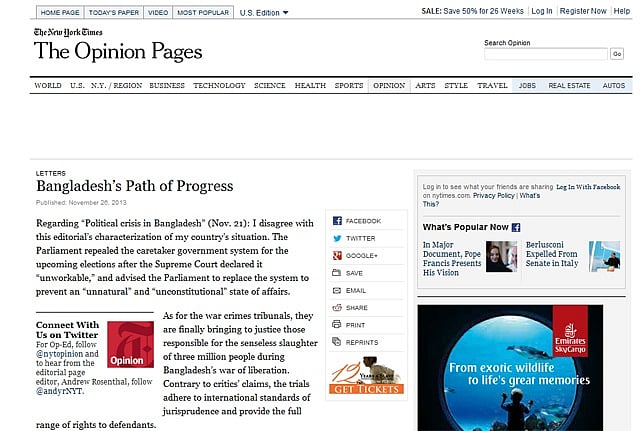
“I disagree with this editorial’s characterization of my country’s situation,” the Bangladesh Ambassador wrote in a letter that appeared on the NYT website on Nov 26 Washington time.
The editorial published on Nov 20 had said, “Bangladesh could face pressure, including perhaps sanctions, from the international community”.
“Prime Minister Hasina needs to restore autonomy to Bangladesh’s judiciary, stop persecuting human rights activists and work with the political opposition to find an acceptable transitional government ahead of next year’s election,” the editorial says.
The NYT has squarely blamed Prime Minister Sheikh Hasina for the present crisis in Bangladesh.
“Top opposition leaders and human rights activists have been arrested. Courts have delivered guilty verdicts and death sentences that flout the most basic standards of due process.
"Responsibility for this crisis sits squarely with Prime Minister Sheikh Hasina, the leader of the Awami League party."
The editorial says Hasina seems determined to hang on to power.
It also warned that banning the Jamaat was a mistake.
"The Jamaat-e-Islami party, an ally of the BNP, has been banned from participating in the upcoming elections. Many Bangladeshis who support the Awami League fear that Islamist parties are threatening the foundation of a country that fought bitterly to separate from Pakistan in 1971.
“But banning Jamaat-e-Islami from participating in the electoral process is only forcing frustrated supporters into the streets."
But the worst attack is against the war crimes trials.
"Meanwhile, trials held by the International Crimes Tribunal in Bangladesh, which was set up in 2009 to try people accused of committing atrocities during the 1971 war with Pakistan, have targeted opposition leaders.
“The tribunal appears to be yet another tool to stifle political opponents."
Akramul Qader in his protest wrote Parliament had repealed the caretaker government system for the upcoming elections after the Supreme Court declared it “unworkable,” and advised Parliament to replace the system to prevent an “unnatural” and “unconstitutional” state of affairs.
“As for the war crimes tribunals, they are finally bringing to justice those responsible for the senseless slaughter of three million people during Bangladesh’s war of liberation,” he wrote.
“Contrary to critics’ claims, the trials adhere to international standards of jurisprudence and provide the full range of rights to defendants.
“The recent violence against innocent people has been fomented by political opponents of the government.
“The police have been forced to act, which has led to the arrest of some politicians who were responsible,” he went on.
He also wrote: “the government has offered to negotiate with opposition leaders to settle the disagreements driving these actions, but that was rebuffed.
“Luckily, a great many Bangladeshis understand that the government is sincere in its desire for progress and want it to succeed,” the Bangladesh ambassador wrote at the end.
Also Read:
NYT talks of 'sanctions'










