


Published : 23 Mar 2016, 04:45 PM
Updated : 19 Oct 2022, 05:10 PM



Also Read:
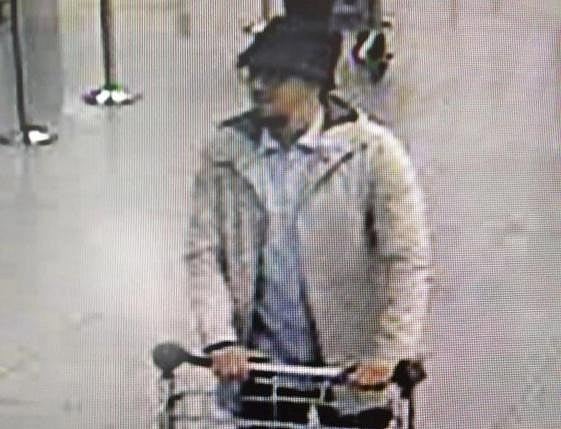
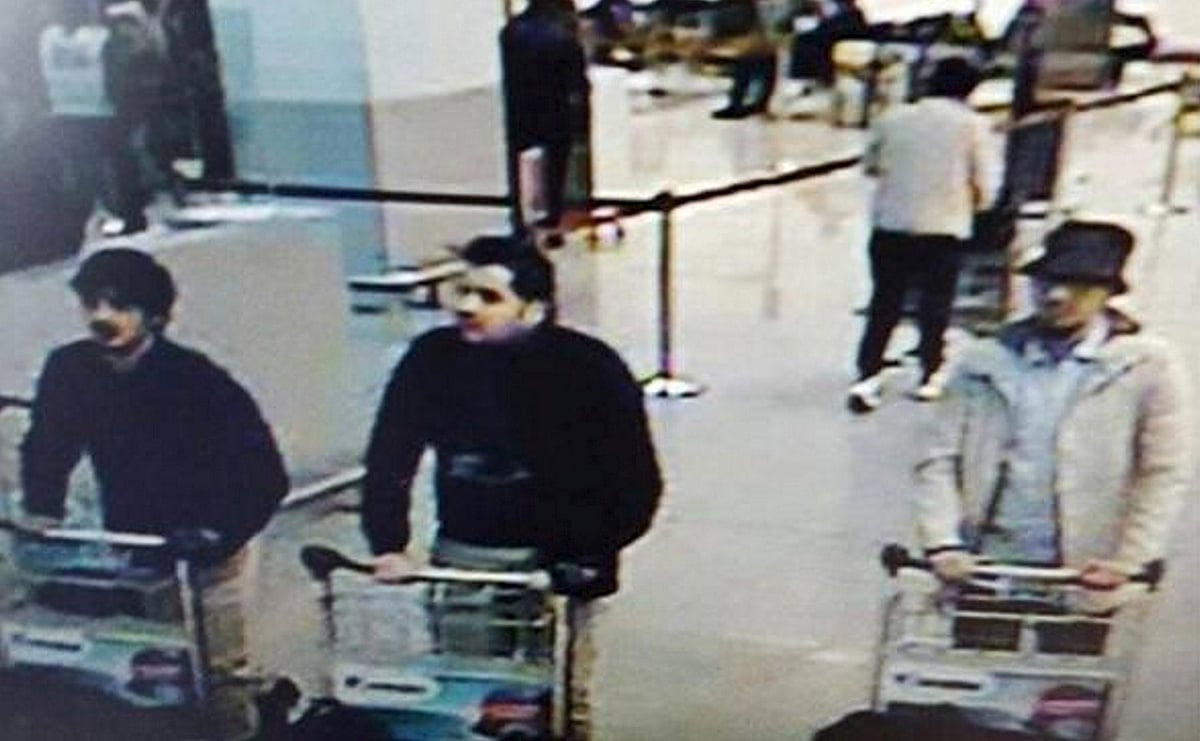
Blasts in BrusselsPolice and prosecutors refused immediate comment after several local media reported that Najim Laachraoui, 25, believed to be the man seen on CCTV pushing a baggage trolley alongside the bombers and then running out of the airport terminal, had been captured in the Brussels borough of Anderlecht.
The death toll in the attacks on the Belgian capital, home to the European Union and NATO, rose to at least 31 with some 260 wounded, Health Minister Maggie De Block said on VRT television. It could rise further because some of the bomb victims at Maelbeek metro station were blown to pieces and victims are hard to identify.
One of the suspects seen on CCTV pushing baggage trolleys at Brussels airport just before the explosions was named as Brahim El Bakraoui, public broadcaster RTBF reported. It said his brother, Khalid, blew himself up on the metro train.
Both had criminal records but had not previously been linked by investigators to Islamist militants.
Laachraoui was wanted in connection with the Paris attacks. His DNA was found on almost all of the explosives belts used in those attacks and at a Brussels hideout used last week by prime Paris suspect Salah Abdeslam, who was arrested last Friday after a shoot-out with police.
RTBF said Khalid El Bakraoui had rented under a false name the apartment in the city's Forest borough, where police hunting Abdeslam killed a gunman in a raid last week. He is also believed to have rented a safe house in the southern Belgian city of Charleroi used to mount last November's Paris attacks.
The Syrian-based Islamist group claimed responsibility for Tuesday's attacks, four days after Abdeslam's arrest in Brussels, warning of "black days" for those fighting it in Syria and Iraq. Belgian warplanes have joined the coalition in the Middle East, but Brussels has long been a centre of Islamist militancy.
Security review
The attacks sent shockwaves across Europe and around the world, with authorities racing to review security at airports and on public transport, and rekindled debate about European security cooperation and police methods.
Prime Minister Charles Michel cancelled a trip to China and convened his inner cabinet to discuss security. Belgium was to observe a nationwide minute's silence with King Philippe, the premier and leaders of European Union institutions attending an outdoor memorial event in Brussels' European district.
The Brussels blasts fuelled political debate across the globe about how to combat militants.
"We can and we will defeat those who threaten the safety and security of people all around the world," said US President Barack Obama.
Police searched an apartment in the northern Brussels borough of Schaerbeek late into the night, finding another bomb, an Islamic State flag and bomb-making chemicals.
Local media said authorities had followed a tip from a taxi driver who may have driven the bombers to the airport.
An unused explosive device was later found at the airport and a man wearing a light-coloured jacket and a hat, believed to be Laachraoui, was seen running away from the terminal after the explosions.
Closing in
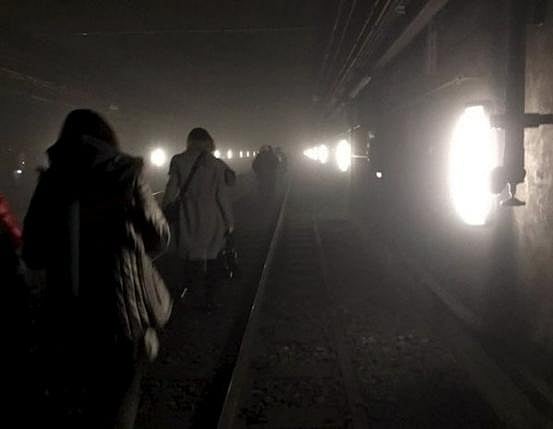
Security experts believed the blasts, which killed about 20 people on a metro train running through the area that houses EU institutions, were probably in preparation before Friday's arrest of locally based French national Abdeslam, 26, whom prosecutors accuse of a key role in the Nov. 13 Paris attacks.
He was caught and has been speaking to investigators after a shootout at an apartment in the south of the city a week ago, after which another Islamic State flag and explosives were found. It was unclear whether he had knowledge of the new attack or whether accomplices may have feared police were closing in.
Islamic State said in a statement that "caliphate soldiers, strapped with suicide vests and carrying explosive devices and machineguns" struck Zaventem airport and Maelbeek metro station.
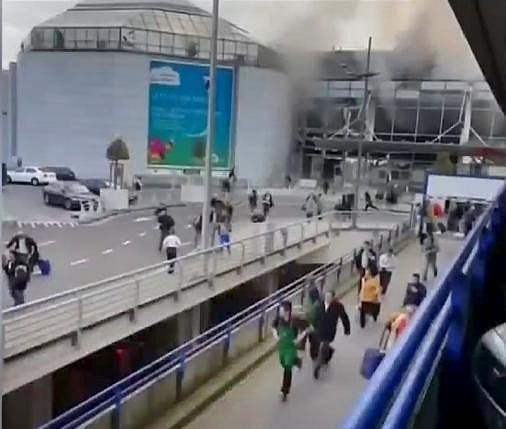
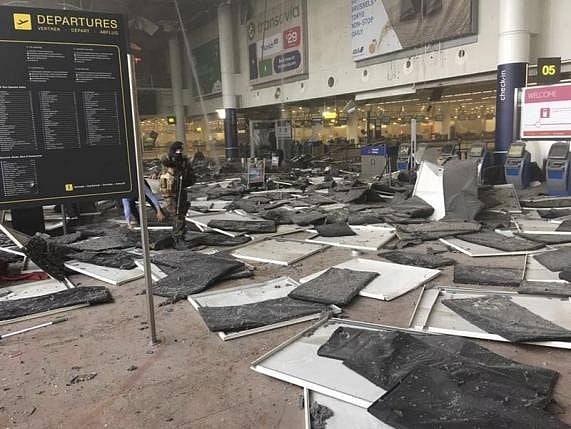
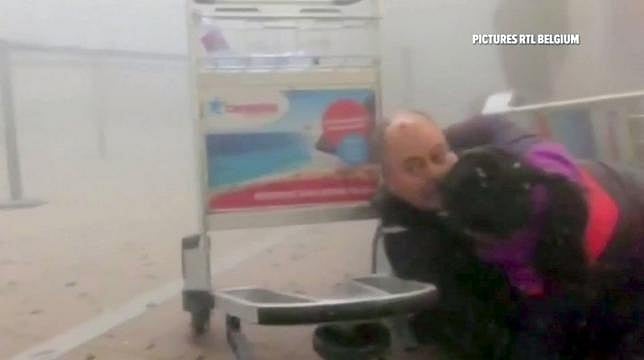
The Zaventem airport in Brussels after the blasts.
The two men in dark clothes wore gloves on their left hands only. One security expert speculated they might have concealed detonators. The man in the hat was not wearing gloves.
About 300 Belgians are estimated to have fought with Islamists in Syria, making the country of 11 million the leading European exporter of foreign fighters and a focus of concern in France and other neighbours over its security capabilities.
Reviving arguments over Belgian policies following the Paris attacks, in which 130 people were killed in an operation apparently organised from Brussels, French Finance Minister Michel Sapin spoke of "naiveté" on the part of "certain leaders" in holding back from security crackdowns on Muslim communities.
Belgian Foreign Minister Didier Reynders retorted that each country should look to its own social problems, saying France too had rough high-rise suburbs in which militants had become radicalised.
Life began to return to normal in Brussels on Wednesday, with some public transport working and cars returning to the European district, but the metro system remained closed and the airport was still shut to travellers.











