


Published : 17 Aug 2021, 02:48 AM
Updated : 14 Oct 2022, 06:57 PM


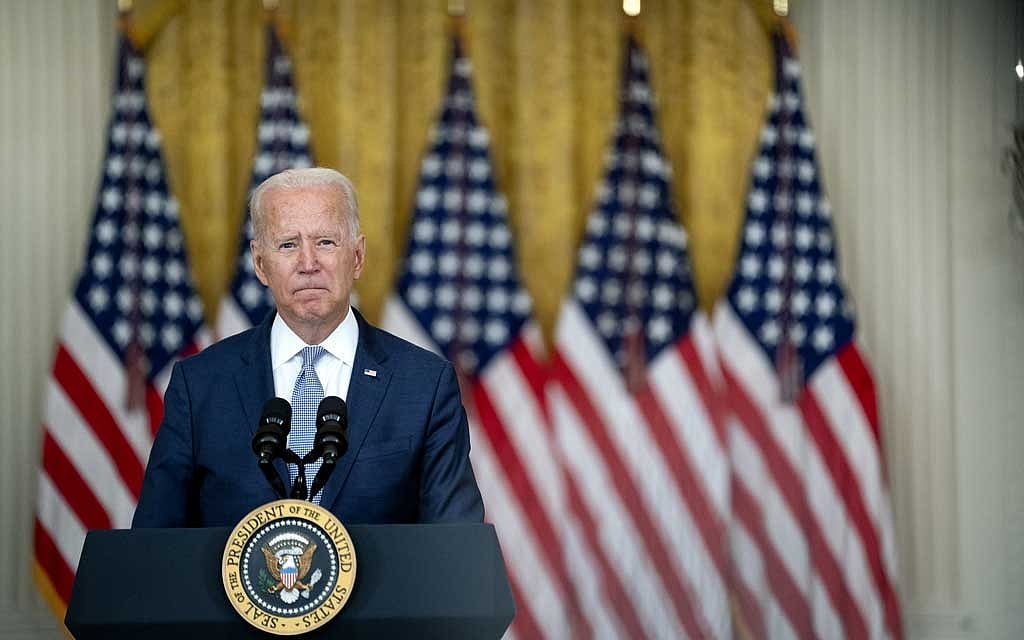
Speaking to the American people from the ornate East Room, Biden stood by his decision to end the longest war in United States history and rejected criticism from allies and adversaries about the events of the weekend that left hundreds of Afghans desperately running after military planes as they ferried Americans to safety out of the country’s capital.
“The choice I had to make as your president was either to follow through on the agreement to drawdown our forces,” Biden said, “or escalating the conflict and sending thousands more American troops back into combat and lurching into the third decade of conflict.”
He added: “I stand squarely behind my decision.”
Biden acknowledged the truth told by dramatic images over the past 72 hours: a frantic scramble to evacuate the US Embassy in Kabul in the face of advancing Taliban fighters, which has drawn grim comparisons to the country’s defeated retreat from Saigon at the end of the Vietnam War.
But he rejected the analogy, insisting that the administration had planned for the possibility of a rapid Taliban takeover and expressed pride that diplomats and other Americans had been evacuated to relative safety at the Kabul airport, which aides said was in the process of being secured by several thousand US troops. And he blamed the fall of the Afghan regime on the failure of the country’s military and political leaders to stand up for themselves.
“Afghanistan political leaders gave up and fled the country,” he said, accusing the military of laying down their arms after two decades of US training and hundreds of billions of dollars in equipment and resources. “If anything, the developments of the past week reinforce that ending US military involvement in Afghanistan now was the right decision.”
He directed his ire at Afghanistan’s political leaders, saying he urged them to engage in real diplomacy.
“This advice was flatly refused,” he said.
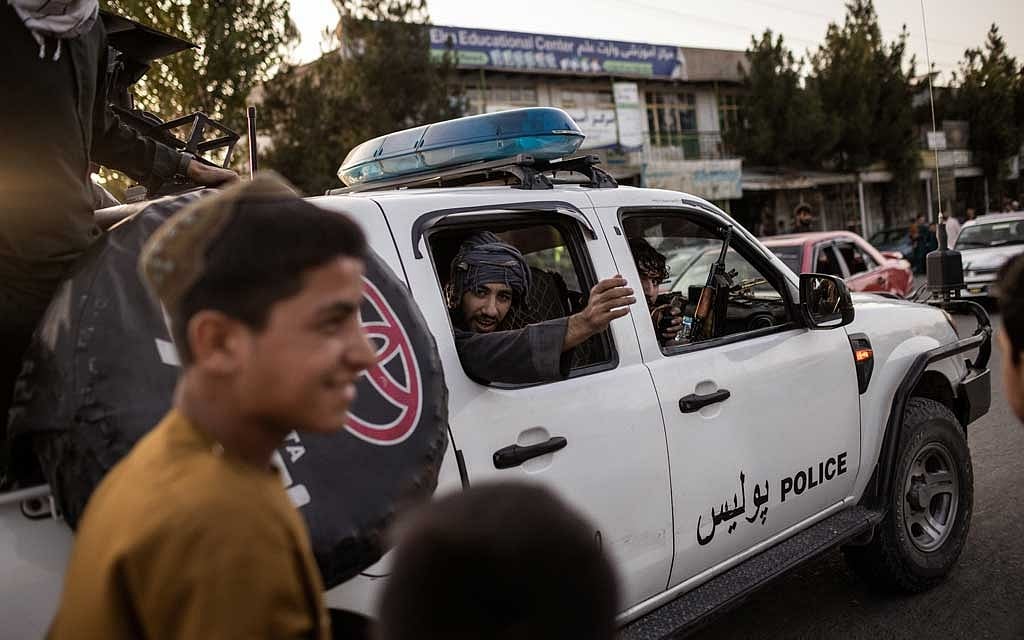
Taliban fighters drive into Kabul, Afghanistan, Aug. 15, 2021. President Joe Biden will go down in history, fairly or unfairly, as the president who presided over a humiliating final act in the American experiment in Afghanistan. (Jim Huylebroek/The New York Times)
The political effect of the weekend’s dramatic collapse of the Afghan government caught the White House off guard throughout the fast-moving events, even as howls of criticism poured in from Republican and Democratic lawmakers, Afghan activists, former President Donald Trump, foreign policy experts and officials from previous administrations.
Sen. Mitch McConnell of Kentucky, the top Republican in the Senate, called it a “monumental collapse” in Afghanistan and said responsibility rests squarely with Biden. Rep. Seth Moulton, D-Mass., a former Marine captain, said the administration had made “not just a national security mistake, but a political mistake too.” The American Civil Liberties Union said the president is “failing at the fundamentally important task of humanitarian protection.”
Trump, who himself sought a withdrawal of US troops from Afghanistan with an even earlier deadline of May 2021, issued repeated denunciations of his successor.
“The outcome in Afghanistan, including the withdrawal, would have been totally different if the Trump administration had been in charge,” Trump said Monday morning. “Who or what will Joe Biden surrender to next? Someone should ask him, if they can find him.”
Trump’s son, Donald Trump Jr., tweeted out a hashtag: #WheresBiden?
Biden had been scheduled to remain on vacation through the week, including heading to Wilmington for several days. Previous presidents have chosen to cut vacations short to be seen as dealing with developing crises at the White House.
Over the weekend, Biden chose to remain with his family at the presidential retreat in the Maryland mountains while the situation in Afghanistan worsened rather than quickly return to the White House. In addition a long written statement on Saturday, the White House released a photo of Biden, sitting alone at a conference room table at Camp David, as he conducted a virtual meeting with his foreign policy advisers on a large television monitor.
White House officials described several hours of meetings throughout the weekend and said the president was briefed numerous times by top intelligence, diplomatic and military aides as the administration raced to keep up with a reality in Afghanistan that was changing by the hour.
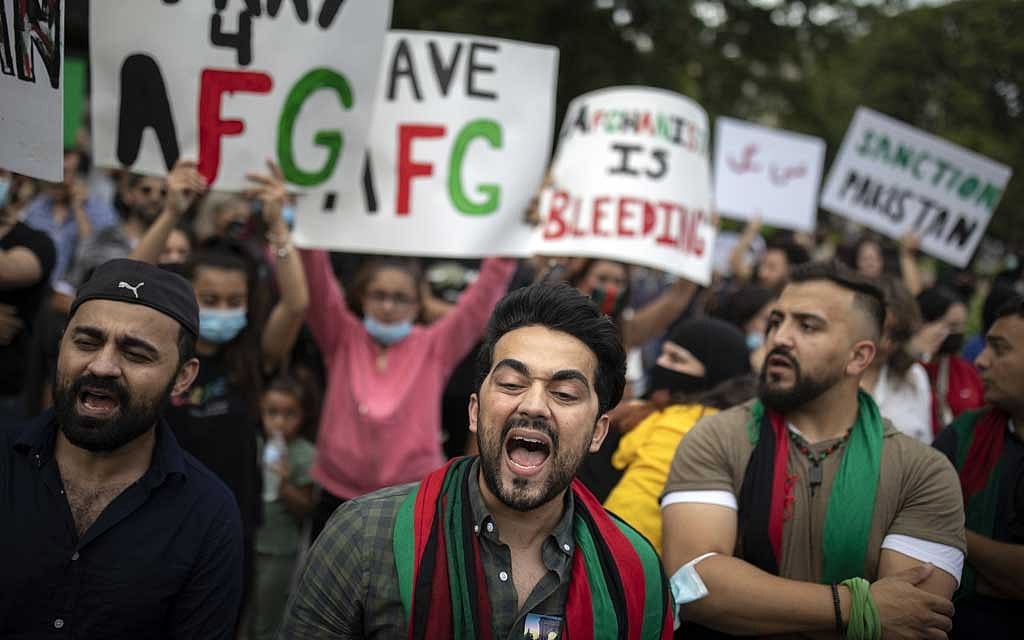
Demonstrators protest the United States’ military pullout of Afghanistan as the Taliban moved into Kabul, at the White House in Washington, Aug. 15, 2021. President Joe Biden is finding few outspoken defenders amid the chaotic collapse of the Afghan government. But after 20 years, a war-weary America may still give the president a pass. (Tom Brenner/The New York Times)
White House officials said there were “active discussions” throughout the weekend about when Biden should publicly address the situation, and what he would say when he did. Officials said they did not want the president to speak before the situation on the ground in Kabul was stable.
But by Monday, officials had settled on a message in which the president and his top aides would acknowledge that the Taliban takeover was more rapid than they expected, but that the situation was under control and in line with Biden’s goal of finally removing the United States from a never-ending war.
Jake Sullivan, the president’s national security adviser, said on NBC’s “Today” program on Monday morning that the administration was in the process of executing what he called a “successful drawdown of our embassy” even as he acknowledged that “the speed with which cities fell was much greater than anyone anticipated, including the Afghans.”
In July, in response to questions from reporters, Biden said he thought the fall of the Afghan government was not inevitable because the country’s army was 300,000 strong and as well equipped as any in the world.
On Sunday, the national Republican Party posted a link of Biden’s response on Twitter, adding: “This was just 38 days ago.”
So far, Biden had left it to Sullivan, Secretary of State Antony Blinken and other aides to try to explain how the president’s prediction proved so wrong.
White House officials, finding few defenders of their efforts in Afghanistan, even among Democrats on Capitol Hill, on Monday distributed talking points to allies to bolster Biden’s position.
The talking points, distributed by the office of House Speaker Nancy Pelosi, include the “topline” assertion that “the president was not willing to enter a third decade of conflict and surge in thousands of troops to fight in a civil war that Afghanistan wouldn’t fight for themselves.”
The administration said the collapse of the Afghan government and ensuing chaos were not indictments of US policy but proof that the only way to forestall disaster would have been to ramp up America’s troop presence.
Answering critics who say the president was caught flat-footed, the talking points assert, “The administration knew that there was a distinct possibility that Kabul would fall to the Taliban. It was not an inevitability. It was a possibility.”
The document also says that the administration “had contingency plans in place for any eventuality — including a quick fall of Kabul. That’s why we had troops pre-positioned in the region to deploy as they have done.”
The lengthy talking points may give allies something to say, but asserting that plans existed may not be much of a defence when televised images show those plans have not been carried out effectively.
©2021 The New York Times Company













