


Published : 26 Mar 2022, 09:26 PM
Updated : 21 Oct 2022, 03:39 PM


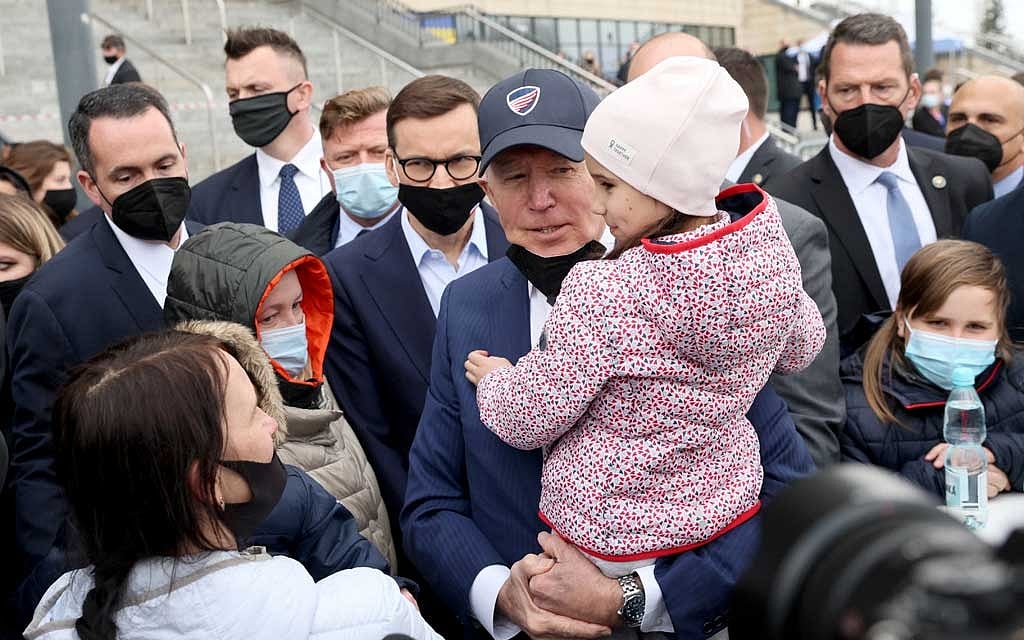
The president heard firsthand from President Andrzej Duda of Poland about the desperate plight of more than 2 million people who have poured into his country just in the past month, driven from their homes by constant bombardment across Ukraine. “Wounded persons” with “mental trauma,” Duda told Biden, describing the many Ukrainians who had arrived with virtually no belongings.
“The suffering that’s taking place now is at your doorstep,” Biden told Duda during a briefing from officials managing the exodus of Ukrainians into neighbouring countries. “You’re the ones who are risking in some cases, your lives, and risking all you know, to try to help.”
Biden did not venture into Ukraine because of security concerns — a fact that he lamented in remarks to reporters.
“Quite frankly, part of my disappointment is that I can’t see it firsthand like I have in other places,” the president said. “They would not let me — understandably, I guess.”
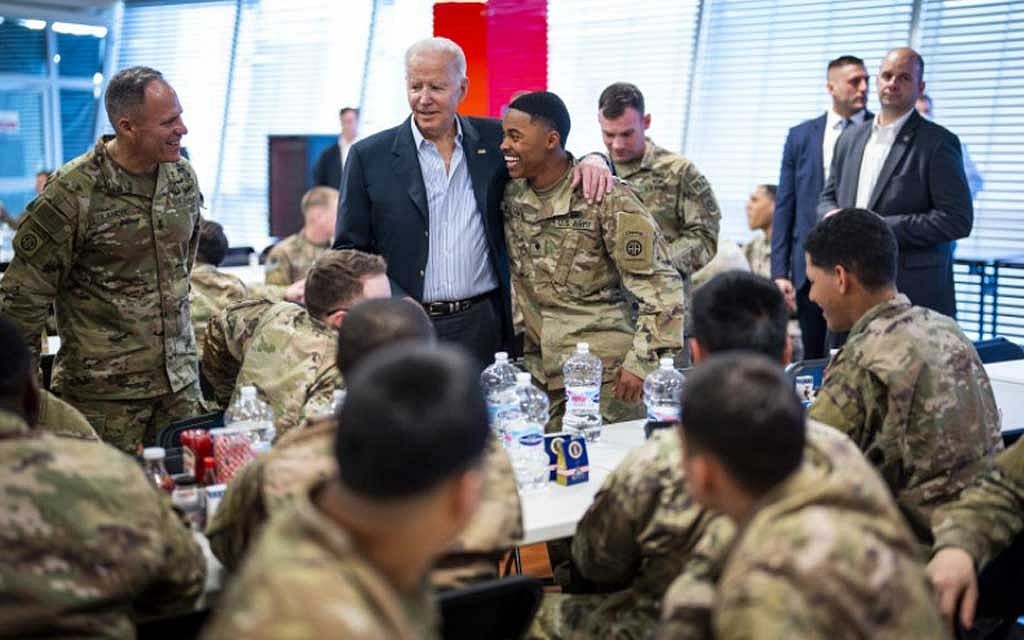
Instead, he met with Duda about 50 miles from the Ukrainian border in the southeastern city of Rzeszow, which has become a hub for humanitarian aid and a transit point for refugees. Biden also visited American troops stationed at a nearby military installation as part of a beefed-up NATO force in Eastern Europe, thanking them for serving as a visible deterrent to President Vladimir Putin of Russia.
He again called Putin a “war criminal,” a characterisation that drew an angry response from the Kremlin last week, and said the images of wreckage coming from Ukraine are like “something out of a science fiction movie.” The president said that keeping the allies united over the long term was the only way to “curtail the devastation” that Putin’s aggression is wreaking on Europe.
His visit came on a day that Russia signalled it may be reassessing its ambitions to conquer all of Ukraine amid fierce resistance by Ukrainian forces, saying its early goals had been “mainly accomplished” and suggesting it would focus on securing the breakaway regions in the east.
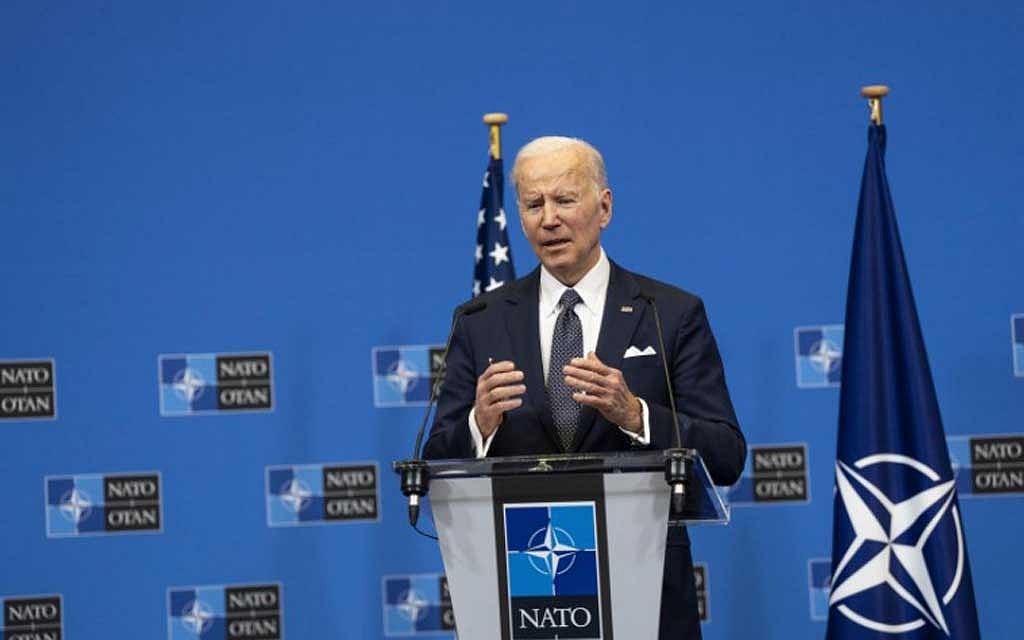
Earlier Friday, Biden met with Ursula von der Leyen, president of the European Commission, announcing a commitment to reduce Europe’s dependence on Russian energy by helping allies acquire natural gas from the US and other countries around the world.
Biden travelled to Rzeszow on Friday from Brussels, where he met world leaders Thursday in three extraordinary back-to-back summits to consult on the military and economic responses to Putin’s aggression.
On Friday, Biden shifted most of his focus to the human dimensions of what he called Putin’s “war of choice.” He listened as Duda described the grim plight of Ukrainians who have arrived in a never-ending flow at Polish border communities.
“We do not call them refugees,” Duda told the president. “They’re our guests. Our brothers, our neighbours from Ukraine who today are in a very difficult situation.”
Biden spoke with Duda and officials from Poland, the US and the United Nations who are leading the humanitarian efforts in the country.
Jake Sullivan, Biden’s national security adviser, said the president would meet with some Ukrainian refugees during an event in Warsaw on Saturday, before returning to Washington later in the day. As recently as Monday, hundreds of Ukrainians were still standing in line at the National Stadium in Warsaw to receive Polish identification numbers.
Sullivan said the events Friday and Saturday were intended to underscore the administration’s support for those bearing the human consequences of the brutal war.
On Thursday, Biden said that the US would accept up to 100,000 people from Ukraine — a significant increase in the number of refugees that the US accepts each year but a small fraction of the more than 3.5 million Ukrainians who have left their homes and fled to Poland and elsewhere in Europe.
The US also pledged an additional $1 billion in humanitarian assistance Thursday to help take care of displaced people.
But until now, Biden’s view of the refugee situation has been from Washington — far from the daily struggles of those who have been driven from their homes.
Friday’s visit to Rzeszow put Biden close to Przemysl, the largest crossing point for refugees between Ukraine and Poland and the location for dramatic reporting and photography during the past several weeks. More than 500,000 Ukrainian refugees have passed through the town, mostly women and children, according to the mayor, Wojciech Bakun.
There had been speculation for days that Biden might visit the border city. Instead, the president stayed in Rzeszow for the afternoon, where he also met with American troops.
He visited about a dozen service members from the 82nd Airborne Division at a barbershop at the G2A Arena near the airport. A few minutes later, Biden joined a group of service members eating pizza in a cafeteria. He called them “the finest fighting force in the history of the world” and added, “I personally thank you for what you do.”
He told a brief story about being in Iraq with his now-deceased son, Beau Biden, who was a major in the Delaware Army National Guard, and then sat down to have a slice of pizza himself.
Later, he told a larger group of service members that they were on the front lines of a generational battle that extended beyond just whether Russia succeeded in overpowering Ukraine.
“Who is going to prevail?” he said, returning to one of his favourite foreign policy questions. “Are democracies going to prevail and the values we share? Or are autocracies going to prevail?
“That’s really what’s at stake,” he said.
Biden has been explicit in his vow that the US military will not set foot in Ukraine, where it could be drawn into direct conflict with Russian forces and potentially trigger a wider, more dangerous world war between nuclear-armed powers.
But he has also promised that the US will honour its obligations to defend any NATO country from aggression. Ukraine is not a member of the 30-member European defensive alliance — but Poland is.
In the run-up to the Russian invasion, Biden sent more than 5,500 additional troops to bolster the military presence on NATO’s eastern flank and to send a message to Putin that he should not consider any direct military action against a member of the alliance.
At the same time, part of the deployment was intended to help Polish officials prepare for what they correctly anticipated would be a surge of refugees across the border.
In fact, the migration was larger and happened more quickly than most officials had predicted. Members of the 82nd Airborne Division have spent the past several weeks helping with humanitarian efforts, even as they worked with Polish forces to enhance the country’s defences.
Biden described the agreement with von der Leyen as an important step in the bloc’s race to wean itself off Russian fuel imports. The president said the US would help the EU secure an additional 15 billion cubic metres of liquefied natural gas by year’s end.
But the task will not be simple. The production of liquefied natural gas is limited and spoken for, and the pledge for additional fuel for Europe will have to be filled in increments from various sources.
Biden said that the US and the EU would set up a task force to plan how to entirely cut Europe’s dependency on Russian oil and gas, and to do so in a way that is aligned with their climate policies.
© 2022 The New York Times Company













