Published : 11 Sep 2026, 06:20 AM
Updated : 16 Sep 2026, 11:49 AM


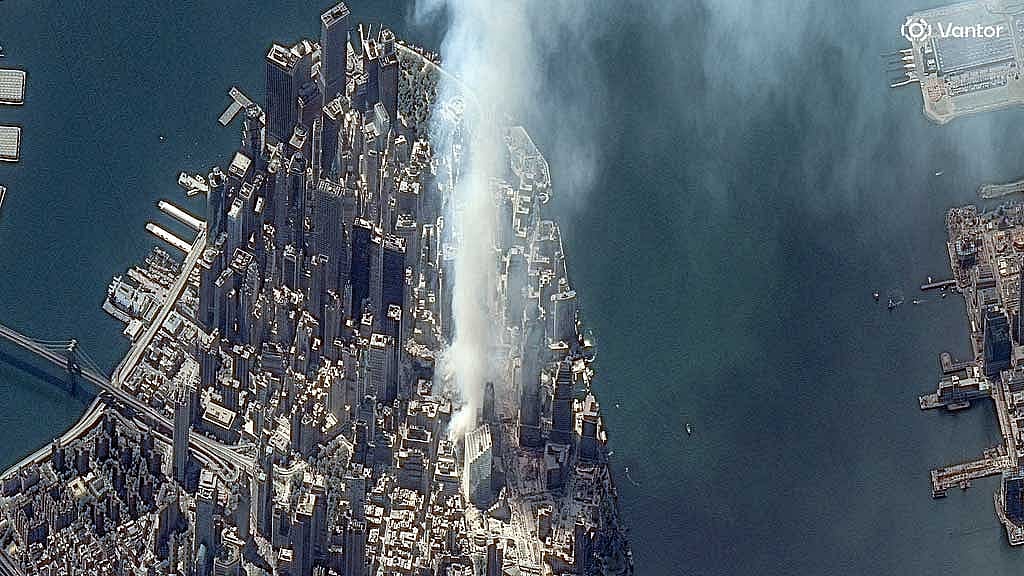
That morning began with the ordinary rhythms of late summer -- commuters spilling from New York subways, coffee in hand, offices stirring beneath a clear sky.
Then, at 8:46am, American Airlines Flight 11 tore into the North Tower of the World Trade Centre.
Seventeen minutes later, at 9:03am, United Airlines Flight 175 struck the South Tower, its impact broadcast around the world. At 9:37am, American Airlines Flight 77 crashed into the Pentagon in Arlington, Virginia. At 10:03am, United Airlines Flight 93 came down in a field near Pennsylvania’s Shanksville after passengers fought back, preventing an attack on another high-profile target in Washington DC.
All 246 passengers and crew aboard the four hijacked planes died. Across the World Trade Centre complex, the Pentagon and the Pennsylvania field, 2,977 people were killed.
According to data preserved by the 9/11 Memorial & Museum, they came from more than 90 countries.
In those few hours, the security architecture of the world's sole superpower was exposed as suddenly fragile, disappearing beneath toxic ash, collapsing steel and burning concrete.
The response would stretch far beyond New York.
Over the next quarter-century, the wreckage of 9/11 cast a shadow across Afghanistan, Iraq, Pakistan, Syria, Yemen, Somalia, the Sahel and South Asia.
Washington's campaign of retribution became the sweeping "Global War on Terror", reshaping warfare, surveillance and the very meaning of national security.
Now, 25 years on, the question is harder to evade: did all that war make the world safer?
From Retribution to Nation-Building
In the immediate aftermath of 9/11, President George Bush's objective was straightforward: find the architects of the attacks, dismantle al-Qaeda and bring Osama bin Laden to justice.
Bin Laden was operating from Afghanistan under Taliban protection. When the Taliban refused Washington's ultimatum to hand him over, the United States and its coalition partners launched Operation Enduring Freedom on Oct 7, 2001.
The Taliban regime collapsed quickly. Al-Qaeda camps were destroyed. Bin Laden fled into the borderlands.
The initial mission appeared to have achieved its central aims. But the war did not end.
Counterterrorism expanded into an ambitious nation-building project, with Western-backed democratic institutions, military structures and civil governance built at enormous cost.
Writing in a Council on Foreign Relations (CFR) symposium marking the anniversary, Richard Haass says Afghanistan and Iraq demonstrated the limits of military force when it is used to transform the political and social realities of other countries.
The consequences were starkest in August 2021.
As US forces made a chaotic withdrawal from Hamid Karzai International Airport in Kabul, the Taliban swept back to power. President Ashraf Ghani fled.
The government Washington had spent two decades, thousands of lives and trillions of dollars supporting collapsed with extraordinary speed.
The Taliban returned to the presidential palace.
Chinese scholar Li Hongmei, writing in the CFR assessment, describes the two-decade Afghan war as a definitive "strategic and military failure", arguing that the vast expenditure had failed to permanently eliminate the insurgent threat.
Iraq and the Vacuum that Became ISIS
If Afghanistan showed how a limited counterterrorism mission could expand beyond its original purpose, Iraq showed how profound intervention could reshape a region.
The 2003 invasion rested on the premise that Saddam Hussein possessed weapons of mass destruction.
Secretary of State Colin Powell famously presented a vial of alleged chemical agents to the UN Security Council. Extensive searches after Saddam's overthrow found no such weapons arsenals.
Then came the dismantling of the Iraqi state.
The Coalition Provisional Authority, under Paul Bremer, imposed its "de-Baathification" policy and disbanded the Iraqi military, leaving hundreds of thousands of armed and trained personnel without jobs.
State institutions fractured. Sectarian violence surged.
According to the CFR analysis, the resulting vacuum, combined with radicalisation in places such as Camp Bucca, helped create the conditions for the rise of the Islamic State.
An intervention intended to counter terrorism had helped create space for an organisation that would seize territory across Iraq and Syria, proclaim a "caliphate" and export violence far beyond the battlefield.
Saddam Hussein had no involvement in the 9/11 attacks. Iraq therefore became one of the clearest examples of the unintended consequences of the post-9/11 security doctrine.
The threat did not disappear. It scattered.
The al-Qaeda of 2001 is gone in its original form.
Bin Laden was killed by US Navy SEALs in Pakistan’s Abbottabad in 2011. Meanwhile, intelligence cooperation, tighter borders, strengthened aviation security and targeted drone strikes disrupted major networks capable of mounting another centrally coordinated attack on the scale of 9/11 on Western soil.
Those were significant tactical gains.
But terrorism itself did not vanish. It changed shape.
The epicentre of global terrorism has increasingly shifted from West Asia towards Africa's Sahel, particularly Burkina Faso, Mali and Niger, according to recent security tracking by ACLED and the Global Terrorism Index.
Al-Qaeda affiliates such as al-Shabaab and AQAP, along with Islamic State branches such as ISIS-K, have exploited weak governance, local grievances and socio-economic displacement.
The threat in 2026 is therefore more fragmented and fluid. It has no single capital, headquarters or battlefield. It flourishes where state capacity is weakest.
The Council on Foreign Relations published a symposium for the 25th anniversary featuring 16 experts from 15 countries. Their broad assessment is sobering: counterterrorism produced undeniable tactical achievements, but military interventions after 9/11 largely failed to deliver their wider, long-term political goals (CFR, "The War on Terrorism", 2026).
Cost Measured in Lives, Money and Displacement
The price of the post-9/11 wars cannot be captured by military victories or the deaths of militant leaders.
The Costs of War project at Brown University's Watson Institute estimates that post-9/11 military engagements have cost the US government more than $8 trillion, caused more than 900,000 direct deaths and displaced at least 38 million people across Afghanistan, Iraq, Syria, Yemen, Pakistan and elsewhere.
Post-9/11 Global Impact
Behind those numbers are destroyed communities, fractured infrastructure and generations shaped by war.
Haass argues in the CFR report that the enormous costs and inconclusive results of America's foreign wars also weakened political unity at home, fuelling public exhaustion with international engagement and accelerating domestic polarisation.
And while Washington was absorbed in prolonged counterinsurgency campaigns, the world around it was changing.
China expanded its economic and military reach through initiatives including the Belt and Road. Russia reasserted itself militarily in Georgia and Ukraine.
The relatively unipolar world of 2001 had given way to the more complicated, multipolar rivalry of 2026.
The Old War, the New Warning
The anniversary arrives with another uncomfortable parallel.
As Washington and Tehran edge towards confrontation, a recent Reuters analysis points to echoes of the post-9/11 "forever wars" in the Donald Trump administration's aggressive posture towards Iran.
The concern is not simply another military campaign. It is the possibility of repeating the same strategic blind spots: unclear end goals, weak exit strategies and escalation that becomes easier to start than to stop.
The 25-year trajectory is difficult to reduce to either victory or failure.
The United States did prevent another 9/11-scale foreign-directed attack on its soil. It dismantled major terrorist networks and killed their most prominent leader. Counterterrorism capabilities changed profoundly.
Yet military force proved far less effective at building lasting political stability.
Afghanistan ended with the Taliban back in power. Iraq helped create a vacuum from which ISIS emerged. Al-Qaeda survived in decentralised forms. The centre of terrorist activity moved towards the Sahel. And millions were displaced at a staggering financial and human cost.
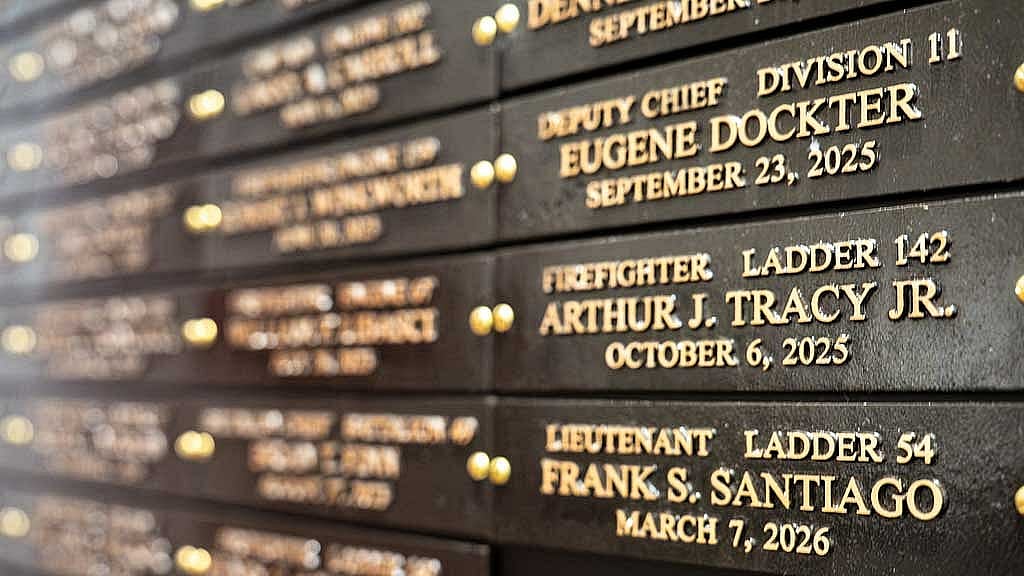
At Ground Zero, the fires have long gone out. The wreckage has become memorial stone, marking the lives lost on a clear September morning.
But the consequences of that morning remain embedded in the politics and security of 2026.
The war on terror showed that military power can destroy camps, topple governments and eliminate individual leaders. It is far less capable of forcibly constructing stable political orders or removing the grievances that help extremism take root.
Twenty-five years after the towers fell, that distinction may be the most enduring lesson of all.
And so the central question remains unanswered: after a quarter-century of war, is the world truly any safer?