


Published : 21 Mar 2019, 02:24 PM
Updated : 17 Oct 2022, 11:37 AM


Almost 170 years later, they are at the centre of a dispute over who should own the fruits of American slavery.
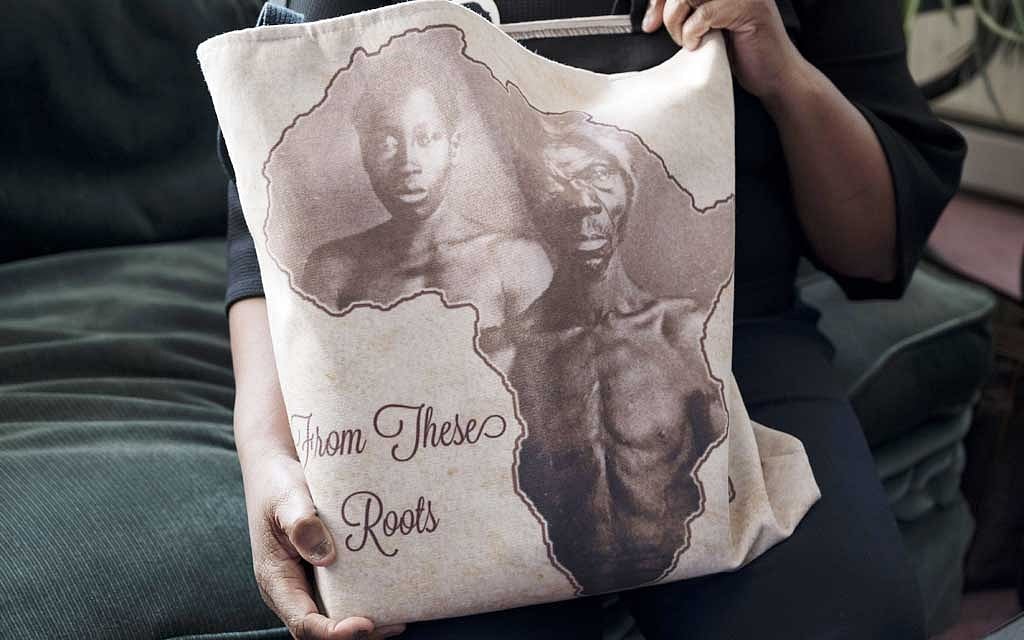
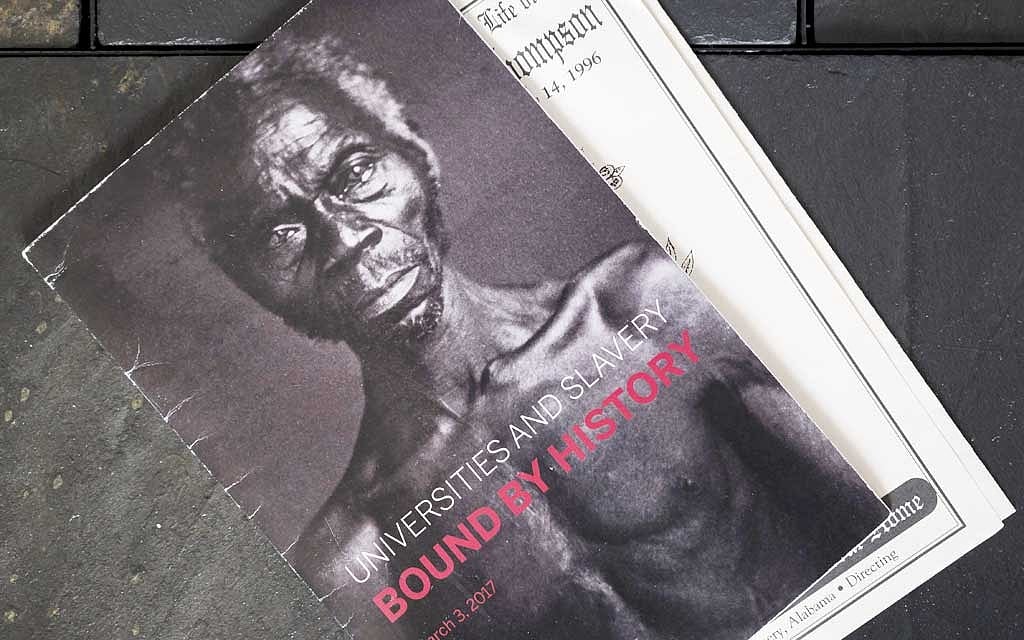
The images of the father and daughter, identified by their first names, Renty and Delia, were commissioned by a professor at Harvard and are now stored in a museum on campus as precious cultural artifacts.
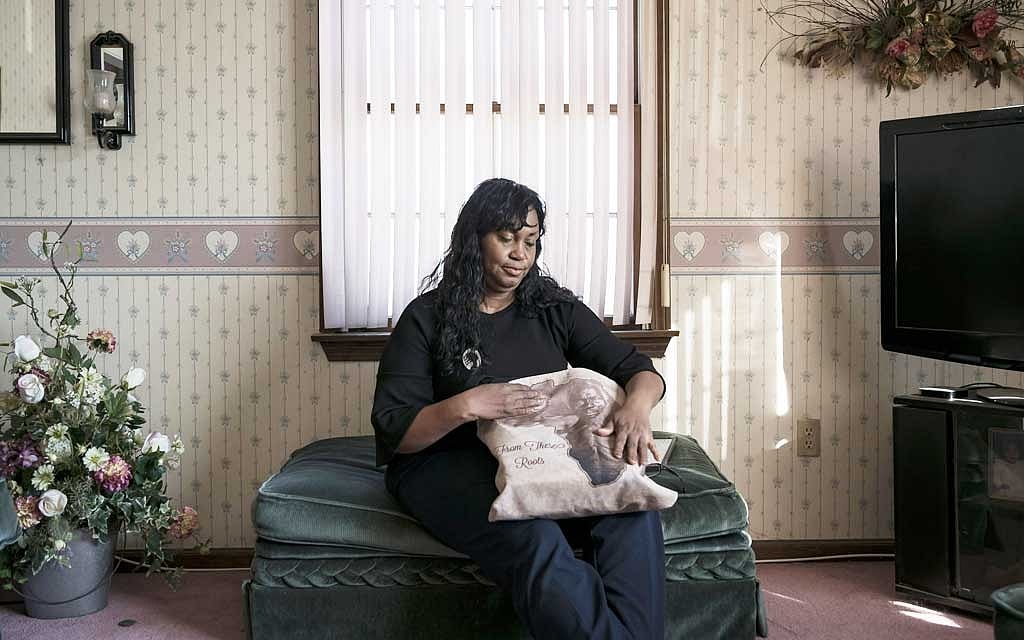
But to the Lanier family, they are records of her personal family history. “These were our bedtime stories,” Shonrael Lanier said.
On Wednesday, Lanier’s mother, Tamara, 54, filed a lawsuit in Massachusetts saying that she is a direct descendant of Renty and Delia, and that the valuable photographs are rightfully hers. The case renews focus on the role that the country’s oldest universities played in slavery, and comes amid a growing debate over whether the descendants of enslaved people are entitled to reparations — and what those reparations might look like.
“It is unprecedented in terms of legal theory and reclaiming property that was wrongfully taken,” Benjamin Crump, one of Lanier’s lawyers, said. “Renty’s descendants may be the first descendants of slave ancestors to be able to get their property rights.”
Jonathan Swain, a spokesman for Harvard, declined to comment on the lawsuit.
Tamara Lanier holds a bag bearing an image of the slaves Renty and Delia, whom she counts as her ancestors, at home in Norwich, Conn, Feb 28, 2019. The image is from an 1850 Harvard professor’s study arguing that black people were an inferior race; Lanier is suing the university for possession of the original daguerreotypes. (Karsten Moran/The New York Times)
A series of federal laws has also compelled museums to repatriate human remains and sacred objects to Native American tribes.
The lawsuit says the images are the “spoils of theft,” because as slaves Renty and Delia were unable to give consent. It says that the university is illegally profiting from the images by using them for “advertising and commercial purposes,” such as by using Renty’s image on the cover of a $40 anthropology book. And it argues that by holding on to the images, Harvard has perpetuated the hallmarks of slavery that prevented African-Americans from holding, conveying or inheriting personal property.
“I keep thinking, tongue in cheek a little bit, this has been 169 years a slave, and Harvard still won’t free Papa Renty,” said Crump, who in 2012 represented the family of Trayvon Martin, an unarmed black teenager killed by a community watch member in Florida. Lanier is also represented by Josh Koskoff, a lawyer who represents families of the Sandy Hook elementary school massacre victims.
Renty and Delia were among seven slaves who appeared in 15 images made using the daguerreotype process, an early form of photography imprinted on silvered copper plates.
The pictures are haunting and voyeuristic, with the subjects staring at the camera with detached expressions.
The daguerreotypes were commissioned by Louis Agassiz, a Swiss-born zoologist and Harvard professor who is sometimes called the father of American natural science. They were taken in 1850 by JT Zealy, in a studio in Columbia, South Carolina.
Agassiz, a rival of Charles Darwin, subscribed to polygenesis, the theory that black and white people descended from different origins. The theory, later discredited, was used to promote the racist idea that black people were inferior to whites. Agassiz viewed the slaves as anatomical specimens to document his beliefs, according to historical sources.
The daguerreotypes were forgotten until they were discovered in an unused storage cabinet in the attic of Harvard’s Peabody Museum of Archaeology and Ethnology in 1976. They were thought to be the earliest known photographs of American slaves.
Notes found with the images give small clues as to the identity of the slaves — their names, plantations and tribes. Renty was born in Congo, according to the label on his daguerreotype.
Interviewed at her home in Norwich, Lanier, a retired chief probation officer for the state of Connecticut, said she had not heard of the photos until about 2010, when she began tracing her genealogy for a family project.
Her mother, Mattye Pearl Thompson-Lanier, who died that year, had passed down a strong oral tradition of their family’s lineage from an African ancestor called “Papa Renty.” Shonrael, Lanier’s daughter, wrote a fifth-grade project about her ancestor in 1996.
The lawsuit could hinge on evidence of that chain of ancestry. Lanier’s amateur sleuthing led to death records, census records and a handwritten inventory from 1834 of the slaves on the plantation of Col Thomas Taylor in Columbia and their dollar values.
A 2017 program conference using as cover art an 1850 daguerreotype of the slave Renty, part of a Harvard professor’s study arguing that black people were an inferior race, Feb 28, 2019. Tamara Lanier is suing Harvard University for ownership of daguerreotypes of slaves, whom she counts as ancestors. (Karsten Moran/The New York Times)
Her genealogical research has its skeptics. Gregg Hecimovich, who is contributing to a book about the slave daguerreotypes, to be published by the Peabody next year, said it was important to note that the slave inventory has the heading “To Wit, in Families.” Big Renty and Renty are at the top of separate groupings, he said, implying that they are the heads of separate families.
“I’d be very excited to work with Tamara,” said Hecimovich, who is chairman of the English department at Furman University. “But the bigger issue is it would be very hard to make a slam-dunk case that she believes she has.”
One argument for keeping the daguerreotypes in a museum is that they are fragile physical objects, which degrade when exposed to light, said Robin Bernstein, a professor of cultural history at Harvard who has studied them.
She declined to take a position in the legal dispute, but said that the images were safe at the Peabody. “Frankly, there are other repositories to keep them safe,” she said. “What I do know is that no ordinary individual such as myself could keep them safe in a home.”
The question remains what Lanier would do with the images of Renty and Delia if she were to win her case in court.
Lanier, who is asking for a jury trial and unspecified punitive and emotional damages, says she does not know, and would have to have a family meeting about it. She does not rule out licensing the images.
Crump, her lawyer, had another idea. The daguerreotypes, he said, should be taken on a tour of America, so that everyone can see them.
© 2019 New York Times News Service













