


Published : 12 Mar 2022, 11:41 AM
Updated : 03 Aug 2022, 11:37 AM


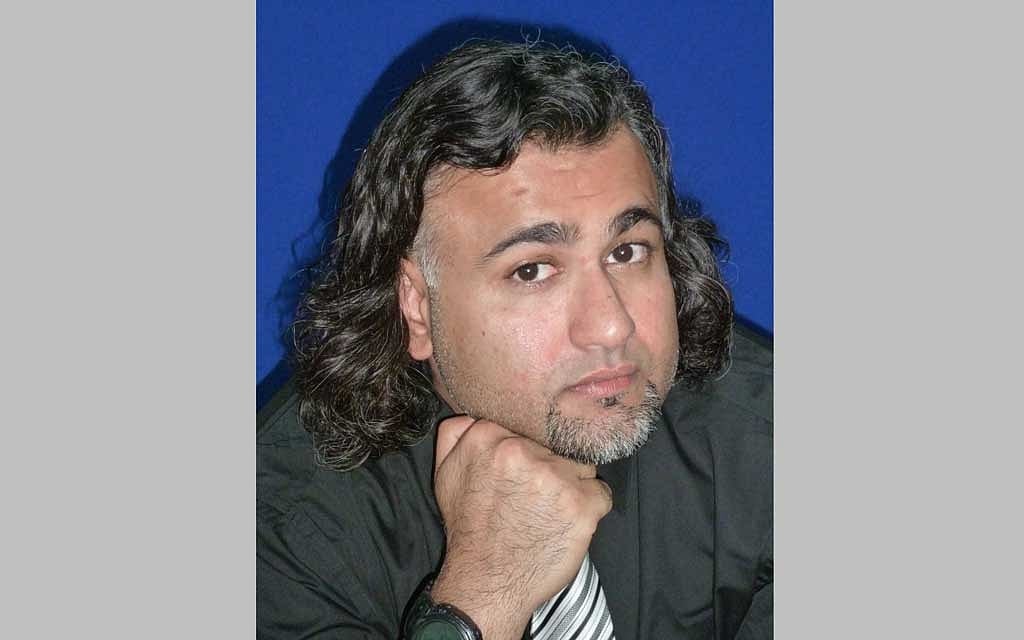
Majid Khan was sentenced to 26 years in prison in October, starting from when he first pleaded guilty to war crimes on Feb 28, 2012, for delivering $50,000 from Pakistan to an al-Qaida affiliate. The money was used in the 2003 bombing of a Marriott hotel in Jakarta, Indonesia, that killed about a dozen people.
But the military jury also declared his torture by the United States “a stain on the moral fiber of America” and urged the war court overseer to offer him clemency.
On Friday, Jeffrey D Wood, the convening authority for military commissions, did just that. He reduced the sentence to 10 years, meaning it ended March 1.
In doing so, Khan became the 20th of the 38 detainees held at Guantánamo Bay for whom the United States needs to arrange safe transfer to another country. His lawyer, J Wells Dixon, urged the Biden administration to “transfer him promptly to a safe third country.”
Khan, 42, is a Pakistani citizen who went to high school in suburban Maryland, but neither place appears to be a viable option. By law, no Guantánamo detainee can be taken to the United States. His lawyers say he cannot be returned to Pakistan because, when he first pleaded guilty, he became a US government witness, and his life could be in danger were he sent there.
“There is no basis left to continue to hold Majid Khan at Guantánamo,” Dixon said. “The United States must send him to a safe, third country where he can be reunited with his wife and his daughter, who he never met.”
Wood, a colonel in the Arkansas National Guard, was appointed to the civilian position of war court overseer during the Trump administration and has wide latitude to review and dismiss cases, as well as negotiate plea agreements. In the case of Khan, an agreement last year that was kept secret from the jury pledged to reduce his time in confinement.
As part of the deal, Khan was permitted to make a public plea for leniency to the jury in October. He offered a painful, lengthy account of his journey from a hipster high school graduate in suburban Maryland in the late 1990s to an al-Qaida recruit in Pakistan after the Sept 11, 2001, attacks, followed by his disappearance into the black sites of the CIA for three years.
He described brutal and humiliating treatment, including being chained contorted and nude with a hood on his head, making sleep impossible, nearly drowning in icy cold water in an improvisation of waterboarding and being roughly and cruelly fed through tubes in his rectum and nose.
Khan’s military lawyer, Maj. Michael J. Lyness of the Army, bluntly told fellow US officers on the jury that the prisoner “was raped at the hands of the US government” and subjected to “heinous and vile acts of torture.”
After deciding their sentence, seven of Khan’s eight jurors wrote a letter to the convening authority urging clemency for Khan because of what the United States had done to him.
“This abuse was of no practical value in terms of intelligence or any other tangible benefit to US interests,” the letter said. “Instead, it is a stain on the moral fibre of America; the treatment of Mr. Khan in the hands of US personnel should be a source of shame for the US government.”
The jury foreperson, Capt. Scott B. Curtis of the Navy, was the only juror involved in the clemency letter who chose to state his views publicly. Nonetheless, it was an extraordinary reproach of the legal framework and CIA detention system that the Bush administration established after the Sept. 11 attacks.
When Khan described his experiences at the black sites to the jury in October, he was the first former black site prisoner to do so in open court.
His testimony capped years of litigation to uncover and declassify information in an effort to offer a public reckoning about what happened to him.
Although he was captured in 2003 in Pakistan, he was not allowed to see his lawyers, Dixon and Gitanjali S. Gutierrez, until 2007, a year after he was brought to Guantánamo Bay.
“Thinking back, Majid was a scared, damaged kid the first time I met him 15 years ago,” Dixon said. “He’s come a long way, and we’re very proud of him.”
©2022 The New York Times Company













