


Published : 04 Oct 2020, 10:34 AM
Updated : 17 Oct 2022, 11:14 AM


Still in a bit of shock, Zepeda felt his anger rise. The friends once shared similar political beliefs but disagreed more often than not over the past 15 years.
“This is not funny,” he shot back. “This is real time, real life and really happening.”
The pandemic could have been a great unifier — a widespread and life-altering tragedy that inspired a notion of shared national purpose, as at other moments of crisis in the country’s past. And perhaps in another moment, in another place, a president falling ill would have seen citizens keeping vigil regardless of political affiliation. But the coronavirus, which has sickened more than 7 million Americans, including the president, the first lady and a growing number of people in his inner circle, has deepened divisions rather than united the country.
Now, a month before Election Day and with the president in the hospital, interviews with voters in some of the most contested battleground states make clear that the divisions that the president himself has stoked in the country are being reflected back at him, with his supporters defiantly insisting he will hold rallies again before Nov 3 and Democrats, if not wishing him a turn for the worse, certainly not shedding any tears.
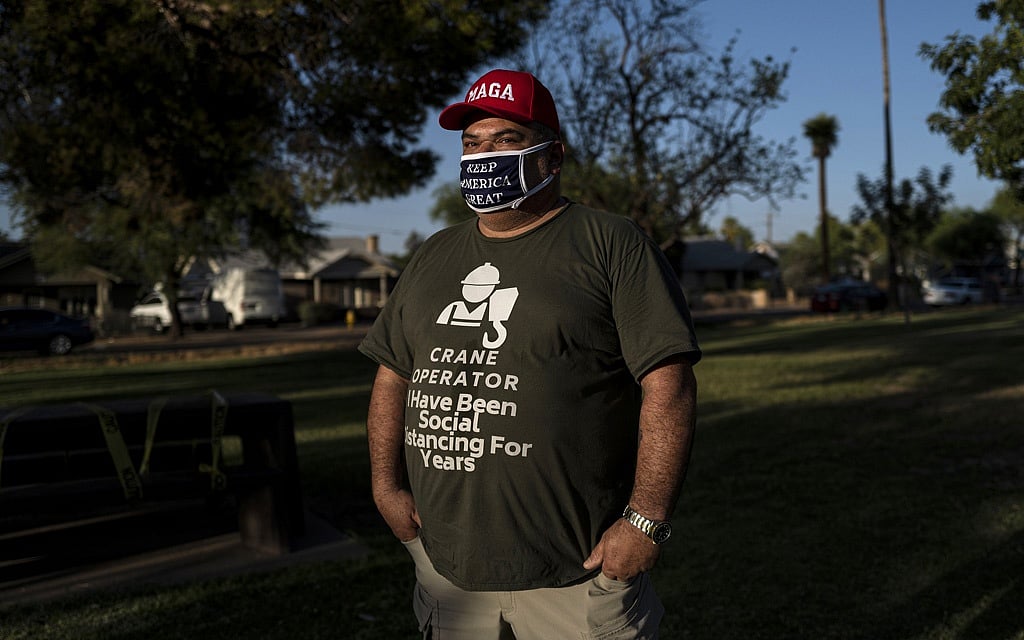
A day before the president disclosed his illness, Zepeda, a crane operator who is currently out of work, stopped by a South Phoenix campaign office in a strip mall, wearing a blue “Keep America Great” mask, to pick up another Trump-Pence lawn sign, because, he said, several had already been stolen from his yard. In his eyes, Trump’s revelation on Twitter that he had the virus was a powerful admission to be admired.
“He doesn’t have to tell anybody,” he said.
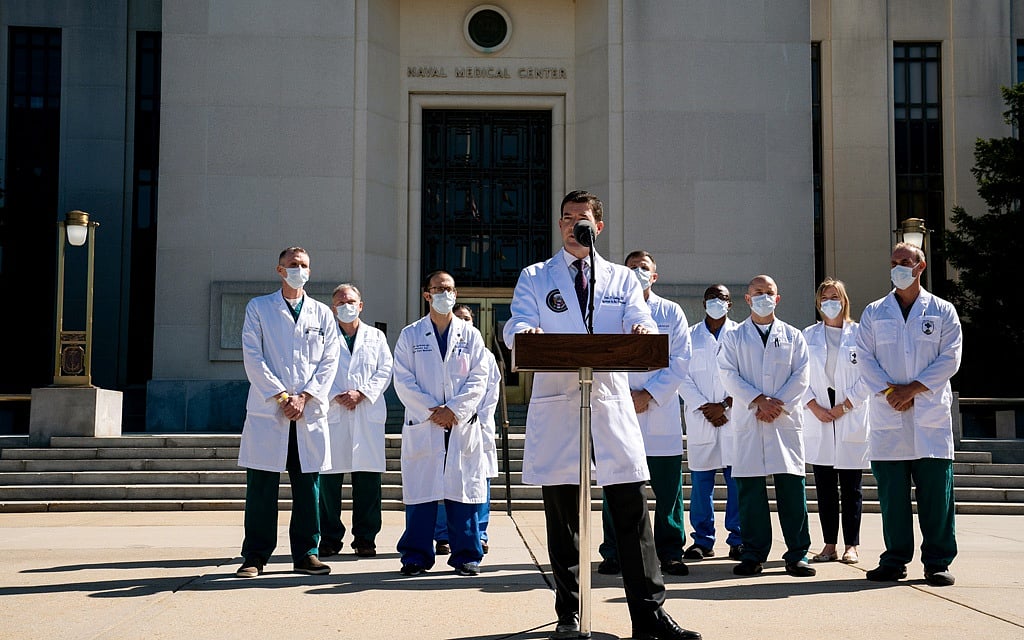
Dr Sean Conley, the White House physician, speaks during a briefing at Walter Reed National Military Medical Center in Bethesda, Md., where President Donald Trump is undergoing treatment for the coronavirus, on Saturday, Oct 3, 2020. In a different moment, a stricken leader might have rallied people behind him but President Trump’s health crisis is filtered through the partisan lenses that divide Americans on seemingly every issue. (Anna Moneymaker/The New York Times)
Concern over the virus in Phoenix lined up as neatly along partisan lines. After Tuesday’s debate but before the president disclosed his illness, people coming to the Trump campaign office described the pandemic as a nuisance, exaggeration or an outright hoax. Many said they thought masks should be optional, and anything else was a violation of their rights. A few people mentioned homemade herbal remedies and said they were sceptical of a vaccine. Few said they knew anyone who had fallen ill or died from the virus.
At the Biden field office in South Phoenix, a woman waiting to pick up signs began to cry as she described the ever-climbing death toll. Nobody she knew had contracted the virus, she said. But that, she said, was besides the point; empathy should not be reserved for friends and family members.
In other battleground states around the country, the voters each campaign is working hardest to win over churned with a chaotic mix of thoughts and feelings on Friday, including concern for the country if Trump’s health worsens, private (and not so private) gloating, and resignation that what might have been a unifying national moment most likely will not be.
Joyce Brodsky, a retired art teacher in Kewadin, Michigan, noting how Biden and his wife, Jill, extended sympathy to the Trumps, said she was unable to feel so selfless.
“I’m more of a ‘serves you right’ type of person,” she said.
While some Biden supporters spoke of the president’s illness as payback — for holding rallies, mocking Biden for wearing masks, generally refusing to wear a mask himself — Cliff Canaan, in Philadelphia, had only one comeuppance in mind: being able to vote Trump out on Nov 3.
“I think it’s very important that the people have their say in rejecting what he stands for,” said Canaan, 31, a software manager for a bank. “I don’t want him to resign or be out of office in any other way than by the ballot box.”
Trump’s supporters, for their part, were eager to wish him well and move forward.
Mira Katerinos, 59, a registered nurse in Waukesha, Wisconsin, said she was a strong supporter of the president — and that, to her, he appeared strong physically and mentally. “Trump will probably do more campaigning with COVID than Biden with no COVID; he hardly seems to be campaigning at all,” she said, repeating a common Trump campaign criticism of his opponent’s schedule. She said she saw no problem with Trump resuming rallies after recovering, which she expected him to do.
“Life has to go on,” she said.
Politically, few voters expected Trump’s personal encounter with the coronavirus would shake his supporters’ faith in him.
Jeff Litscher of Stetsonville, Wisconsin, said he thought — he “was naive enough to think” — that some people might take down their Trump signs after the revelations, in Bob Woodward’s latest book, that the president privately admitted the risk of the virus while playing it down in public.
“But if anything, they have multiplied,” said Litscher, the host of a radio show in Wisconsin’s Northwoods who plans to vote for Biden.
© 2020 The New York Times Company













