Published : 08 Feb 2022, 05:08 PM
Updated : 03 Aug 2022, 11:30 AM


Three failed rainy seasons have created the driest conditions since the 1980s, with forecasts of below-average rainfall set to increase suffering in the coming months.
"Harvests are ruined, livestock are dying, and hunger is growing as recurrent droughts affect the Horn of Africa," said Michael Dunford, Regional Director in the WFP Regional Bureau for Eastern Africa.
The conditions have decimated livestock, forcing thousands in a region where many are farmers into displacement camps.
"We never experienced this before, we only see dust storms now. We are afraid that they will cover us all and become our graveyard," said Mohamed Adem from the Somali region of Ethiopia in a WFP video.
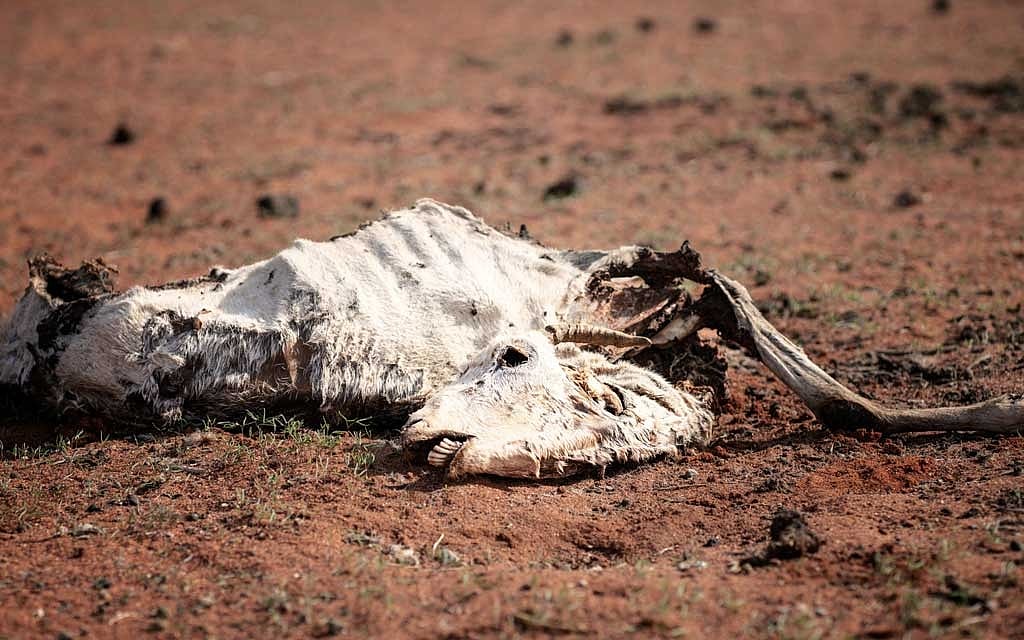
Aerial footage taken nearby showed vast dusty scrubland strewn with cattle carcasses. In Kebele village, people tied ropes beneath the torso of a thin cow to raise it to its feet.
A photo shows a carcass of a dead goat following severe droughts in Wajir, northeastern Kenya, Dec 2, 2021.World Food Programme/ REUTERS
The drought is also spreading to parts of Kenya, south-central Somalia and Eritrea. Between 2010 and 2012, around 250,000 people died of hunger in Somalia, half of them children.
The United Nations children's agency's Mohamed Fall warned at the same briefing that many children will die or suffer from life-long cognitive or physical damage without quick action to avoid famine.
"We need to act now to prevent catastrophe," he said by phone from Nairobi, adding that 5.5 million children in the four countries are currently threatened with acute malnutrition.
WFP, which won the Nobel Peace Prize in 2020, is launching its regional response plan for the Horn of Africa this week and calling for $327 million. UNICEF is seeking $123 million.