


Published : 15 Aug 2021, 04:15 PM
Updated : 08 Apr 2022, 01:08 PM


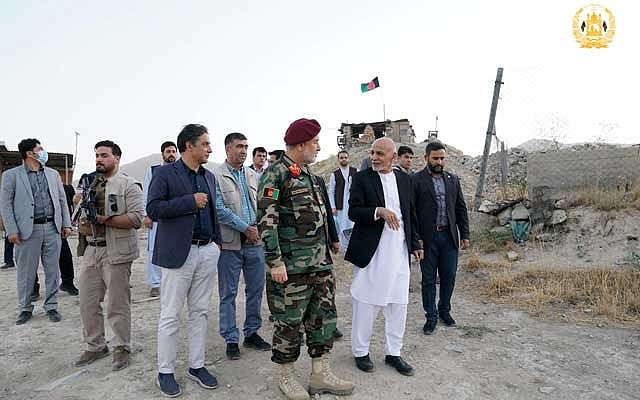
Acting Afghan Interior Minister Abdul Sattar Mirzakwal said Sunday that Kabul will not be attacked and that they will shift power peacefully to a transitional administration, though he did not say what a transitional government may look like.
In an on-camera video statement carried by Afghan news agency TOLO, he assured Kabul residents that security forces would secure the city.
Around the same time on Sunday, the Taliban issued a statement saying it was in talks with "the opposing side" for a peaceful surrender of the capital.
Taliban spokesman Zabihullah said that all fighters had been instructed to be on standby at all entrances to Kabul until a peaceful and satisfactory transfer of power was agreed. They were also instructed about the lives, dignity and belongings of the residents of Kabul, and about not creating any danger or discomfort to them.
The security of the capital was the responsibility of the government and they should guarantee it, Zabihullah added.
The United States military has begun evacuating American diplomatic and civilian staff. A core group of American diplomats who had planned to remain at the embassy in Kabul were being moved to a diplomatic facility at the international airport, where they would stay for an unspecified amount of time, according to a senior United States official.
Secretary of State Antony J Blinken was expected to speak about the situation later Sunday.
After days in which one urban centre after another fell to the insurgents, the last major Afghan cities besides Kabul that were still controlled by the government were seized in rapid succession over the weekend.
The insurgents took Mazar-i-Sharif, in the north, late on Saturday, only an hour after breaking through the front lines at the city’s edge. Soon after, government security forces and militias — including those led by the infamous warlords Marshal Abdul Rashid Dostum and Atta Muhammad Noor — fled, effectively handing control to the insurgents.
On Sunday morning, the Taliban seized the eastern city of Jalalabad. In taking that provincial capital and surrounding areas, the insurgents gained control of the Torkham border crossing, a major trade and transit route between Afghanistan and Pakistan.
The Taliban offensive, which started in May when the United States began withdrawing troops, gathered speed over the past week. In city after city, the militants took down Afghan government flags and hoisted their own white banners.
Despite two decades of war with American-led forces, the Taliban have survived and thrived, without giving up their vision of creating a state governed by a stringent Islamic code.
After the Taliban took control of Afghanistan in the 1990s, movie theatres were closed, the Kabul television station was shut down and the playing of all music was banned. Schools were closed to girls.
Despite many Afghans’ memories of years under Taliban rule before the US-led invasion in 2001, the insurgents have taken control of much of the country in recent days with only minimal resistance.
Their rapid successes have exposed the weakness of an Afghan military that the United States spent more than $83 billion to support over the past two decades. As the insurgents’ campaign has accelerated, soldiers and police officers have abandoned the security forces in ever greater numbers, as the cause for which they risked their lives appeared increasingly to be lost.
Afghanistan’s president, Ashraf Ghani, has resisted pressure to step down. In a recorded speech aired on Saturday, he pledged to “prevent further instability” and called for “remobilising” the country’s military. But the president is increasingly isolated, and his words seemed detached from the reality around him.
The speed of the Taliban’s advance has thrown exit planning into disarray. While many analysts had believed that the Afghan military could be overrun after international forces withdrew, they thought it would happen over months and years. Now it risks being completed in a matter of days and weeks.
President Biden has accelerated the deployment of an additional 1,000 troops to Afghanistan to help get American citizens out. He made it clear that he would not reverse his decision to withdraw all combat forces.
“I was the fourth president to preside over an American troop presence in Afghanistan — two Republicans, two Democrats,” Biden said on Saturday afternoon. “I would not, and will not, pass this war onto a fifth.”
The deployment that Biden announced on Saturday to assist with the evacuations will bring the American troop presence to 5,000, if only briefly. He said he still planned to pull all combat forces out of the country and remove them from “harm’s way.”













