


Published : 21 Aug 2020, 09:49 PM
Updated : 17 Oct 2022, 11:11 AM


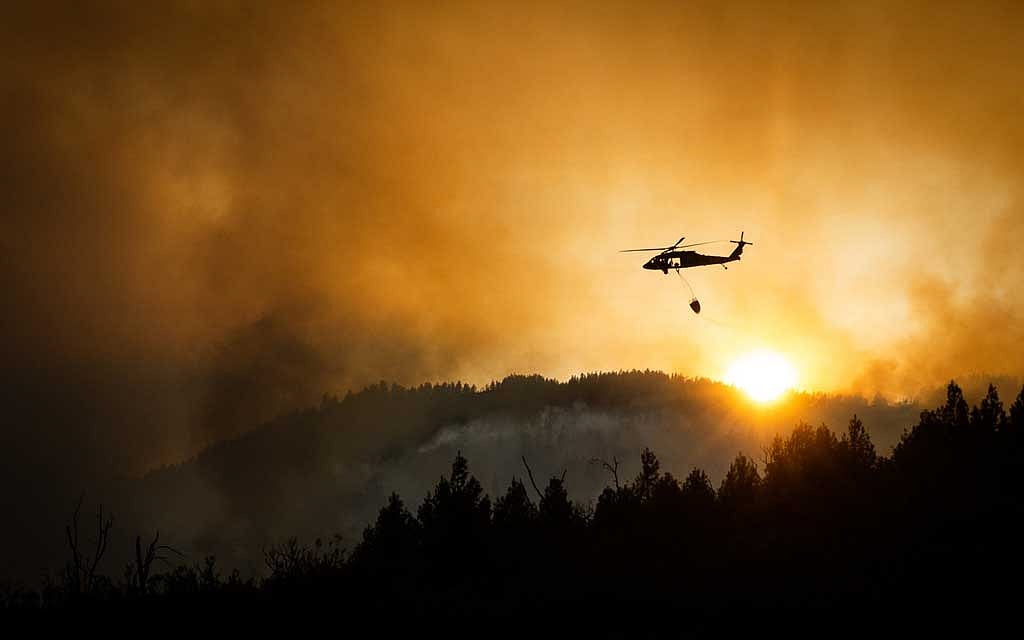
Five deaths have been linked to the fires, which have forced more than 60,000 people out of their homes, filled the skies with thick smoke and consumed hundreds of homes.
The fires, burning across more than 420,000 acres, were ignited by lightning during an extraordinary period of more than 10,800 lightning strikes over several days, which caused hundreds of fires, including nearly a dozen major ones. As flames raced toward homes this week, smoke worsened an already oppressive heat wave, lightning strikes sparked new fires, the electrical grid struggled to keep up with demand and the coronavirus threatened illness in evacuation shelters.
At least four bodies were recovered Thursday, authorities said, including three from a burned house in a rural area in Napa County and a man found in Solano County. On Wednesday, a helicopter pilot on a water-dropping mission died in a crash in Fresno County.
Firefighters have struggled to contain the largest fires at all. The LNU Lightning Complex doubled in size Wednesday and nearly doubled again Thursday, growing to 215,000 acres as it stretches across Napa County and the surrounding area. The fires in that grouping have destroyed nearly 500 homes and other buildings, many of them in Vacaville, and are responsible for the four civilian deaths, according to Cal Fire, the state’s fire agency.
A combination of fires known as the CZU Lightning Complex has forced more than 48,000 people in San Mateo and Santa Cruz counties to evacuate, including the entire University of California, Santa Cruz campus, which was placed under a mandatory evacuation order Thursday night. The fires have grown to 48,000 acres and consumed 50 buildings.
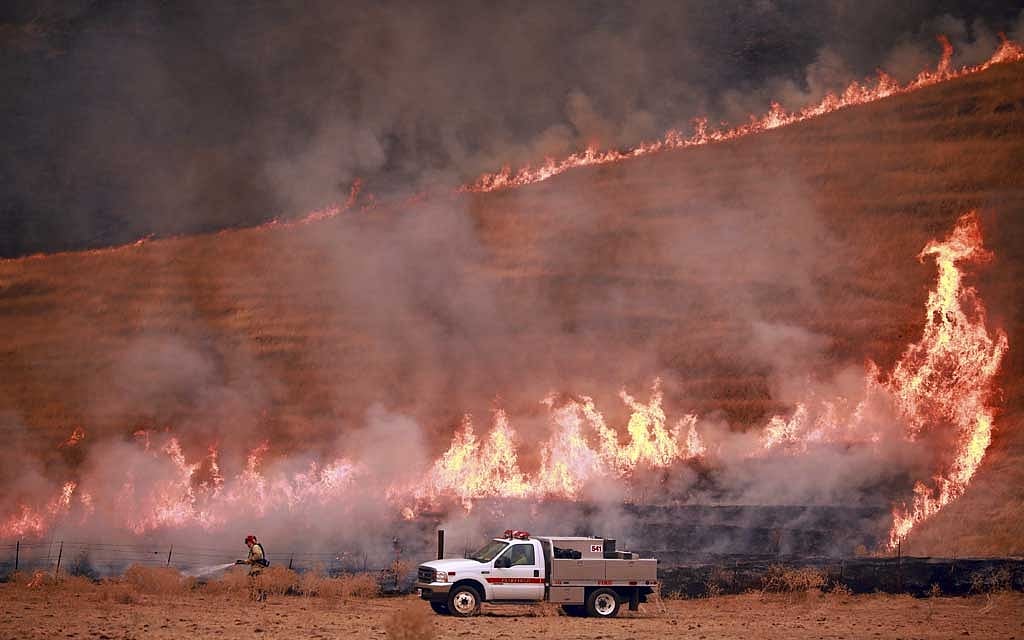
Firefighters monitor a back burn set at a cattle ranch to direct the wild fire in Vacaville, Calif., Aug. 19, 2020. Thousands of people were forced to flee their homes in Vacaville, a city of about 100,000 residents near Sacramento, as a combination of uncontrolled fires continued to threaten Northern California on Wednesday. (Jim Wilson/The New York Times)
Gov. Gavin Newsom, in a video message for the Democratic National Convention on Thursday, called the state’s wildfires an “unprecedented challenge” and linked them to global warming.
“If you are in denial about climate change, come to California,” he said.
©2020 The New York Times Company








