Published : 10 Oct 2023, 12:44 PM
Updated : 10 Oct 2023, 12:44 PM


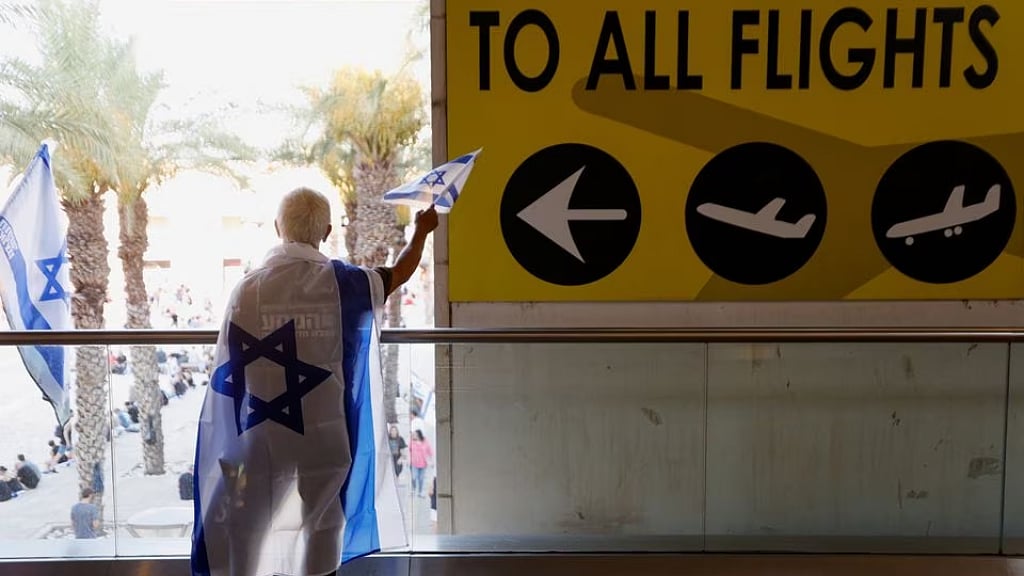
Major international air carriers suspended or scaled back flights to or from Tel Aviv, while Russia banned night flights to Israel, after a surprise attack by Hamas militants over the weekend and a threat of escalating conflict raised safety concerns.
About 50 percent of scheduled Tel Aviv flights did not operate on Sunday and a third were cancelled on Monday as of Monday evening in Israel, according to Flightradar24, a flight tracking website.
US air carriers United Airlines and American Airlines suspended direct flights to Israel after the Federal Aviation Administration urged airlines to exercise caution. Delta Air Lines said on Monday it would cancel flights to and from Israel until the end of the month.
Many European airlines have also cancelled flights.
Israel's national carrier El was the exception - adding more flights to bring reservists back from around the world to assist in the country's biggest mobilisation in history.
Fighters from Islamist group Hamas killed at least 900 people and abducted dozens of hostages in Saturday's attacks, the deadliest such incursion in decades, prompting Israel to retaliate by pounding the Palestinian enclave of Gaza.
Israel's tourism sector, driven by beach- and party-goers in Tel Aviv and historical tours to sites like Jerusalem, is set to take a major hit as flight cancellations pile up. Tourism makes up 3.6 percent of total employment, according to OECD data.
US cruise operators Royal Caribbean and Carnival said they had 'adjusted' their itineraries in the Israel area.
"So far clients haven't been cancelling, but they are being more precautious about travelling. We've been getting a lot of inquiries about safety," said Matt Berna, Americas President of Intrepid Travel, a group tour and travel company.
Regulators including the FAA, the European Union Aviation Safety Agency and Israel's aviation authority urged airlines to use caution in the region's airspace, but stopped short of suspending flights.
Russia, though, restricted flights from going to Israel before 0900 GMT due to what it called an 'unstable political and military situation' and advised airlines to monitor risks during daylight.
Israel's civil aviation authority asked airlines to 'review current security and threat information' and changed some air traffic routes. It noted that delays were expected and advised airlines to carry extra fuel.
US airlines normally run direct services from major cities including New York, Chicago, Washington and Miami.
Among the three US carriers, United has the biggest exposure. In the quarter through December, Israel accounted for 1.9 percent of its planned global capacity, according to a Reuters analysis of Cirium data. American Airlines has the lowest exposure, with Israel accounting for 0.4 percent of its global capacity in the same period.
US airline stocks fell Monday, with Delta closing down 4.6 percent, American down 4 percent and United off 4.9 percent.
AIRLINE RESPONSES
In Europe, Air France, Portugal's TAP and Finland's Finnair suspended direct flights. Norwegian Air cancelled its flights from Copenhagen and Stockholm to Tel Aviv this week and Ryanair cancelled flights through to Wednesday.
Britain's easyJet halted flights to Tel Aviv on Sunday and Monday, and said it would adjust the timings of flights over the next few days.
Hungarian budget carrier Wizz Air cancelled flights to and from Tel Aviv until further notice.
"Wizz Air is the most affected group with its operations accounting for some 9.4 percent of Israel's total October capacity and ... representing some 2.3 percent of the carrier's total schedules," Irish brokerage Goodbody said.
Lufthansa, also among the airlines most exposed to Israel according to Goodbody, cancelled flights to and from Tel Aviv through Monday.
Virgin Atlantic said it would continue to run some flights but that customers could rebook or request a refund until Oct 15.