
Published : 09 Oct 2026, 01:03 PM
Updated : 09 Oct 2026, 01:22 PM


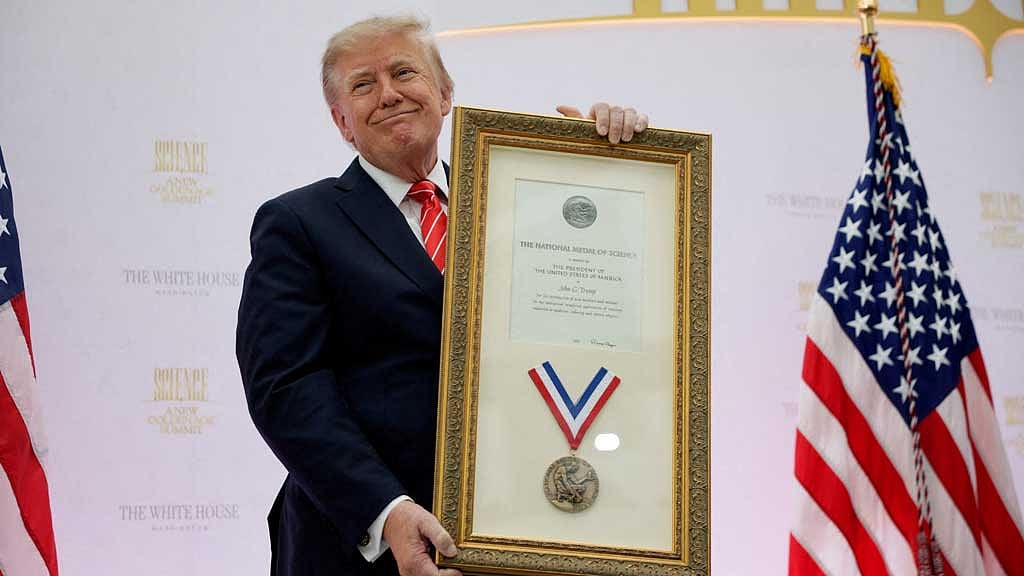
The 2026 Nobel Peace Prize is set to be announced in Oslo later on Friday, with US President Donald Trump among the prominent figures being talked about ahead of the decision.
Trump has repeatedly said he deserves the prize, while several political leaders have publicly backed him and said they submitted nominations on his behalf.
But being nominated for the Nobel Peace Prize and being seriously in contention to win it are very different things.
There are 287 nominated candidates this year -- 208 individuals and 79 organisations -- but the Norwegian Nobel Committee does not reveal who has made its shortlist.
Nor does a nomination amount to an endorsement. The committee does not vet nominations for merit before they are submitted, meaning that being called a "Nobel Peace Prize nominee" may sound far more significant than it actually is.

Who Can Nominate Someone?
Thousands of people around the world are entitled to submit names.
They include national lawmakers and ministers, sitting heads of state, certain university academics, previous Nobel Peace Prize laureates and members of specified international courts and organisations.
Candidates cannot nominate themselves.
But if an eligible nominator submits a valid nomination before the deadline, that person or organisation enters the pool of candidates. The Nobel Committee does not first decide whether the nomination is merited.
Its own guidance is explicit: simply being nominated does not imply any affiliation with or endorsement from the Nobel Peace Prize or its institutions.
This year there are 208 individual candidates and 79 organisations. The nomination deadline was Jan 31, although committee members were able to add names at their first meeting in February.
The identities of the candidates, however, are officially secret.
The Nobel Institute neither confirms nor denies individual nominations until 50 years have passed. Nominators are free to publicise their own choices, which is why names appear in the media every year, but those claims cannot be independently verified through the committee.
Hitler, Stalin And Gandhi
The Nobel archives show how little a nomination by itself can tell us.
Adolf Hitler was nominated for the 1939 Peace Prize by Swedish parliamentarian Erik Brandt.
Brandt was an “anti-fascist” and intended the nomination as satire. He withdrew it days later after it caused outrage. The Nobel archive makes clear that he never intended the submission to be taken seriously.
Joseph Stalin was nominated in 1945 and again in 1948 for his role in ending World War Two, despite the mass repression associated with his rule of the Soviet Union.
The reverse is equally revealing.
Mahatma Gandhi was nominated five times -- in 1937, 1938, 1939, 1947 and 1948 -- but never received the prize.
After Gandhi was assassinated in January 1948, the committee awarded no Peace Prize that year, saying there was "no suitable living candidate".
A nomination, then, tells us that an eligible person put a name forward. It tells us little about what the committee itself thinks of the candidate.
So What Actually Matters?
After nominations close, the five-member Norwegian Nobel Committee reviews the field and selects a much smaller group for detailed assessment.
Experts prepare reports, the committee meets repeatedly through the year and the field is gradually narrowed. Consensus is preferred, although a majority vote is enough to choose the winner.
Those deliberations remain secret.
That is why public campaigns, betting markets and declarations that a political leader has been "nominated for the Nobel" offer only limited insight into the eventual result.
Trump said this week that he believes his efforts to resolve international conflicts merit the prize, although he also expressed doubt that the committee would choose him.
Whether his name was formally submitted and accepted as a valid nomination is not something the Nobel Institute will confirm.
And even if it was, the archives show why that fact alone would reveal very little.
The 2026 laureate will be announced at the Norwegian Nobel Institute at 11am in Oslo (3pm Bangladesh time).