


Published : 06 Jan 2017, 04:11 AM
Updated : 19 Oct 2022, 03:24 PM


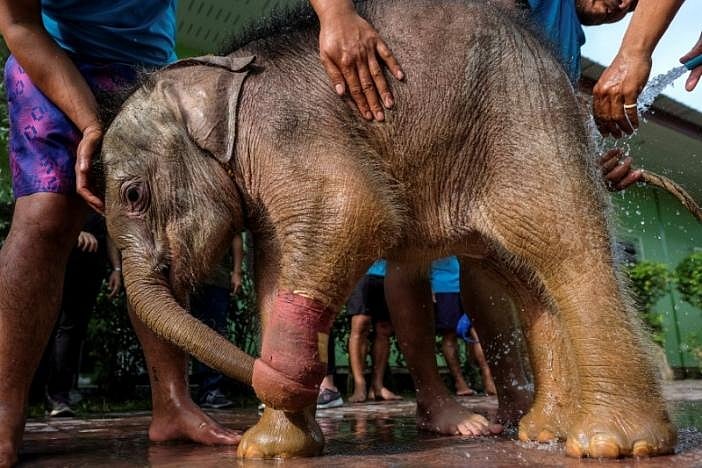
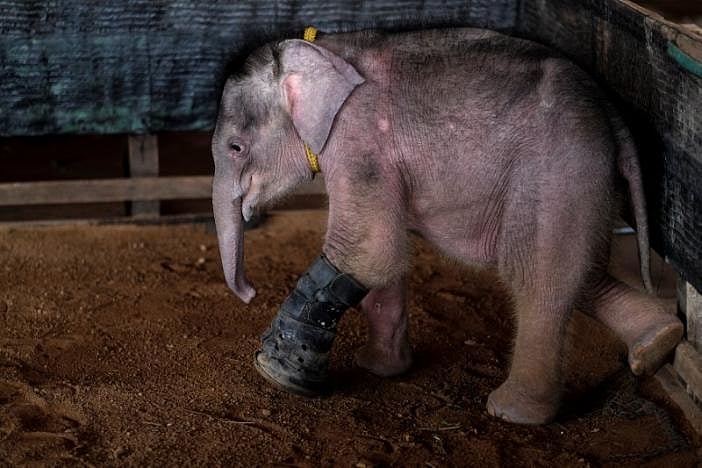
Baby Fah Jam was three months old when her front left leg was caught in a trap set by villagers in Chanthaburi province, 250 km (155 miles) southeast of the capital, Bangkok.
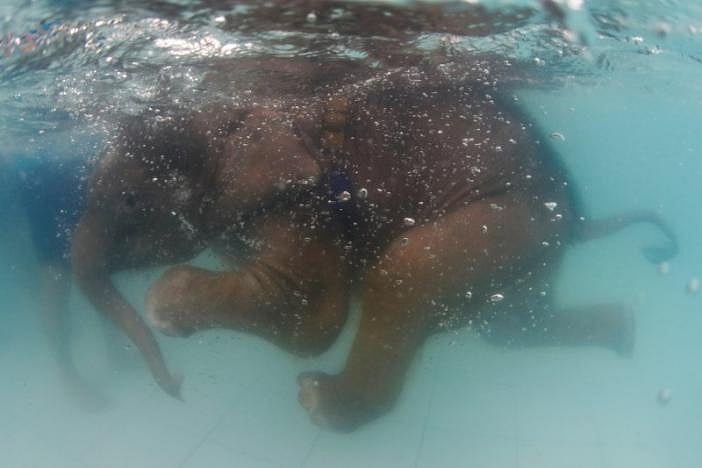
Veterinarian Padet Siridumrong said Fah Jam, who is now five months old, was showing signs of improvement following initial water-based exercises known as hydrotherapy.
"By her fourth or fifth sessions she will enjoy swimming more. She's just a baby, that's why she's a bit scared at first but, by nature, elephants love the water," Padet said on Thursday.
The treatment could take up to two months, he said.
Fah Jam, a five-month-old baby elephant, is pictured in her enclosure at the Nong Nooch Tropical Garden in Pattaya, Thailand January 5, 2017. Reuters
The elephant is a symbol of Thailand and in ancient times they were used to carry soldiers into battle. They were also used in the logging industry.
But logging has been banned and many domesticated elephants have ended up on the tourist trail, giving rides and putting on displays in shows.
Animal rights groups have criticised the use of elephants in the tourism industry, arguing that the animals are often mistreated.
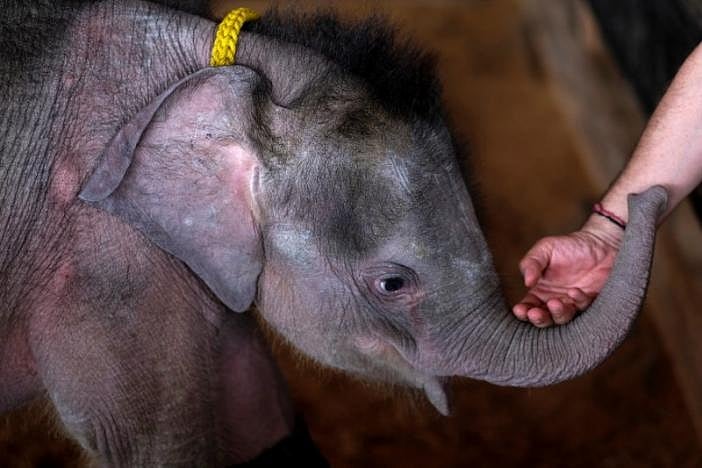
Fah Jam, a five-month-old baby elephant, plays with a handler at her enclosure at the Nong Nooch Tropical Botanical Garden in Pattaya, Thailand January 5, 2017. Reuters
There are about 3,700 elephants left in the wild in Thailand and up to 4,000 domesticated ones, according to EleAid, a British organisation working for the conservation of the Asian elephant.
Deforestation, rapid urbanisation and poaching of elephants for their ivory have all contributed to a dramatic decline in the wild elephant population.












