Published : 12 May 2020, 11:19 PM
Updated : 17 Oct 2022, 11:07 AM


Willie Grady, ER nurse
Atlanta
This is my first travel assignment. I had a trip planned for the month of April so I already had the time off. They offered a great salary, but I think more so than that, I tend to follow God.
About a week before I came, I had a family member that passed away from COVID. She had sickle cell. She had been in and out of hospitals, which aren’t the safest places right now. I ended up telling my older kids about the assignment the day before I was leaving. And my daughter — she’s such a sweetheart — she cried for like 30 minutes. But I knew I had to be here.
When I first got to the Bronx, it seemed like it was nonstop. Your entire shift, everybody was being intubated and placed on ventilators. You just had to walk out for a minibreak sometimes just to get your mind clear and then come back to it.
One guy came in alert, oriented, ambulatory — we call them “walkie talkies.” His main concern was how long his imaging and CT scan were going to take so he could go home. I went into the break room and one of my co-workers came in, she was like “Grady, they’re coding your patient.” I’m thinking, OK, this is my other patient who has pancreatic cancer. No, it’s the guy who was alert, oriented, ambulatory. He was a young guy, like 50. We didn’t get him back after doing CPR for like 45 minutes. That really affected me.
Stephanie Benjamin, ER doctor
San Diego
Low oxygen level, fever and confusion. I intubate the patient not long after she arrives at the emergency department. I remind myself, “She’s healthy, young, and female — the odds are in her favour.” (And mine, if I get sick, too.)
Hours later I hear, “She’s coding!” followed by the rhythmic thud of CPR. I lead the code. Four minutes: no pulse. Compressions continue. Rounds of epinephrine are given. Eight minutes: no pulse. We work together to save this patient, this woman, this mother, this human being. Ten minutes: no pulse.
I start tearing up and berate myself. This is my room, my team. Pull it together! Sixteen minutes: no pulse. I announce, “At 20 minutes, if nothing changes, I’ll pronounce her time of death.” Eighteen minutes: She has a pulse!
I slip into a nearby office. My N95 mask starts choking me; I rip it off and sob on the floor. Yes, we got her back, but she’s already died once. Her odds of surviving COVID-19 are dismal now. I dry my eyes, don my mask, and head back to the emergency department.
Colleen Hill, physician assistant
Atlanta
One of the elements of my job is calling family members to tell them their loved one has died. Right before COVID really hit my city, I got that call myself: My father died, very unexpectedly, of a heart attack.
I’ve been making an awful lot of those calls now that I’m back at work after his funeral.
They’re all blending together, as are the death certificates that I sign. But this juxtaposition of experiences has forced me to face head-on the problem of inevitability.
People die. All people die. My father, your father, me and you.
So I come to work not to fight death, not to prevent death, but to support life and hope while they last.
My most intense experiences have been relaying messages from families to their loved ones.
“Tell Pookie I love her.”
“Tell my husband I lit a candle for him.”
And I put on my protective gear — the same N95 mask I’ve been wearing since the pandemic started — and I go into the room and I squeeze their hand and tell them they are loved.
Kim Hyeon-hee, nurse
Daegu, South Korea
I was looking after regular inpatients at my hospital when I was dispatched to another hospital that was emptying to prepare for COVID-19 patients. Nothing was ready. We were discussing ways to prepare for patients but by noon, two patients already came in.
Soon 50, 60 and up to 80 patients were arriving in a day. Unimaginable, no? Ambulances carrying patients were surrounding the hospital building.
The condition of some patients was suddenly getting worse. Family members weren’t allowed, even when things got bad. We nurses cried, it was breaking our hearts. I was unable to console the families as I normally would.
We worked about 12 to 14 hours a day. It felt very, very hard. I felt a sense of dread. I asked myself, “Is this something I can handle?” I felt scared, but there was no running away. It was what I had to do. My colleagues all felt the same. I feel a strong bond with them now. The sense of camaraderie is like that of a war veteran.
I felt so bad for my family. At first, they were against me being dispatched to the hospital, but later they supported me. My daughter said, “Mom, you are amazing. My friends think so, too.” When I came home late one night, I cried in front of my husband and mother and said, “I am grateful and I am sorry.” I wouldn’t have been able to hold on without their support.
Keiji Oi, vascular surgeon
Tokyo
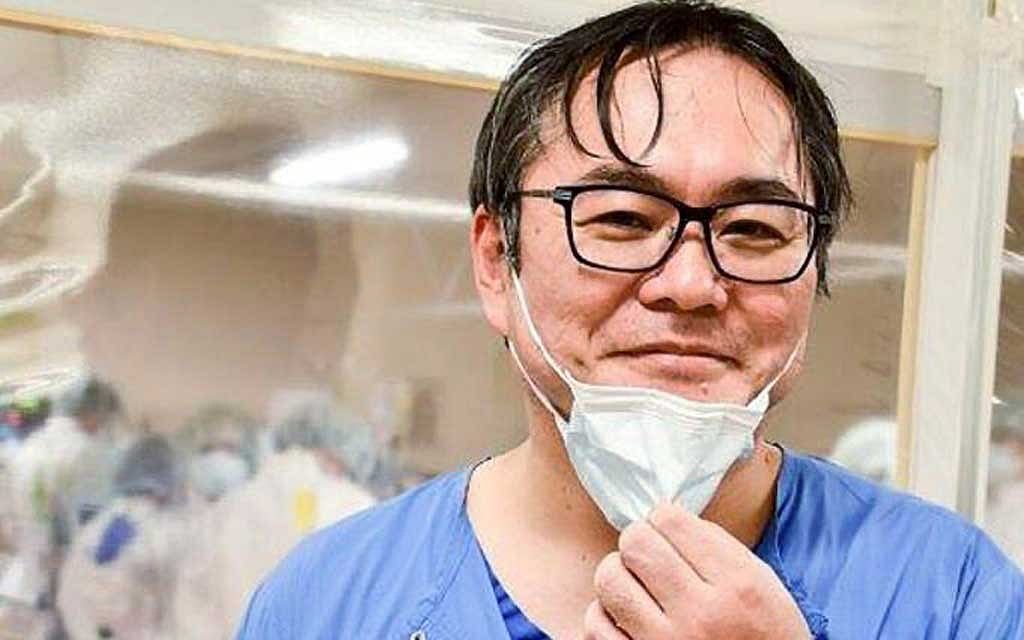
The hospital isn’t doing the heart surgeries that were planned. Now I’m focused on hooking people up to ECMOs for heart and lung support, and managing the machines.
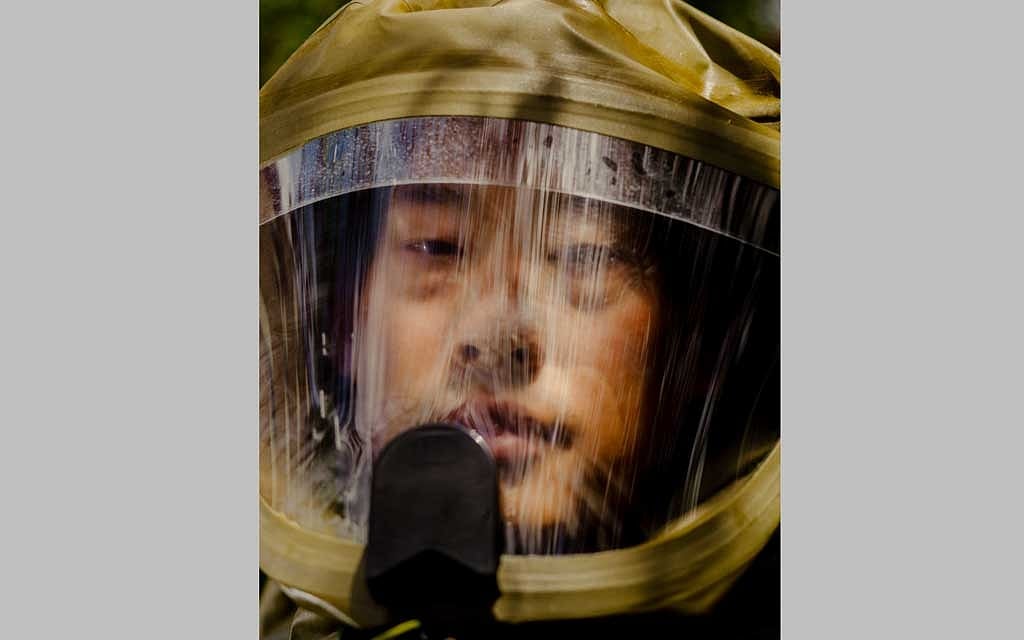
I have to be more accurate and safer than usual, but using senses that are now worse. Our face shields fog up in an instant. We’ve also started wearing three pairs of gloves. It’s like I’m trying to treat patients through a fogged-up shower curtain.
I can’t do things by myself the way I used to. I understand how important it is to work as a team. I’m trying to avoid disagreements about the patients’ treatment more than before. Even if there’s a difference of opinion in the team, we don’t have the time to discuss it at leisure.
Yesterday there was a request from another hospital to hook an elderly patient with advanced cancer to the ECMO. It was my boss’ decision. Thinking about the number of ECMOs and the need for treatment going forward, the chances of recovery and so on, they thought it wasn’t appropriate.
When you have to make that decision yourself, I think that’s really tough. There are patients coming to us who we absolutely must save. Finding a way to save them is our job.
When I’m off, I’m really careful that I don’t bring the virus home with me. I’m not seeing my family to make sure I don’t give it to them. I just shout, “I’m home” when I walk through the door. We have our meals at different times.
Claudio Del Monte, chaplain
Bergamo, Italy
I go around dressed like the medical staff, with protective eyewear, a good surgical mask and another wider one on top to protect it. I put a cross on my disposable gown using a felt pen so that people understand that I am the priest. I walk around holding a small cross and a small bottle of sanitiser. There are already bottles in the halls, but there are moments when a patient reaches out because they want to hold your hand. Like doctors and nurses, I wear more than one set of gloves.
I’ve never gone into a room to pray with one patient where the other patient didn’t want me to say a prayer with them as well. If they tell me that they are not Christian, there’s always time for a greeting because certainly the mystery of everyone’s life is intangible.
During the most delicate moments, you are accompanying someone heading toward the infinite and there is fear. So you tell them, “Don’t be afraid. You are going toward the light. Have faith that God is with you. Don’t be afraid.”
Those are the things we whisper in their ears.
It’s a medical situation, but it is also about the soul.
Melissa Todice, nurse
Shelton, Connecticut
It kills me when I hear, “Well, that’s what they signed up for.” I never took a pandemic nursing class.
The biggest change is worrying about myself. Going into the rooms and flinching when patients cough, even though we’re covered head to toe. Feeling guilty you flinched at all. Guilty that they can’t see my face, hear my voice, muffled under my face shield. Guilty that I can’t hear them. Then leaving them alone in that room.
The guilt has no beginning or end.
Amanda Dasaro, EMT
Staten Island, New York
When people are experiencing their worst moments, I feel good knowing that once I arrive I can make a difference. We did choose this job, but we are human and people have their limits. Some of us are just getting by, some of us are doing fine, and some of us are just not OK.
There was a moment in the very beginning of this when I looked my 7-year-old son in his eyes and said that I loved him and would see him later. I walked out the door with a few personal belongings and a few clean uniforms. I chose to live in temporary housing so that I could protect my family. Did I want to quit and stay home? Yes.
The calls skyrocketed. I have pleaded with patients to hold on while transporting them. I have told them to be strong while they are wheeled into a room full of nurses and doctors waiting to intubate them. I feel horrible for having to tell family members that they could not come with their loved ones.
There have been plenty of times these past few months when I have broken down and cried to my work partner. Sometimes I just hug her with no words needed. I often ask her, when will this end?
Enrique Boloña Gilbert, critical care doctor
Guayaquil, Ecuador
When you work in intensive care, seeing people die on a daily basis becomes part of your life. So very few things scare you. But I had never felt what I have felt in the past few weeks: Afraid of getting myself infected and putting my family at risk. I woke up fearing going to work. I went to bed afraid. It drains you.
As head of the ICU, I have to supervise everything, every case. Prioritising, organising, coordinating is very stressful. There was a time when we had 64 COVID-19 patients, 34 of whom were intubated. We have not had a single day off in the past six weeks.
Thank God, we never had to choose to remove ventilation from an old person to give it to a young person. Yet, I had a 44-year-old patient who died, and that hit me hard. I thought: “This guy is my age, he was pretty healthy. If I get infected, it could happen to me.” At that moment, I realised how fragile life is.
Amanda Ramalho, nurse
Pelotas, Brazil
I am afraid! I never thought I’d be living in this warlike situation. Still, I’m happy to be of help and I take a lot of care not to be contaminated.
The hospital provides us the PPE, but I buy more with my own money, like some glasses that were more comfortable than the standard ones provided.
Since we’re wearing the PPE, we have to be conscious of going to the bathroom. Sometimes I skip the bathroom altogether.
I first tested a patient for COVID on March 12, and I haven’t hugged anyone since then. I went to see my family once but didn’t get out of the car.
I live by myself. I miss my family and friends a lot.
Brooke Spence, critical care nurse
Las Vegas
My patients are watching the news and seeing how many people are dying around the world, knowing they are positive. They ask me if they are going to die. I tell them that we are all trying our absolute best to get them back home to their loved ones.
I chose a career in health care — specifically, critical care — because I wanted to help others in their most vulnerable and dire time of need. I put my faith in God and take precautions by properly donning, removing and disinfecting my personal protective equipment. But in the back of my mind, I can’t help but wonder how much the risk of infection increases from constant exposure.
Judit Amigó, endocrinologist
Barcelona, Spain
“Tomorrow you are not coming to this department, from now on you’ll be in a COVID ward.” That’s what I was told on March 14. I had mixed feelings of courage and fear. Attending to these patients was daunting. The moment I went through the door of their room, my muscles tensed and I could only think of how contagious the virus was. Lack of PPE contributed to the creeping feeling of risk. Patients kept being transferred to the ICU every day, many of them young, healthy people. We are all struggling together.
Thomas Lo, anesthesiologist
Queens, New York
On 9/11, I was working at Morgan Stanley on the 73rd floor of the World Trade Centre. It was actually my birthday. When the second plane hit my building, I felt the entire building shift and sway. I thought we were going to topple over. I thought, “I’m not going to survive this.”
An event like that gives you a different perspective on life. A few years later I realised that I was meant to be a doctor and make my life count by helping others.
Now we have another war in New York and in the world with COVID. I’m an anesthesiologist, so I’m intubating patients who are no longer able to breathe on their own. I’m right by the patient’s airway, often inches away, as I place the breathing tube. With the respirator, I feel safe.
It’s my duty. Every patient I intubate who is able to survive COVID is a life that is saved.
Dalifer Freites Nuñez, rheumatologist
Madrid
I have learned to work with the uncertainty of what will arise day by day.
Hadia Kohi, midwife
Feroz Koh, Afghanistan
There aren’t enough female doctors and specialists in Afghanistan. Afghans are so conservative, they don’t want male doctors to check their women. Women are losing their lives. That is why I decided to become a midwife. I save moms’ lives.
When the COVID-19 centre was established, I applied for a job.
I work 12 hours per day. Many people, including pregnant women, come for tests. Sometimes it is hard to handle, but it is a crisis and people must be kind.
A few days ago, a pregnant woman with symptoms came to the centre. Her husband said no men were allowed to check her, even if she died. We put the woman in isolation. My co-worker and I went to check her. She was panicking, she started screaming and fainted. For a moment I lost myself, but very soon I realised I needed to stay strong and help her. We took her blood and checked her blood pressure. When she gained consciousness, she started crying and said she wanted to go home. I told her the virus doesn’t kill everyone, and it isn’t a thing to be ashamed of. Anyone can get it. It was hard to convince her, but we made it.
Ferrukh Faruqui, family physician
Ottawa, Ontario
For a few years, I’ve thought of quitting medicine. In my family practice, I see affluent people who are discontented with their lives, the medical system and doctors. And they’re not afraid to say so.
This week, I went back to acute care medicine to look after COVID-19 patients. The first day, I stood tall. We gowned, gloved, donned our masks. And we went out, like soldiers do, to fight a common enemy.
I’m reading EKGs again, interpreting chest X-rays. Most of all, I’m connecting with patients in a way that matters again. It’s made me realise why I went into medicine 30 years ago.
Neo Liu, nurse
Wuhan, China
Before the epidemic, my work was very orderly and was largely the same every day. At the end of December, we started hearing about an outbreak, but because the government had still not publicly disclosed anything, we really didn’t know any details.
Then, at the beginning of January, I heard some colleagues say that the respiratory department was suddenly having a lot of patients die. Dr Li Wenliang [the whistleblower doctor who died of the coronavirus and became a symbol of many Chinese people’s anger and frustration] was my co-worker. Even though I never spoke to him, we worked in the same part of the hospital, and I recognised him.
When I first found out that he had tried to warn people about the virus, and then been censured by police, I thought, “Wow, is this outbreak really serious?” But at the time, the government was saying there was no human-to-human transmission, so I relaxed a little.
When I saw the news that he had died, I was so surprised. He was so young, how could this happen so suddenly? I couldn’t sleep. I cried all night. Five doctors at our hospital died during this epidemic.
Because Wuhan was locked down, from the start of the epidemic until now, I haven’t had any chance to visit my hometown. I can only video chat with my parents and tell them I’m OK, they shouldn’t worry. Now that Wuhan’s lockdown has been released, I think in a few days I will go home to see my parents.
Christelle Nancy Diane Mike, doctor
Yaounde, Cameroon
I have been attracted to the medical profession for as long as I can remember. It is in my nature to care for others and ensure that they are healthy, be it mentally or physically. What would have been the best career, if not as a medical doctor, to achieve that?
I am currently working with the Doctors Without Borders COVID-19 team in Buea, in the southwest region of Cameroon. During the first weeks of the outbreak in my country, my sister developed the symptoms of COVID-19. She called every night to complain about a severe headache, which I thought was related to her wearing glasses. She cried on the phone for days and added that she had lost her sense of smell and taste.
Travelling to her was not possible. Her fear of going to the treatment centre was another stress. But I helped in managing her case from afar, and she recovered. I am scared this pandemic will not be controlled soon. There is a high risk of having to bear this for longer than we wish. But my will to help has not changed a dime.
Ilaria Sommonte, nurse
Naples, Italy
When the coronavirus appeared in China, I never thought it would involve Italy so directly and in such a short time. I still remember an elderly, gentle-looking man who came to us with already well-known diseases, including Alzheimer’s. Each day, you lived a different experience with him. Sometimes he did not understand where he was. Other times he was convinced that I was his mother or his aunt. Other times, he silently watched me while I was doing my job.
COVID-19 worsened his situation, hindering him from breathing freely, making it difficult for him to even drink a glass of water. During a night shift, he passed away silently. That silence echoes in my head because his two daughters had called us daily to get news of their father, but that night they could not wail in pain or hug the man who raised them for the last time.
This COVID crisis has totally changed the way I live my life. I have always been shy and sensitive. I thought I was a weak person. Now I am discovering that I have power and courage above all my expectations. Often, in family life or in the workplace, I am giving strength to people much older than me who are blinded by anxiety.
Patricia Lafontant, ER nurse practitioner
Washington, DC
A 26-year-old patient asked me if he was going to die. He said he felt like he was.
This was a young, otherwise healthy African American male who was unable to speak in complete sentences due to shortness of breath.
I couldn’t answer that question — I really didn’t know. I will never forget how sick he looked. That’s when the virus became very real to me. That’s when I realised that we were dealing with something we had never seen before.
Daniel Akinyemi, ICU nurse
Montclair, New Jersey
Our ICU is very busy. It’s all COVID and there are so many deaths. A lot of the patients that I’ve been taking care of, they go within three days. The phone rings relentlessly with family and friends seeking updates. A lot of times you don’t want to take off your PPE to answer the phone because you could put yourself at risk. So usually I will put a glove over the phone so that I can answer.
About a month ago, I had a patient on a ventilator whose husband kept calling. When I spoke with him, he said he believed in God and the power of a miracle. We said a little prayer together over the phone and I asked, “Does she have a favourite song?” He said she’s been singing Blue Bayou ever since they met. When she does laundry, when she does her hair. I knew the song and I said, “I will sing it for her.”
I play songs for patients on my phone. I found out that you can have your iPhone in a sandwich bag and you can actually unlock it with your thumb. I sang it to her while it was playing. And I read her favorite verse in the Bible, Psalm 23. The monitor started going off. Basically she started sucking in the air that the ventilator was providing. I was on her right side and she was looking toward the right. So I quickly moved to the left, and she turned to the left. I called a couple of my co-workers and everyone was happy. She was weaned off the ventilator the next day. When a patient is recovering, it’s just like a baby was born, you know?
Colette Badjo, doctor
Montreal
I live in Canada but I am working as an emergency coordinator for Doctors Without Borders’ COVID-19 response in Ivory Coast. I am proud of what I do. The biggest challenge here is to get all the necessary supplies, such as drugs, personal protection equipment and other materials. We usually get supplies from international providers, but with all the restrictions to travel and closure of borders, it’s getting more and more difficult. We risk facing shortages when it’s crucial for frontline health workers to be protected in order to avoid any new contamination chains. This situation makes us think out of the box. For instance, here in Abidjan, we are now producing 1 million tissue masks in the local factories, in order to distribute them to the general population.
Francis X Riedo, infectious disease doctor
Kirkland, Washington
The improbability was striking — that two patients in one critical care unit in a small, community hospital in a suburb of Seattle would both test positive for COVID-19. It was Feb. 28.
With the first result, I suspected a testing error. With the second result, we understood that our 318-bed hospital had the first known cases of community spread in the U.S.
In that moment, our lives changed enormously.
One day, it dawns on you that your entire academic and professional life has prepared you for this moment.
Am I concerned about getting COVID-19? Yes. I turn that concern into practical measures: I wash my hands carefully, practice social distancing, check and recheck my PPE. Now, more than ever, my colleagues and I need to be alert, focused and present. Together, with others like us all over the world, we’re doing what we trained to do: control the spread, care for people, save lives and take care of each other.
© 2020 New York Times News Service