Published : 01 Jan 2018, 02:46 AM
Updated : 08 Apr 2022, 02:55 PM


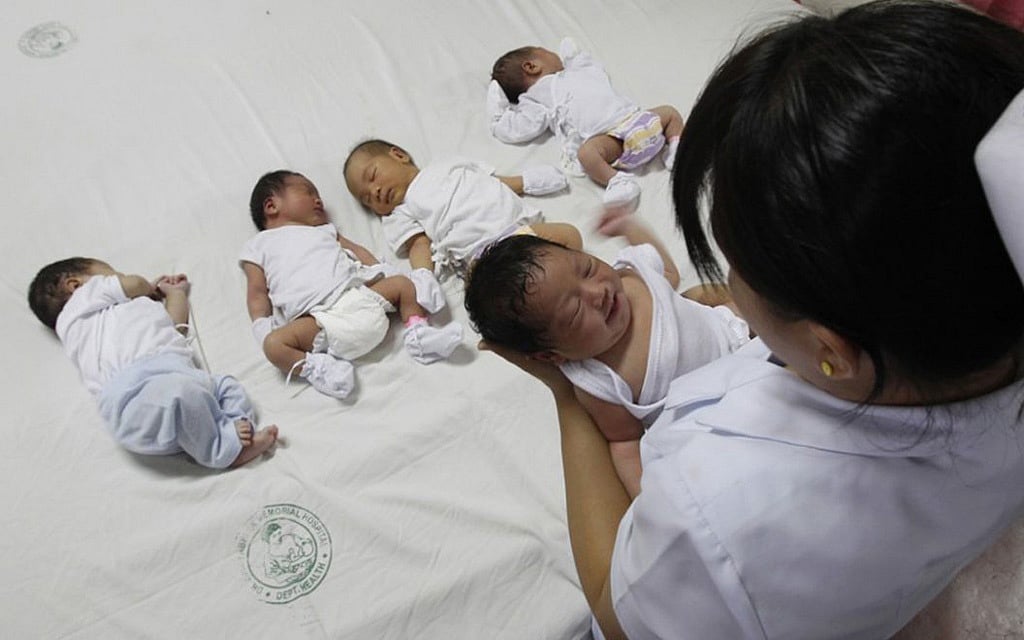
Bangladeshi babies will account for 2.17 percent of the estimated 385,793 babies to be born globally on New Year’s Day.
Kiribati’s Christmas Island, a small island in the Pacific, will most likely welcome 2018’s first baby; the United States, its last. Globally, over half of these births are estimated to take place in nine countries which are:
India — 69,070
China — 44,760
Nigeria — 20,210
Pakistan — 14,910
Indonesia — 13,370
The United States of America — 11,280
The Democratic Republic of Congo — 9,400
Ethiopia — 9,020
Bangladesh — 8,370
While many babies will survive, some will not make it past their first day. In 2016, an estimated 2,600 children died within the first 24 hours every day of the year.
For almost 2 million newborns, their first week was also their last. In all, 2.6 million children died before the end of their first month.
Among those children, more than 80 percent of all newborn deaths are due to preventable and treatable causes such as premature birth, complications during delivery, and infections like sepsis and pneumonia.
“This New Year, UNICEF’s resolution is to help give every child more than an hour, more than a day, more than a month - more than survival,” said Edouard Beigbeder, UNICEF Bangladesh Representative.
“We call on governments and partners to join the fight to save millions of children’s lives by providing proven, low-cost solutions.”
Over the past two decades, the world has seen unprecedented progress in child survival, halving the number of children worldwide who die before their fifth birthday to 5.6 million in 2016.
But despite these advances, there has been slower progress for newborns. Babies dying in the first month account for 46 percent of all deaths among children under five.
Next month, UNICEF will launch Every Child Alive, a global campaign to demand and deliver affordable, quality health care solutions for every mother and newborn.
These include a steady supply of clean water and electricity at health facilities, the presence of a skilled health attendant during birth, disinfecting the umbilical cord, breastfeeding within the first hour after birth, and skin-to-skin contact between the mother and child.
“We are now entering the era when all the world’s newborns should have the opportunity to see the 22nd Century,” said Edouard Beigbeder, UNICEF Bangladesh Representative.
“Unfortunately, nearly half of the children born this year likely won’t. A child born in Sweden in January 2018 is most likely to live to 2100, while a child from Bangladesh would be unlikely to live beyond 2091.”