Published : 08 Nov 2021, 01:19 PM
Updated : 14 Oct 2022, 07:02 PM


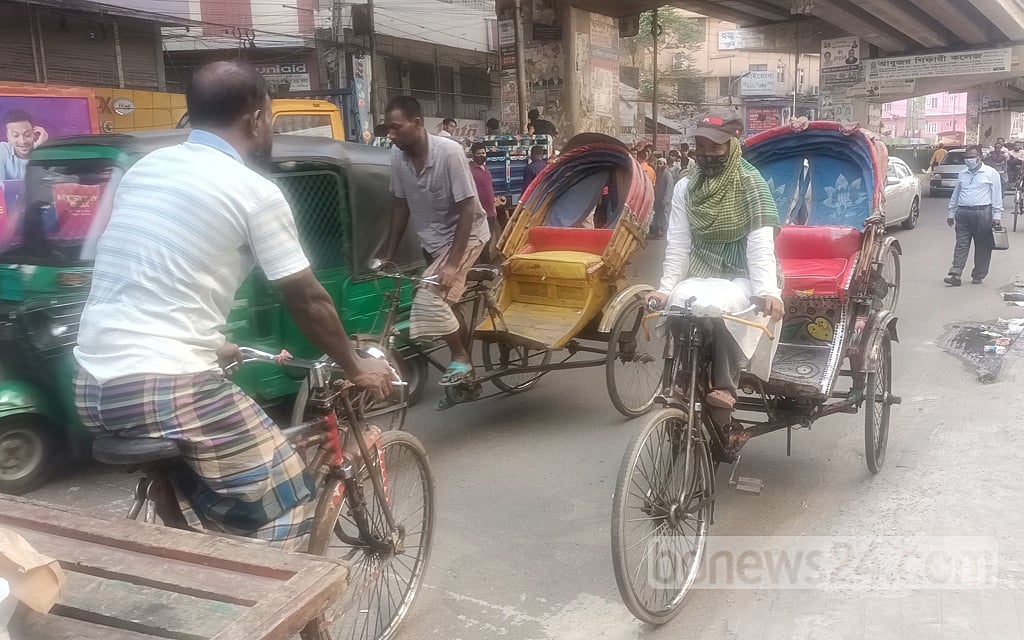
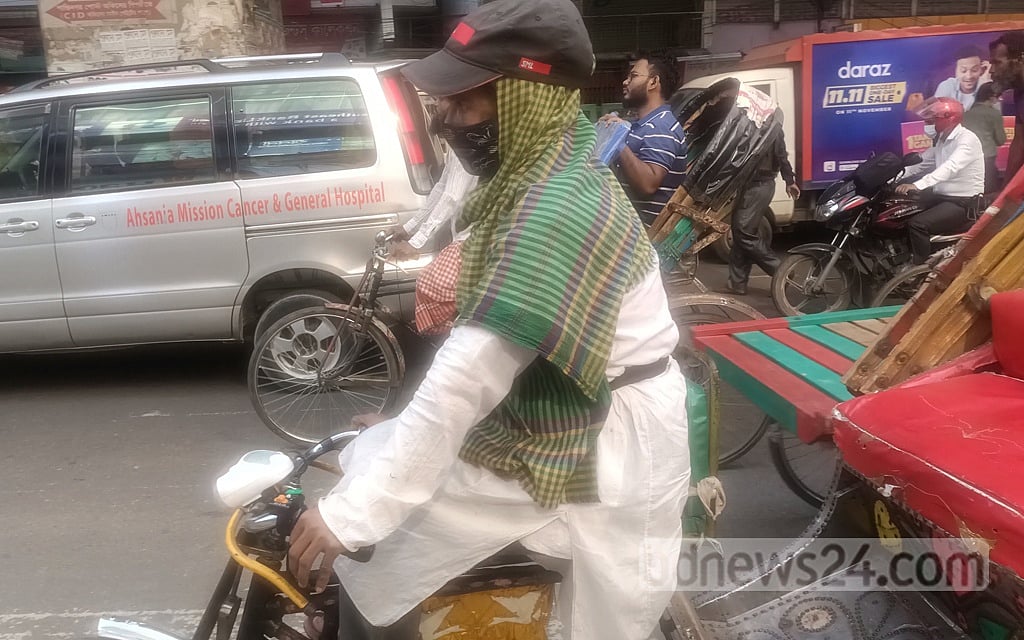
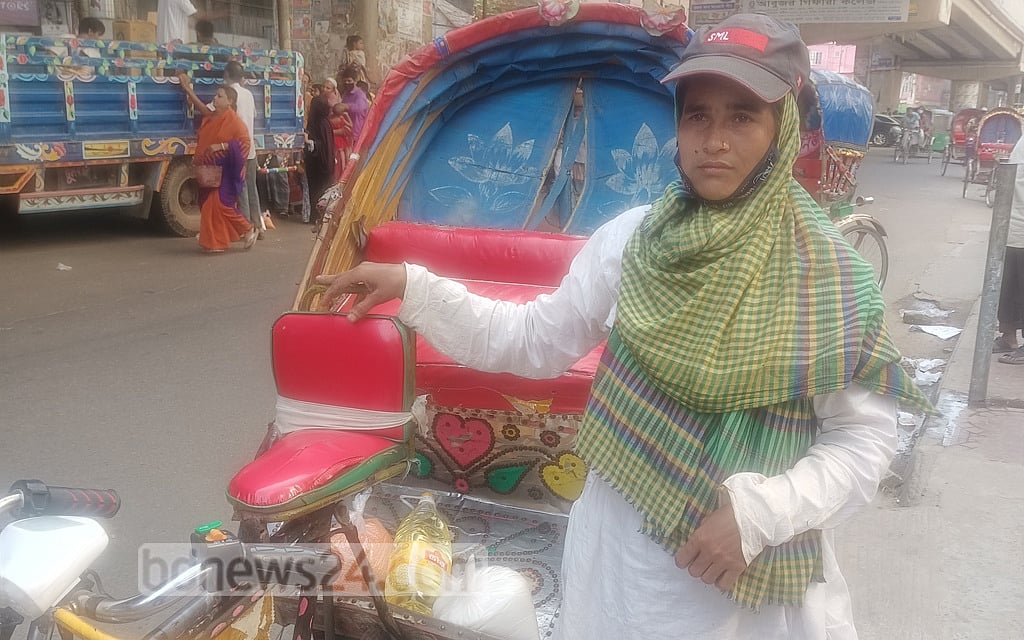
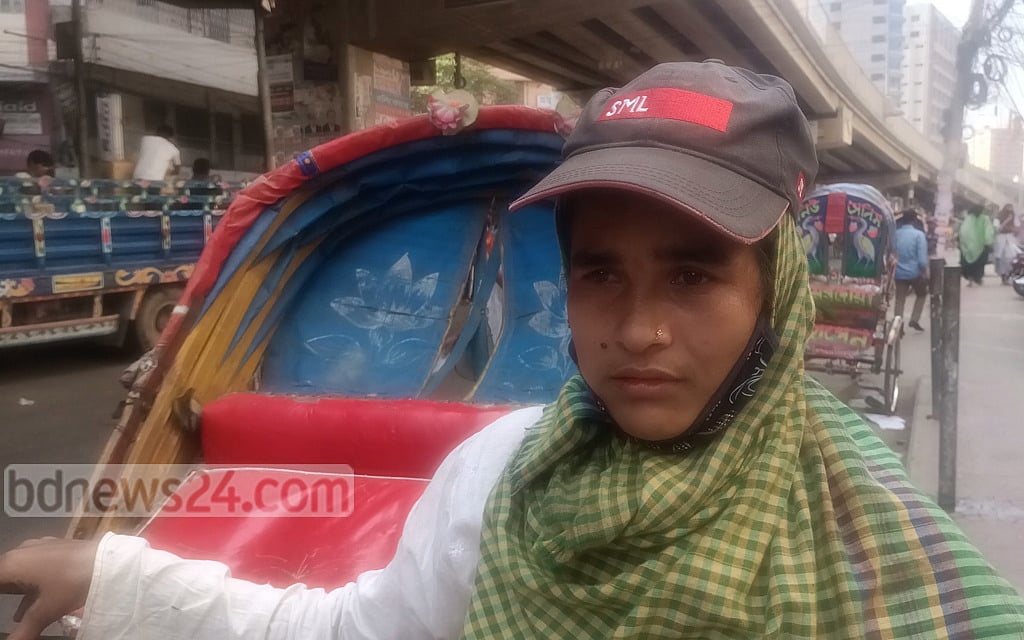
But a closer look, and the tone and timbre of the voice, will lead to the discovery of a woman who has been concealing her identity to earn a living and survive on the busy streets of Dhaka.
Nupur Begum has been working as a rickshaw puller for some time now.
After her husband left her for good, Nupur took responsibility for herself and her two daughters and has tried hard to provide them with a good life.
She told bdnews24.com the story of her life, why she was compelled to dress as a man and how she is working to overcome all the obstacles in her way.
Nupur, then 22, came to Dhaka from Shariatpur’s Damudda Upazila 14 years ago in search of a job. She got one at a readymade garments factory.
She met Sohel, another worker at the factory. The two developed a romantic relationship and then got married.
But, even in the early days, their marriage was marred by domestic violence, Nupur said.
"He started to beat me. And he got addicted to drugs as well. And, at the start, my parents did not accept our marriage."
Amid the fights, Nupur and Sohel started a family and had two daughters.
Nupur said her husband got into an extramarital relationship with another woman when her younger daughter was only three months old.
“All of a sudden, he stopped coming home. That woman wasn’t around either. Then I heard they had eloped.”
Nupur looked for Sohel in numerous places for the next five years. But, when Sohel finally returned to her, she did not take him back.
“He said he wanted to be with us and keep our family together. But I didn’t think it was right. I told him that I couldn’t stay with him because he left a three-month-old child. My daughters know very little about their father.”
After working at a garments factory for several years, the single mother took the job of a domestic aide in different houses. But it was becoming harder every day to keep the family going with her meagre income.
This financial need forced Nupur to change her profession six years ago and become a rickshaw puller. But she was worried how she would manage the work as it is often considered a job for men.
She got over the hesitation and decided to earn a better living and turn her dream of seeing her daughters successful into reality. She changed her appearance and disguised herself to avoid complications such as security issues and the reluctance of passengers to hire a woman for a rickshaw trip.
“As a woman, I work very hard as a rickshaw-puller. When people see a woman rickshaw-puller on the road, they may follow me and try to harm me. That’s why I wear a pair of pants and a long shirt to protect myself,” Nupur said.
“Another reason is that passengers won’t hire me if they see that I am a woman. But they approach me thinking I’m a man. I explain the situation to them and manage to get them to ride on my rickshaw.”
Because of security issues, Nupur only offers rides on her rickshaw from the morning to the early evening, she said.
“I could never make more than Tk 6,000 to 7,000 a month if I worked as a domestic aide. Now my family can be more comfortable,” Nupur said.
Nupur lives in the Manda neighbourhood. Her daughters are in Class V and Class VI at a local school.
“My daughters are very sharp, but I can’t give them proper guidance due to our financial constraints. I want to see them become successful after they get an education, no matter how hard I need to work,” said Nupur.
Though she is now earning more than she used to, poverty still looms over the family as the price of essentials keeps rising. Nupur has no other ideas on how to earn a living besides the hard life of a rickshaw-puller.
Nupur said she does not travel to her village home to meet her parents very often.
“My parents are so poor that they can’t even manage their own household. Even if they wanted to, they’re not in a position to help me financially.”
Nupur, who has been running a rented rickshaw for the past six years, dreams of buying her own one day.
Maybe then she could earn more for her family, she says.