


Published : 18 Oct 2020, 01:36 PM
Updated : 08 Apr 2022, 02:46 AM


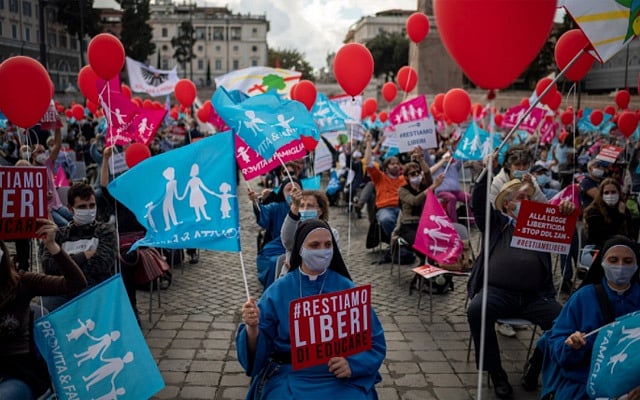
Demonstrations were planned throughout the country before a parliamentary vote planned for this coming week, with supporters framing the measure as a long-overdue means to provide basic human rights and protection from attack, and opponents depicting it as an overreaching step that would also suppress opinion and religious beliefs.
“We have been through centuries of discrimination,” said Marlon Landolfo, 21, who recounted a vicious homophobic attack on him and another man in northern Italy last month. “Now it’s 2020, and we are still discussing a law that protects us for what we are.”
The bill under debate would explicitly recognise anti-LGBT and anti-women hate crimes and hate speech by including those offences under an existing law that makes discrimination, violence or incitement to violence based on someone’s race or religion a crime punishable by up to four years in prison.
Current law does not have a specific designation for such offenses against LGBT people, and as a result, homophobic or transphobic assaults are tried on lesser charges than racially motivated or anti-Semitic ones.
The bill, which appears to have the support of a parliamentary majority, makes discrimination based on sex, gender, sexual orientation or gender identity an aggravating circumstance, which could mean added time to sentences.
Decades of efforts and multiple attempts to extend protections to LGBT people have failed in Italy, making the country an outlier among Western European democracies such as Britain, France and Spain. Italy approved same-sex civil unions in 2016 but does not allow same-sex marriage.
Alessandro Zan, a member of Parliament with the centre-left Democratic Party who proposed the bill, said its ratification would denote a significant cultural shift in a society with deep patriarchal and conservative roots.
“These people are particularly exposed to hate crimes,” he said. “This is why we particularly need to protect them.”
Some opponents of the bill say it will cross the line into censorship. They have presented hundreds of amendments — including one that mockingly asked to extend protection to bald or white-haired people — in order to slow down the legislative process.
© 2020 The New York Times Company













