Published : 15 Apr 2014, 02:18 PM
Updated : 19 Oct 2022, 07:27 PM


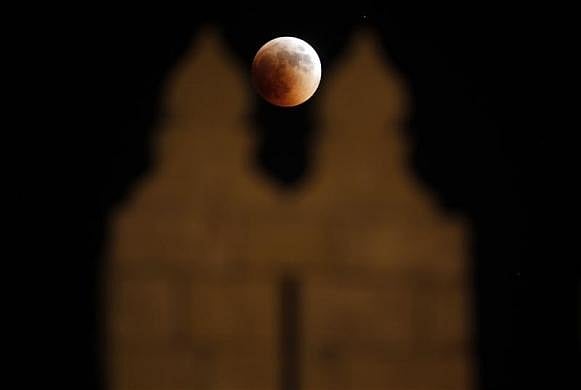
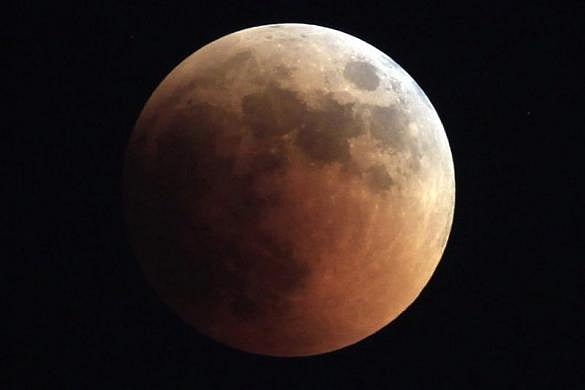
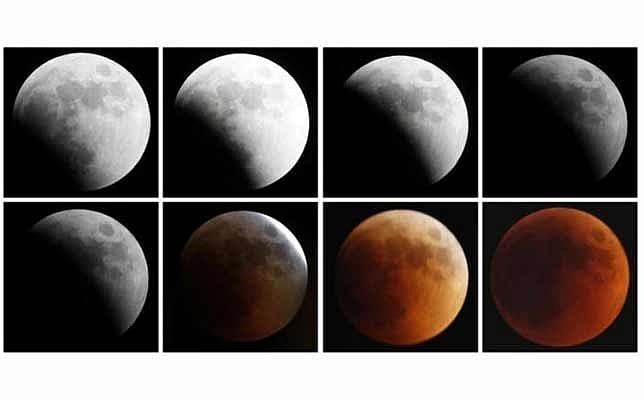
The lunar eclipse will unfold over three hours beginning at 1:58 am EDT when the moon begins moving into Earth's shadow. A little more than an hour later, the moon will be fully eclipsed and shrouded in an orange, red or brown glow.
Precise coloring depends primarily on the amount of volcanic ash and other aerosols floating in the atmosphere, SpaceWeather.com reports.
The moon is seen during a total lunar eclipse from Cairo June 15, 2011. During the eclipse, the earth is lined up directly between the sun and the moon, casting the earth's shadow over the moon. Credit: REUTERS
The celestial show will be over by 5:33 am, according to astronomers at the University of Texas' McDonald Observatory.
Eclipses occurs two or three times per year when the sun, Earth and the full moon line up so that the moon passes through Earth's shadow.
Tuesday's eclipse will be the last full lunar eclipse visible from the United States until 2019, NASA said.
Weather permitting, the eclipse will be visible from most of the country, with the exception of New England and Alaska.
Alaskans can get a view of the moon rising already partly eclipsed. From New England, the moon sets before the eclipse ends.
The eclipse also will be visible from Australia, New Zealand and all of the Americas.
Combination photo shows the moon as it undergoes a total lunar eclipse as seen from Jerusalem June 15, 2011. Credit: REUTERS
NASA plans live coverage of the eclipse on NASA TV, the NASA.gov website and on its social media accounts. Coverage begins at 2 am EDT.
Other websites offering live webcasts and commentary of the eclipse includes Slooh.com and the Coca-Cola Science Center at Columbus State University in Georgia