Published : 09 Oct 2026, 08:08 PM
Updated : 09 Oct 2026, 08:08 PM


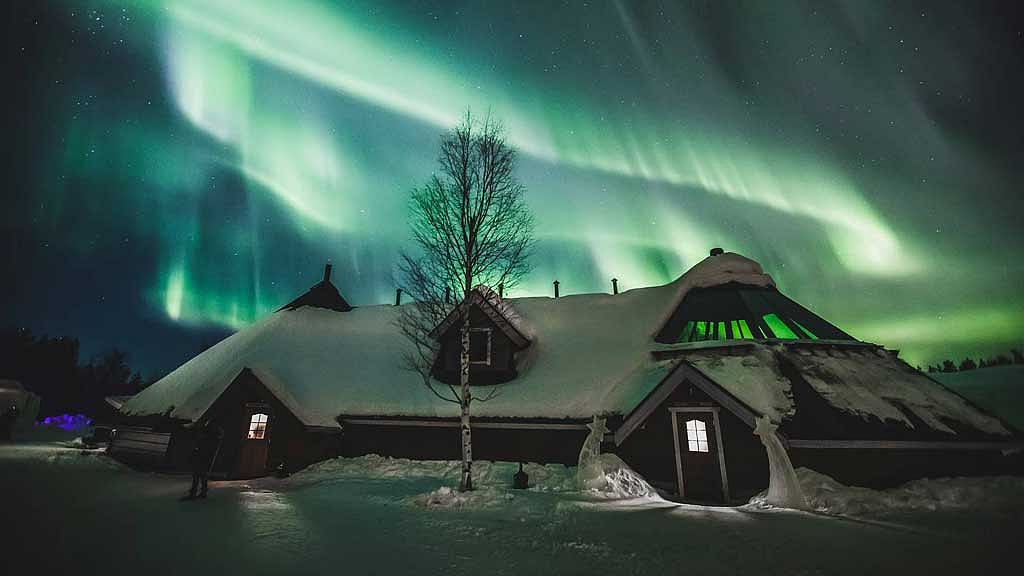
The aurora -- known as the northern lights in the northern hemisphere and the southern lights below the equator -- ranks among the most breathtaking sights in nature.
But the explanation most people have heard, that it is caused by particles from the Sun hitting our atmosphere, is only loosely accurate, according to The Independent.
The real story is considerably more dramatic.
The process begins with the Sun. Its outer layers are in a state of plasma -- a superheated gas in which atoms have been stripped into electrons and ions.
This plasma flows outward from the Sun in a continuous stream known as the solar wind, travelling through space until it reaches Earth.
Earth’s magnetic field, the same force that guides a compass needle, normally acts as a barrier.
Charged particles in the solar wind generally cannot cross magnetic field lines, so most of the solar wind is deflected around the planet. On the side facing away from the Sun, the wind stretches Earth’s magnetic field into a long tail shape.
The real action begins when the Sun erupts.
Explosive events in the Sun’s outer atmosphere can hurl massive clouds of magnetised gas -- called coronal mass ejections -- into space.
When one of these clouds reaches Earth, it can trigger a process called magnetic reconnection: a local breakdown in the structure of Earth’s magnetic field that releases enormous amounts of energy.
This energy drives powerful electrical currents in near-Earth space and generates strong electric fields that accelerate electrons to very high speeds.
These fast-moving electrons are then funnelled along magnetic field lines down toward the atmosphere above the polar regions, reports The Independent.
There, they collide with oxygen and nitrogen atoms, exciting them. When the atoms settle back to their normal state, they release that energy as light -- the shimmering, shifting curtains of colour that make up the aurora.
The colours vary depending on which atoms are involved and at what altitude the collisions occur. Oxygen at higher altitudes tends to produce red hues, while lower oxygen glows green. Nitrogen contributes blue and purple tones.
In other words, the aurora is not simply particles raining down from the Sun.
It is the visible result of a chain of events spanning hundreds of millions of kilometres -- from a solar eruption to a magnetic disturbance in near-Earth space to a collision of charged particles high above the poles.
And for those lucky enough to see it, the effect is unforgettable.