


Published : 05 Dec 2014, 08:45 PM
Updated : 19 Oct 2022, 07:45 PM


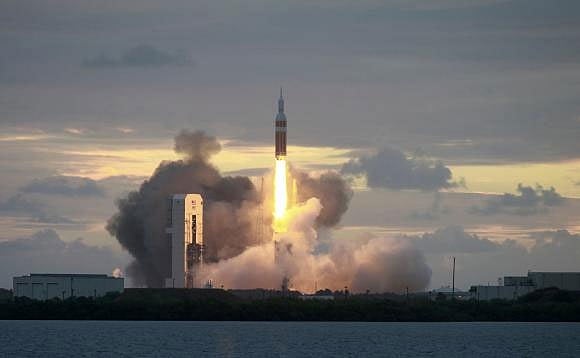
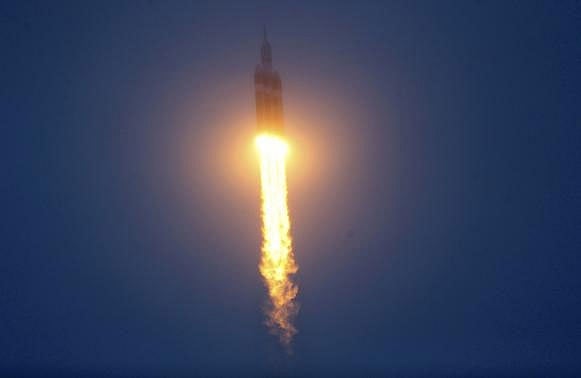
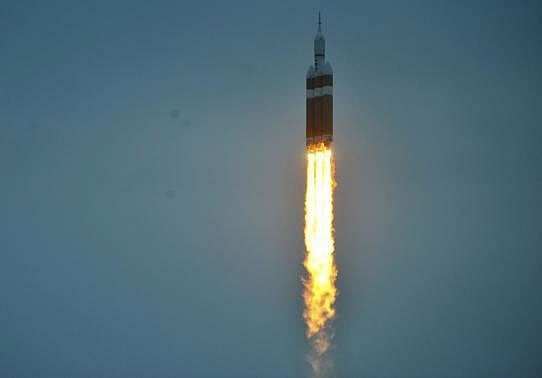
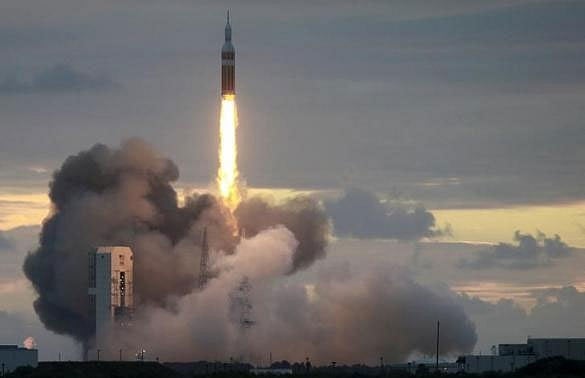
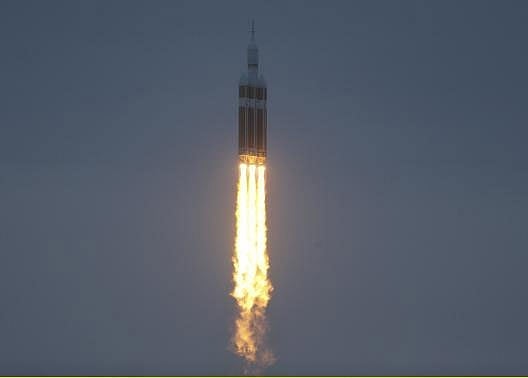
The Orion capsule blasted off aboard a Delta 4 Heavy rocket, the biggest in the US fleet, just after dawn from Cape Canaveral Air Force Station in Florida.
Three hours later, it reached peak altitude of 3,604 miles (5,800 km) above the planet, a prelude to the most challenging part of the flight, a 20,000-mph (32,000 km/h) dive back into the atmosphere.
Orion survived a searing, plunge through the atmosphere, heating up to 4,000 degree Fahrenheit (2,200 degree Celsius) - twice as hot as molten lava - and experiencing gravitational forces eight times stronger than Earth’s.
Over the next few minutes, a total of 11 parachutes deployed to slow Orion’s descent, including three gigantic main chutes that guided the spaceship to a 20-mph (32 km/h) splashdown 630 miles (1,014 km) southwest of San Diego, California, at 11:29am EST (11:29 EST).
The Delta IV Heavy rocket with the Orion spacecraft lifts off from the Cape Canaveral Air Force Station in Cape Canaveral, Florida December 5, 2014. Credit: Reuters
A rocket carrying the Orion spacecraft blasts off from Cape Canaveral Air Force Station, Florida December 5, 2014. Credit: Reuters











