Published : 01 Oct 2026, 05:23 PM
Updated : 01 Oct 2026, 05:23 PM


Astronomers say they have traced a puzzling type of bright X-ray flash to the collision of two neutron stars.
The Einstein Probe satellite, launched in 2024, has detected hundreds of these flashes from distant galaxies, reports The Independent.
Some have been tied to the deaths of massive stars, but many have remained unexplained because scientists could not pin down their distance or energy.
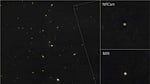
The breakthrough came when the satellite sent out an alert about a flash that lasted almost 10 minutes.
Telescopes including the European Southern Observatory's Very Large Telescope (VLT) and the Very Large Array (VLA) turned towards it within moments.
Their data point to the birth of a magnetar, a neutron star with an extremely powerful magnetic field, formed when two neutron stars merged, according to The Independent.
Such mergers were previously known mainly through brief gamma-ray bursts and gravitational waves.
The new findings suggest a magnetar can drive brighter, longer-lasting blasts, which could account for the other mystery flashes.
Niccolò Passaleva, who led the VLT follow-up, said it was the longest-lasting prompt X-ray flash ever recorded from a neutron star merger.
Co-author Eleonora Troja said she knew something unusual was happening as soon as she saw the signal's duration, says The Independent.
Because the team reacted quickly, they were able to study the explosion while it was still bright.
The findings are published in Science Bulletin in a paper titled "Minutes-long soft X-ray prompt emission from a compact object merger".