Published : 28 Oct 2026, 09:00 PM
Updated : 28 Oct 2026, 09:00 PM


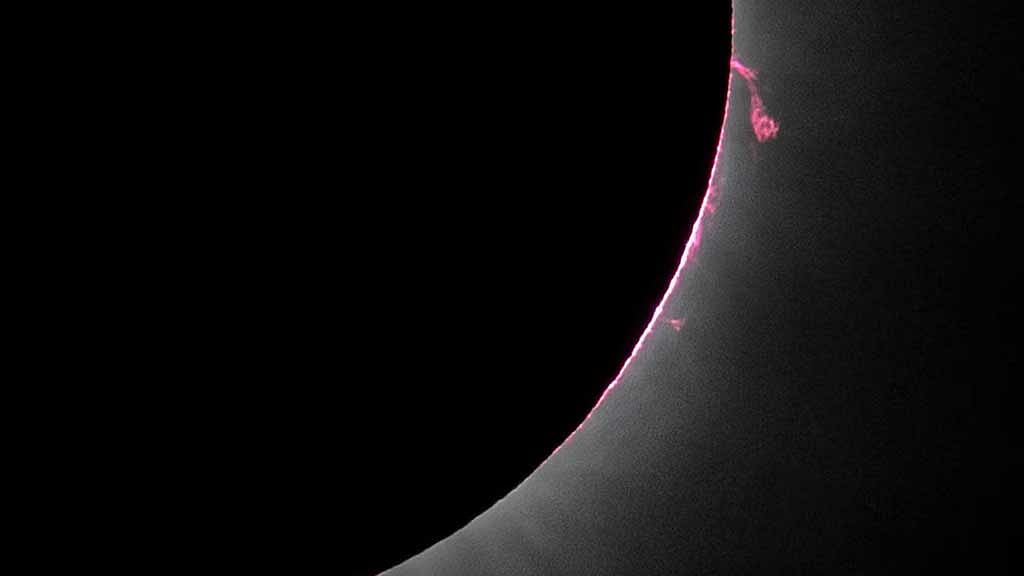
An ancient Chinese record of a solar eclipse from 709BC has revealed new insights into how Earth's rotation has changed over thousands of years, according to The Independent.
The eclipse was recorded in the "Spring and Autumn Annals", an ancient chronicle compiled during the Zhou dynasty. Modern astronomers know Earth's rotation has gradually slowed over millennia, largely due to lunar tidal friction, meaning the planet spun faster 2,700 years ago than it does today.
Previous astronomical models struggled to align with the historical text, which noted a total eclipse visible from the court of the Lu Duchy. Earlier calculations suggested a total eclipse could not have been seen from that location.
However, researchers from Nagoya University and the National Astronomical Observatory of Japan recently corrected long-standing errors in the ancient city's geographic coordinates using fresh archaeological data.
By resolving the coordinate discrepancy, scientists accurately measured Earth's rotation during the event and simulated the appearance of the Sun's atmosphere, The Independent reports.
The study, published in The Astrophysical Journal Letters, also highlighted secondary historical texts that may contain one of the earliest surviving written descriptions of the solar corona.
Researchers noted that the description aligns with a period when the Sun was returning to standard 11-year activity cycles following an extended period of low magnetic activity.