Published : 09 Oct 2026, 12:15 AM
Updated : 09 Oct 2026, 12:15 AM


Astronomers have detected the most distant fast radio burst ever recorded, a powerful blast of energy that travelled 10 billion years across the universe before reaching Earth.
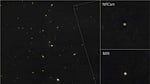
The signal, named FRB 20240304B, originated just three billion years after the Big Bang -- more than double the distance of the previous record holder.
It was picked up by the MeerTRAP Project using South Africa's MeerKAT radio telescope, with NASA's James Webb Space Telescope later identifying the galaxy it came from, reports The Independent.
Fast radio bursts are among the most mysterious phenomena in modern astronomy. Lasting just milliseconds, they release enormous amounts of energy, but their origins remain unknown. Theories range from exotic astrophysical objects to, more speculatively, alien technology.
The host galaxy offers some clues. It is small, metal-poor and undergoing intense star formation -- conditions that point toward young magnetars, a type of neutron star formed when massive stars explode, as the likely source.
Researchers say the signal carries information about the matter it passed through on its billion-year journey, making it a powerful tool for studying how galaxies and the invisible matter between them have evolved over cosmic time, according to The Independent.
"We have caught a fast radio burst from a time when the universe was only about three billion years old, and we have used that brief flash of radio light to learn about the matter it has travelled through over billions of years," said Manisha Caleb of the University of Sydney.
The findings are published in the journal Science.