
Published : 09 Oct 2026, 01:12 AM
Updated : 09 Oct 2026, 01:12 AM


For consumers, the egg has become another small calculation at the market counter. For farmers, it is a daily gamble: keep producing and absorb the losses, or cut back and risk losing the business altogether.
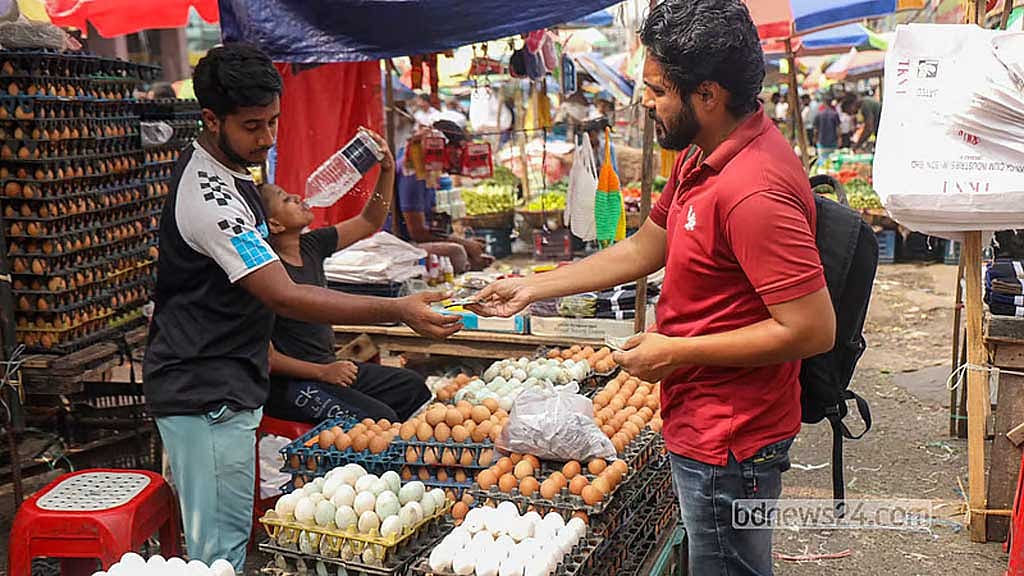
Egg prices have remained high for about a month. According to the Trading Corporation of Bangladesh, a dozen eggs cost as much as Tk 162 on Thursday, up from Tk 150 a month earlier. In neighbourhood shops, brown eggs were selling for Tk 160-165 a dozen.
Farmers say the squeeze comes from several directions -- bad weather, more expensive feed and medicine, transport costs and the cost of running generators during power cuts. Some say they are reducing production to contain their losses.
Cost of Laying an Egg
In Barishal’s Wazirpur, farmer Arifur Rahman says raising 1,000 day-old layer chicks for 180 days costs at least Tk 1.2 million before they become productive.
“I have a shed where I should be getting 60 cases of eggs, with 30 eggs in each case. Instead, I am getting 49 cases. The feed quality is not good, and the weather has been adverse. Altogether, egg production has fallen, but the cost per egg keeps rising,” he said.
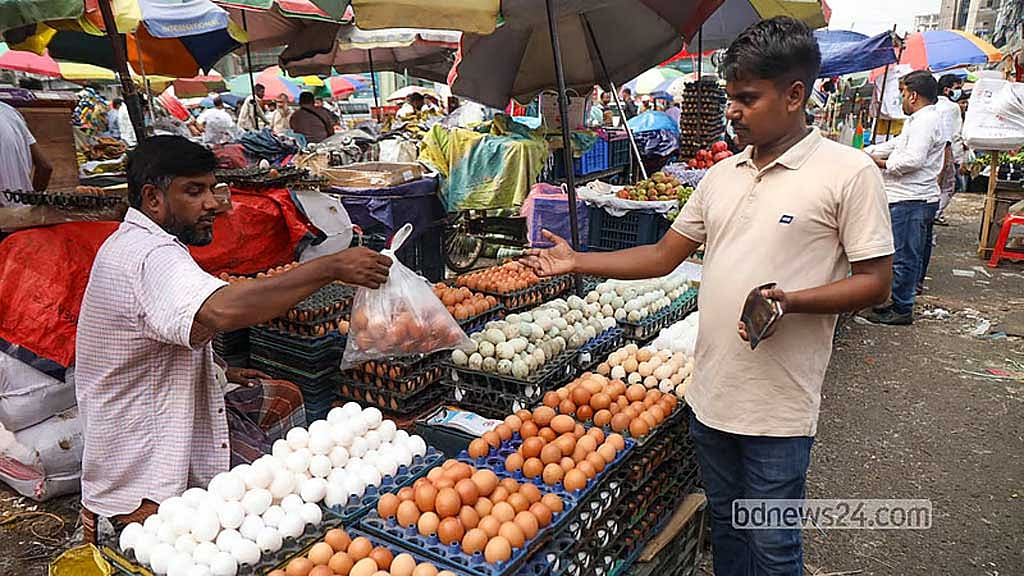
After that initial investment, Arifur collects up to 800 eggs a day from his 1,000 hens. The birds remain productive for about a year and a half.
“A laying hen eats at least 140g of feed a day. A bag of feed costs at least Tk 3,000. So 140g costs Tk 8.4. Medicine costs at least 80 paisa per egg. Electricity, labour, transport and generators cost around Tk 1.8,” he said.
That puts his production cost at roughly Tk 11 an egg, before other expenses.
The best-quality Grade A eggs fetch about Tk 10.7 each wholesale, he said. Grade B sells for Tk 3 less and Grade C another Tk 4 lower.
“Those who bring down egg prices are not farmers. If an egg is even slightly smaller, they put it in Grade B. I don't know where the Grade A eggs go. The Grade B eggs go straight into the market at full price.”
He added, “We are suffering huge losses in the market. I cannot simply walk away now. But holding on is also costing me. I cannot just throw away hundreds of thousands of taka in a single day.”
Feed Bill rises, Pressure Spreads
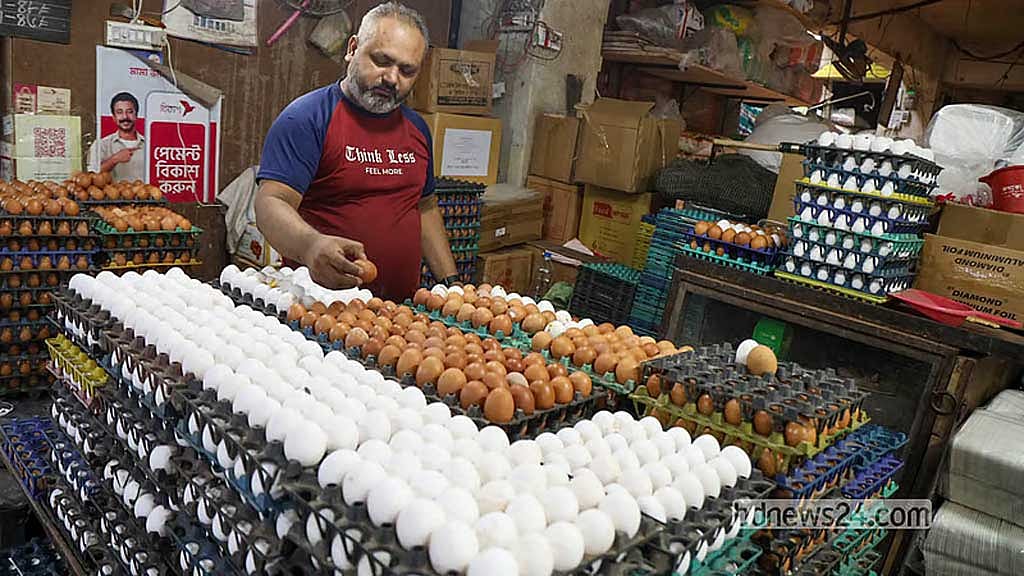
At Dhaka’s Ati Bazar in Keraniganj, starter feed was selling for Tk 3,350-3,400 a bag, grower feed for Tk 3,300-3,440 and Layer-1 feed for Tk 3,250-3,400.
Feed seller Din Islam said prices had risen sharply.
“The price has increased by up to Tk 250 a bag in the past two months. Corn has risen from around Tk 25 to Tk 40 a kilogramme. The dealer only says the price is rising and that we have to buy at a higher price,” he said.
Soybean meal, rice bran and corn are among the main feed ingredients. Bangladesh Feed Industry Association Secretary General Md Anwarul Haque said the prices of soybean meal and DORB had risen 20-27 percent, while some other ingredients had risen 35-40 percent.
“Electricity and fuel price increases have also raised the overhead costs of farms and feed factories. Rising international raw-material prices have increased overall production costs, and we fear those costs will rise further this year,” he said.
He estimated daily egg demand at around 70 million, against supply of about 65 million, with extreme heat and adverse weather also hurting production.
But he argued that eggs remain relatively cheap compared with other everyday foods.
“When an egg costs Tk 14 to Tk 15, there is fierce criticism. Yet a cup of ordinary milk tea costs Tk 20, a singara Tk 20, betel leaf Tk 10 and a cigarette Tk 25.”
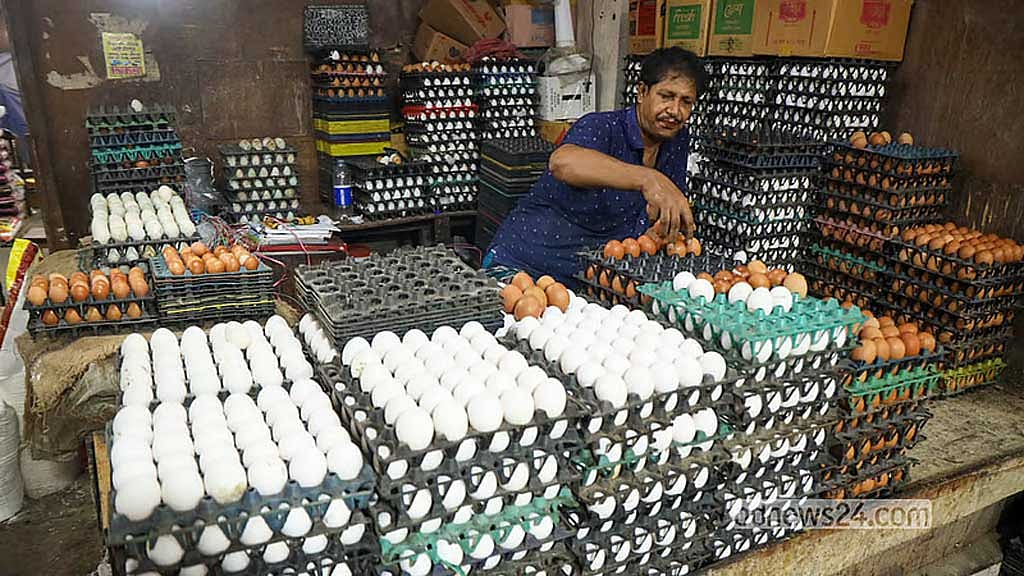
Who Controls the Price?
The industry’s smaller farmers say rising costs are only part of the problem. They accuse large companies and traders of manipulating supply and prices, allegations that industry representatives deny.
Mofizul Islam Mallik, chairman of the Bangladesh Marginal Poultry Industry Protection Association, said small farmers often have to sell eggs cheaply before they reach the market, while larger players can influence supply.
“Marginal farmers are being pushed out. If they cannot survive, corporate companies could eventually gain unchecked influence over egg and chicken prices. Consumers may have to buy at whatever price they set,” he said.
Tejgaon Egg Traders Multipurpose Cooperative Society President Amanat Ullah rejected the allegations.
“There is no question of a syndicate here. Those who say this are living in a fool’s paradise. We sell eggs at the price we buy them. No one can determine egg prices alone. The market price mainly depends on supply and demand.”
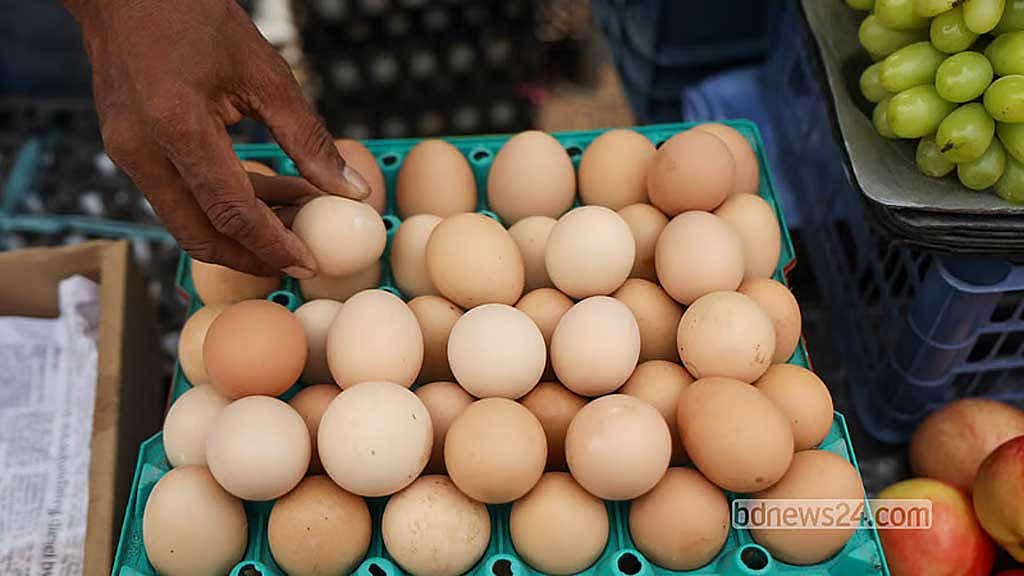
The Competition Commission fined People’s Poultry and Hatchery Tk 7.2 million last year after finding collusion over egg prices. Another company is facing a separate hearing over similar allegations.
Consumers Association of Bangladesh Vice-President SM Nazer Hossain said several groups, including wholesalers and large companies, were contributing to the instability.
“There has been no major event in the country that should have caused egg prices to rise this way,” he said, arguing that the recent fuel-price increase alone could not explain a trend that had already lasted a month.
For producers, however, the central complaint remains unchanged. As Bangladesh Poultry Association President Suman Hawlader put it: “They can lower the price if they want, or raise it if they want. But for those of us who produce eggs, our production costs are not falling.”