Hearing on one plea of SQ Chy Sunday
he war crimes tribunal rejects most of the petitions of the BNP MP from Chittagong Updates
bdnews24.com News Service
bdnews24.com
Published :
12 Apr 2012, 11:15 AM
Updated :
09 Aug 2022, 03:39 PM
Dhaka, Apr 12 (bdnews24.com) � After rejecting most of the petitions of BNP MP Salauddin Quader Chowdhury, the war crimes tribunal deferred hearing on one to Sunday.
One of the several petitions, eventually rejected, sought adoption of new rules of procedure contending that the 1973 Act and the rule of procedures framed by the tribunal were not adequate to conduct a fair trial.
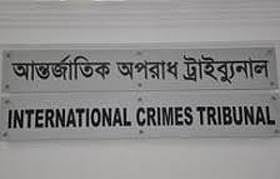
The International Crimes Tribunal, set up to deal with the crimes against humanity during the 1971 Liberation War, indicted the six-time MP from Chittagong for 23 charges on Apr 4.
Salauddin Quader's defence counsel Fakhrul Islam had filed a bunch of applications on the day of his client's indictment and prayed that the court hear them before passing the order.
On Thursday, the tribunal allowed an application seeking legible copies of certain documents provided by the prosecution.
Chairman of the three-judge tribunal Justice Mohammad Nizamul Huq said the order in this regard would be the same as those in case of similar applications and that legible copies would certainly be provided.
"If they cannot provide legible copies, you will have the opportunity to examine them. It is possible that they being really old documents cannot be copied legibly."
Regarding another petition seeking a transcript of the BNP leader's statements to the investigation officer during an interrogation in a 'safe house', the tribunal said it is unnecessary. "What he said there will not be allowed to be used against [your client]," said Justice Huq.
Fakhrul Islam kept insisting that the tribunal issue an order before proceeding to other matters despite the tribunal chief's assurance. Judge A K M Zaheer asked the defence counsel, "We are assuring you that his statements will not be allowed to be used against your client in an open court. And you still don't believe us?"
Fakhrul Islam relented then.
What is 'proceedings'?
Much of the debate that followed after Fakhrul Islam began to argue revolved around the definition of 'proceedings'.
A former prime ministerial adviser for parliamentary affairs when BNP chief Khaleda Zia was in office, Salauddin Quader had prayed for amending the rules of procedure since the 1973 Act and the rules of procedure were inadequate for a fair trial.
The Chittagong MP's counsel said he had not been given a copy of the investigation report because the Criminal Procedure Code or the Evidence Act did not apply to the proceedings at the tribunal.
The defence counsel cited Section 9.1 of the International Crimes Tribunals Act of 1973 saying that 'proceedings' began with the submission of formal charges against an accused.
Fakhrul Islam drew the tribunal's attention that according to Section 23, CrPC or Evidence Act did not apply to the proceedings. Thus, the counsel said those laws would apply before the proceedings began and in that respect grave injustice had been done to his client.
Newly-appointed tribunal member Justice Anwarul Haque asked whether the counsel could show any provisions that said those two laws would apply prior to the proceedings or show convincingly that it would indeed be the case. Then the tribunal would consider his pleas.
Fakhrul Islam, however, said that since it did not apply after the proceedings, which was mentioned explicitly, then he could certainly say that they would apply before they began.
Prosecutor Zead-Al-Malum said regardless of the defence counsel's attempts to divide the proceeding into such phases as pre-proceedings and so forth, CrPC or Evidence Act would not come into effect. "Proceedings mean all proceedings."
The tribunal chair, Justice Nizamul Huq, then asked prosecutor Syed Haider Ali, whether he had further submissions.
Prosecutor Haider Ali said Section 8, which outlines investigation, explained in detail about what was to be done in this regard and there was no further requirement to bring in other provisions.
With the arguments all but over on both sides, tribunal member Judge A K M Zaheer Ahmed said he had a few queries and began a discussion that appeared to end the matter quite decisively.
Judge Zaheer Ahmed told the counsel to go over the two sections he had referred to, which he did. The judge told him to read Section 9.1 first which states, "The proceedings before a Tribunal shall commence upon the submission by the Chief Prosecutor, or a Prosecutor authorised by the Chief Prosecutor in this behalf, of formal charges of crimes alleged to have been committed by each of the accused persons."
The tribunal member clarified that the tribunal meant the panel of judges the counsel was addressing. "So, proceeding before this tribunal begin with formal charge submission," he said.
The judge then went over Section 23 which states, "The provisions of the Criminal Procedure Code, 1898 (V of 1898), and the Evidence Act, 1872 (I of 1872), shall not apply in any proceedings under this Act."
The judge explained there three components that the law referred to � the tribunal, prosecution and the investigation agency. "Here it says 'any proceedings under this Act', which should include the other two components as well."
Justice Nizamul Huq rejected the petition in his order, which noted that while proceedings before the tribunal began with the submission of formal charges, CrPC and Evidence Act were barred for any proceedings under the Act.
The order also said that Fakhrul Islam's proposal to adopt more rules in order to ensure fair trial was rejected. Justice Huq, however, noted that the people were welcome to give suggestions about the rules but as for the defence counsel's instant suggestion, the petition was rejected.
SQ Chowdhury in ICT
The prosecution submitted formal charges against Salauddin Quader on Nov 14, 2011 and the tribunal took them into cognisance three days later.
The Chittagong MP was shown arrested for war crimes charges on Dec 20, 2010, five days after his arrest.
The investigating agency submitted a 119-page report with around 8,000-page data to the chief prosecutor on Oct 3 in a bid to prove allegations of war crimes during the 1971 Liberation War.
Besides Sayedee whose case is the most advanced stage and Salauddin Quader, Jamaat chief Matiur Rahman Nizami, secretary general Ali Ahsan Mohammad Mujaheed and assistant secretaries general Mohammad Kamaruzzaman and Abdul Quader Molla have been detained on war crimes charges.
The tribunal also sent Jamaat-e-Islami's former chief Ghulam Azam to jail on Jan 11 and will issue his indictment order on Apr 17.
The tribunal extended the conditional bail of former BNP MP Abdul Alim and member of Ziaur Rahman's cabinet, ordering the prosecution to place the formal charges on Apr 24.
bdnews24.com/ta/nir/2205h