


Published : 30 Nov 2015, 12:50 PM
Updated : 19 Oct 2022, 07:04 PM




The former prime minister surrendered before the court of Dhaka’s Ninth Special Judge Md Aminul Islam on Monday and sought bail.
The court has fixed Dec 28 to hear the charge framing in the case filed by the Anti Corruption Commission (ACC), which accuses her of causing a loss of Tk 137 billion to the state exchequer.
Her motorcade arrived at the court around 12.15pm. The court proceedings started soon after her arrival.
During the hearing, Khaleda’s chief counsel Khandker Mahbub Hossain said, “Khaleda Zia is ill. She has been on bail before and never exploited it unfairly.
The ACC’s lawyer Mosharraf Hossain Kajal opposed the statement. “The bail tenure of the suspect has expired. She misused her power while she was still the prime minister. She is accused of causing the State huge losses,” he said.
After a brief 10-minute hearing, the judge granted Khaleda bail.
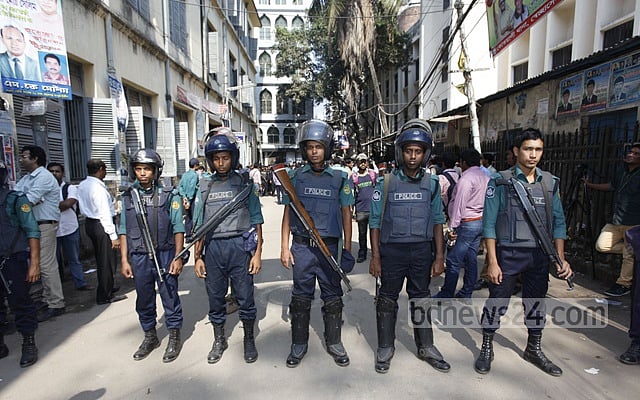
Security had been tightened around the court premises ahead of Khaleda’s arrival.
More than 100 police and RAB personnel had been deployed in and around the premises since Monday morning.
Traffic movement was restricted in the streets around the court area.
The ACC filed the case on Dec 9, 2007 after the BNP chairperson was arrested by the military-backed caretaker government.
Charges were pressed against 11 people, including Khaleda, on May 5, 2008, for allegedly causing a loss of Tk 137 billion to the state by awarding the gas exploration contract to a Canadian company, Niko Resources.
The High Court on July 9, 2008 stayed proceedings of the graft case and issued a ruling after Khaleda filed the petition. The stay order was upheld by the Appellate Division.
The case was stuck for the last seven years until the ACC moved to revive it earlier this year.
On Jun 18, the High Court rejected Khaleda’s petition questioning the legality of the case and lifted a freeze on the case proceedings.
It had also ordered the former prime minister to surrender before the court within two months after receiving the court order.













