November 24, 2026

Anti-liberation icon Ghulam Azam buried in independent Bangladesh

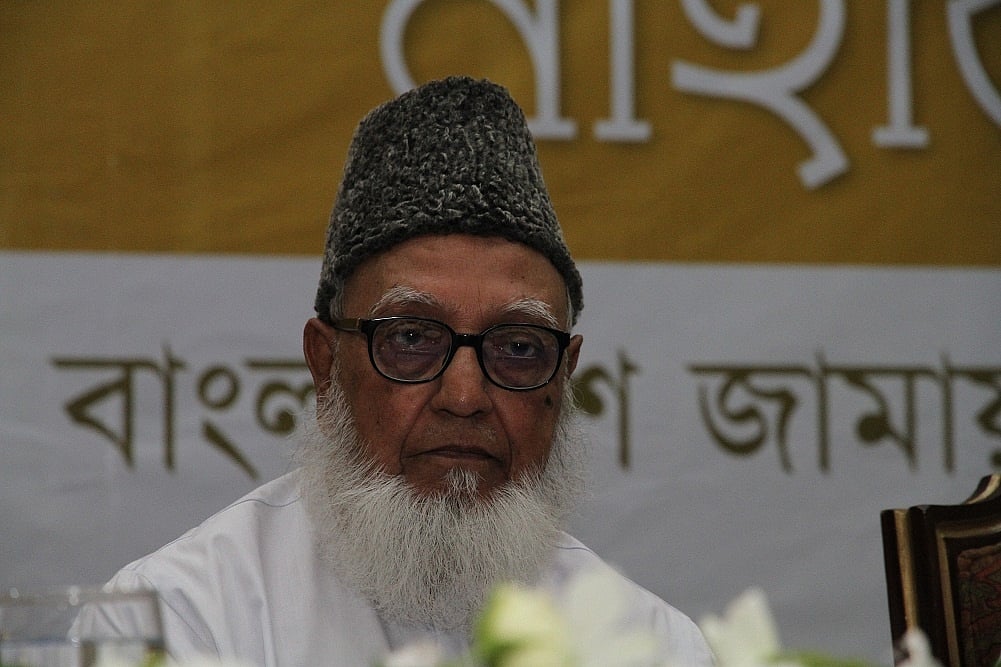
Ghulam Azam has at last got his last resting place in Bangladesh, the country he did not want believe in his lifetime.

Sumon Mahmud

Liton Haider and Monirul Islam

bdnews24.com

Published : 25 Oct 2014, 10:54 PM

Updated : 19 Oct 2022, 07:42 PM

Image
File Photo
Image
File Photo

Also Read:

War criminal Ghulam Azam buried

He even tried to destroy its very fabric even after Bangladesh was put on the map, having spearheaded the Jamaat-e-Islami’s efforts in 1971 to stop the nation’s birth.

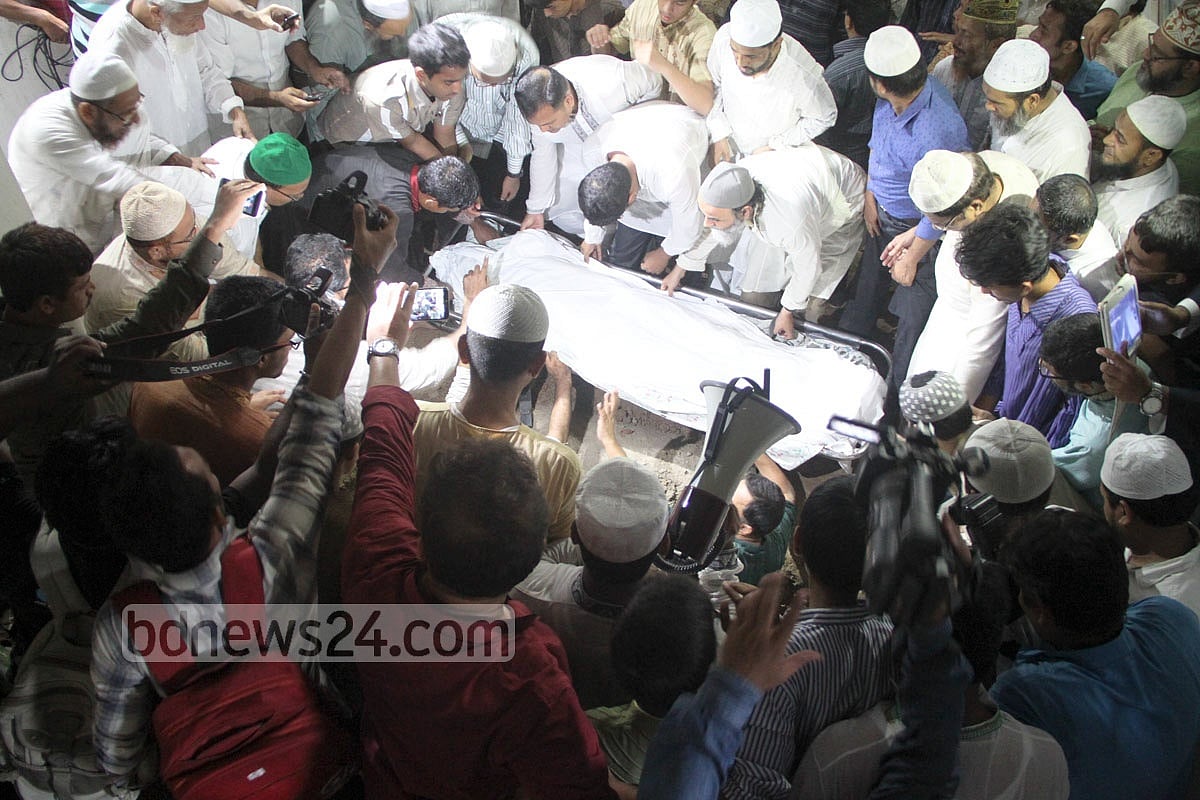
The top war criminal was buried at his family graveyard in capital Dhaka’s Moghbazar on Saturday.

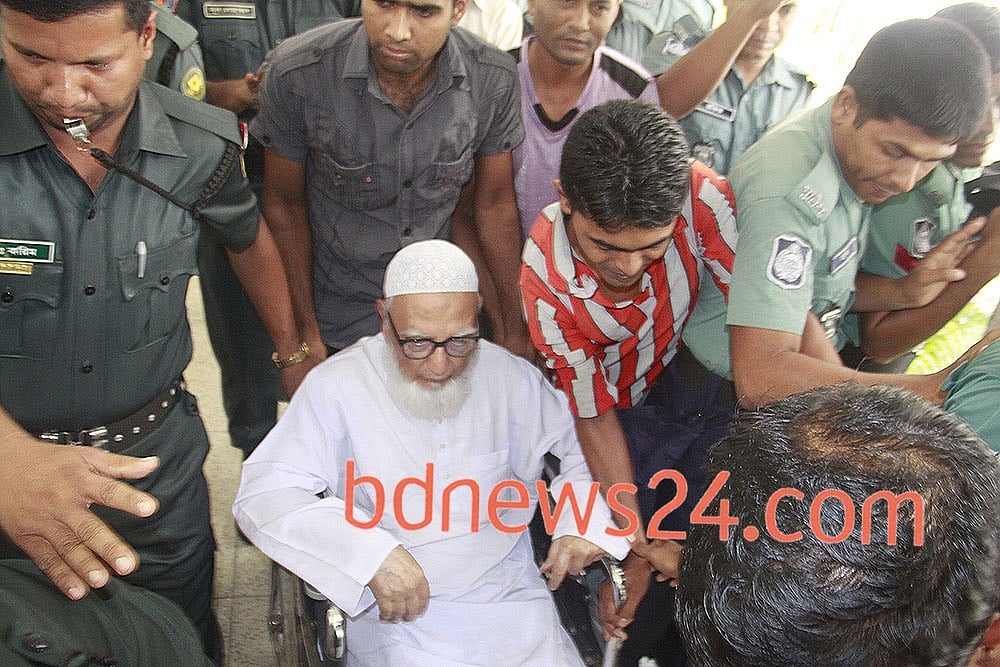
He died at a prison cell at Bangabandhu Sheikh Mujib Medical University (BSMMU) Hospital on Friday night.

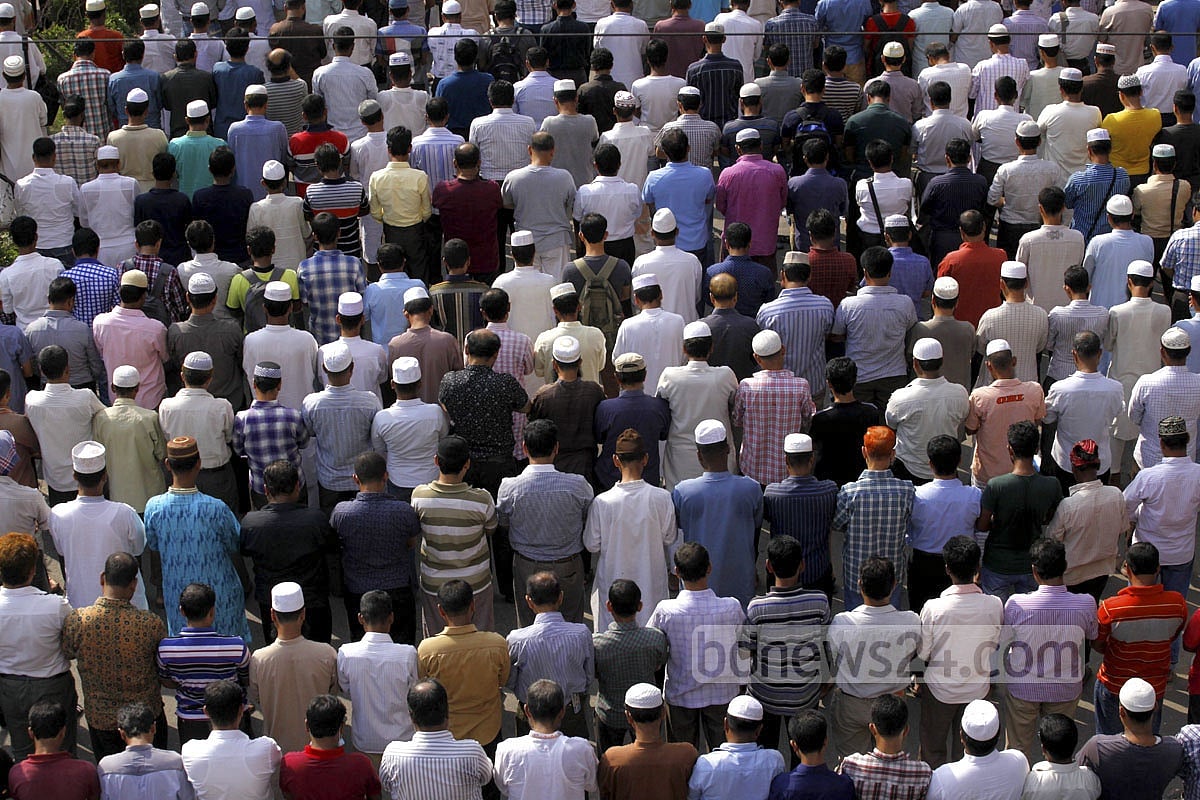
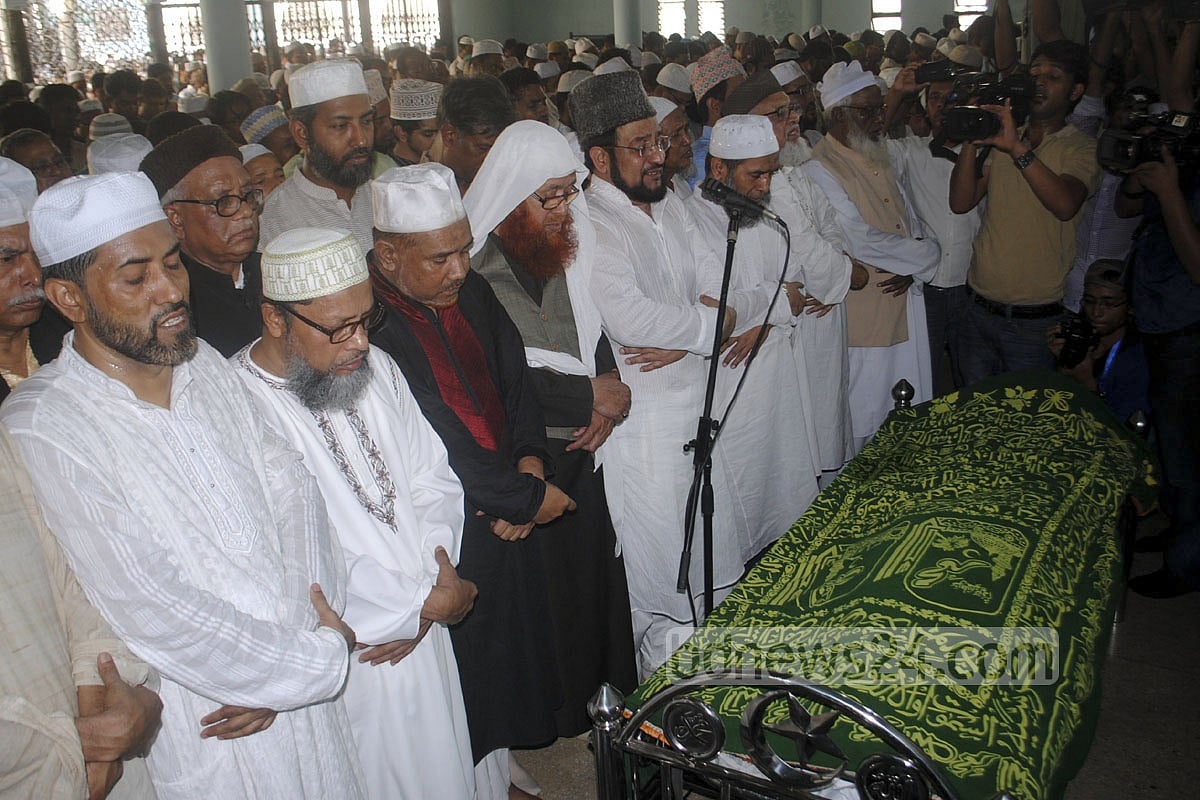
On Saturday noon, prior to his burial in the afternoon, Ghulam Azam’s body was taken to Baitul Mukarram National Mosque for the Namaj-e-Janaza attended mostly by leaders and activists of Jamaat and its student wing Islami Chhatra Shibir.

Bangladesh’s first war crimes tribunal in July 15 last year found Azam guilty of all five categories of crime -- conspiracy, planning, incitement, complicity (abetment) and murder -- committed during the 1971 Liberation War, and sentenced him to 90 years in jail.

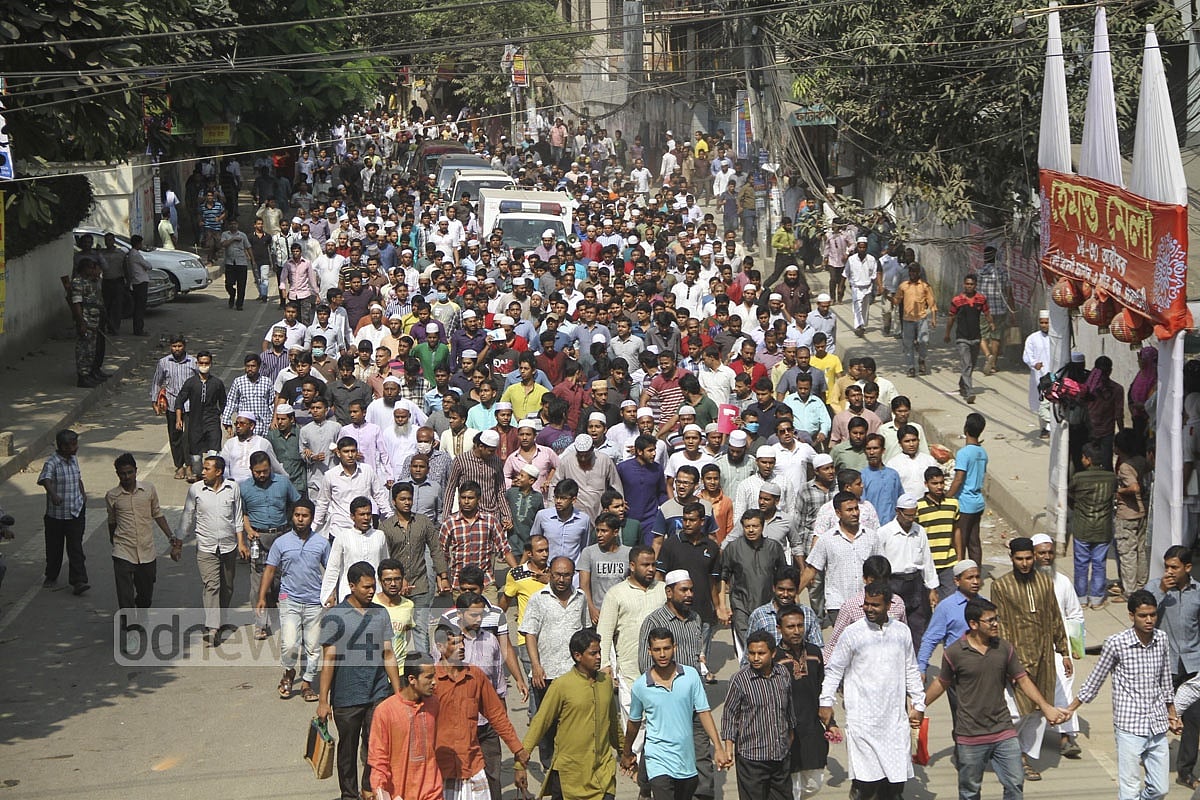
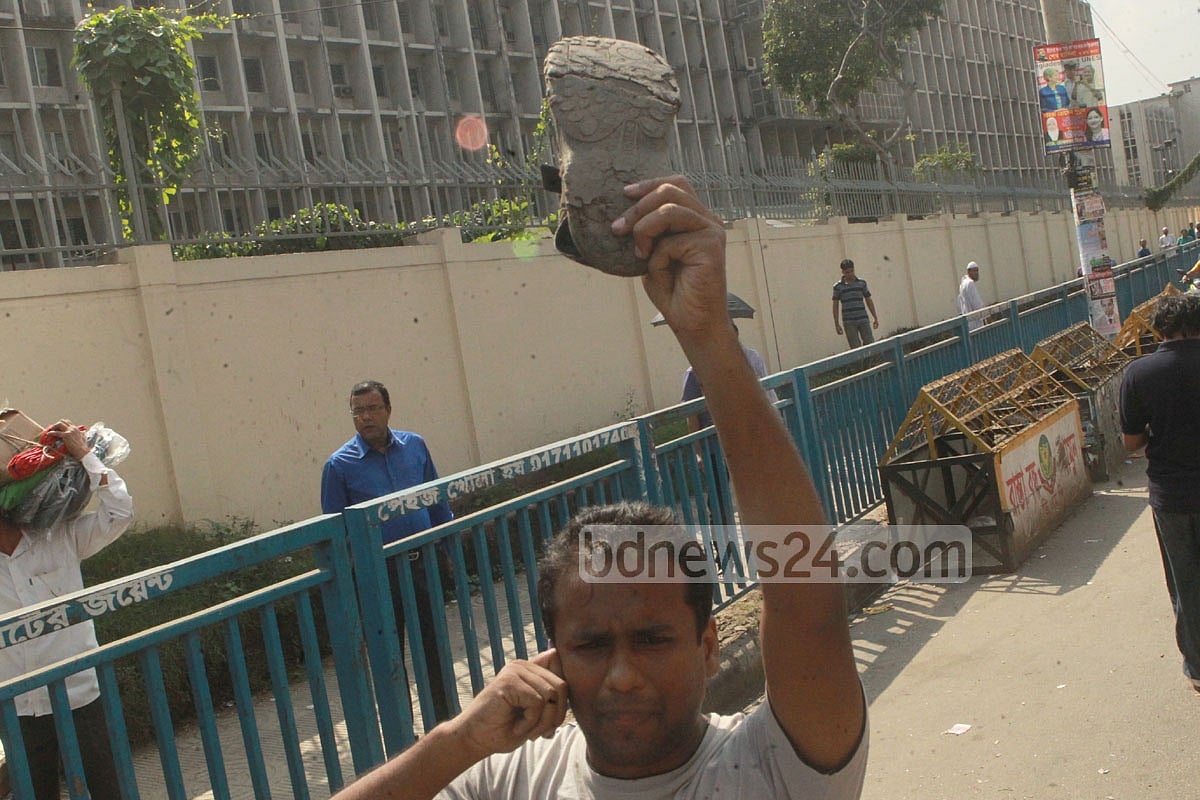
Delivering the verdict, the International Crimes Tribunal said Azam deserved capital punishment for his crimes, but had him serving the sentence in prison, "consecutively or till his death", considering his age and state of health. The 92-year old former Jamaat chief died while carrying out the sentence at the top public hospital’s prison cell. He was kept there ever since his arrest on Jan 11, 2012. Jail authorities handed over Azam's body to his family on Friday. Since then, it was kept in an air-conditioned hearse at the family's Moghbazar residence until the Janaza. Then the Jamaat supremo's body was taken to Baitul Mukarram for funeral prayers. It is the same mosque where he was thrashed with sandals nearly 33 years ago for his anti-liberation role. Azam's fourth son Abdullahil Amaan Azmi conducted the Janaza after the Zuhr prayers. Right before the funeral prayers, addressing the gathering, he claimed that his father was convicted and sent to jail in a false case. The ICT had found Ghulam Azam, who left deep emotional scars in the collective national psyche by engineering war-time atrocities, guilty of, among other categories, conspiring and planning crimes against humanity in 1971. The war criminal, who never apologised or regretted going against the Bangalees, only served one year and three months of his 90-year sentence. The Jamaat ran a massive campaign against Bangladesh's birth in 1971 and to destroy the Bangalees' dream of a free Bangladesh they wanted to make murder, loot and rape permissible in the name of Islam. And currently, many of this party's top brass are behind bars and standing trials for committing all these war-time crimes. Apart from the Jamaat leaders, many leaders of its ally from the BNP-led 20-Party Alliance attended Ghulam Azam's Janaza on Saturday. BNP chief Khaleda Zia's advisor Shawkat Mahmud was seen attending the Janaza but he represented a faction of the Bangladesh Federal Union of Journalists. He was accompanied by journalist leaders Ruhul Amin Gazi, Abdul Hye Shikdar, Jahangir Alam, among others. BNP's affiliate Jatiyabadi Ulama Dal chief Abdul Malek also joined the Janaza. Islami Oikya Jote Chairman Abdul Latif Nezami, Muslim League leader Nurul Huda, Labour Party Chairman Mostafizur Rahman Iran, Hamdullah Al Mehedi, Shamsuddin Parvez, Masud Khan, BJP's Salahuddin Matin Prakash, Islami Shashantantra Andolan's Maulana ATM Hemayetuddin, among others, joined the funeral prayer. Several student and cultural organisations had been protesting against Azam's Janaza and burial in Bangladesh since noon. Some of them threw sandals at the hearse carrying the Jamaat ideologue's body when it was crossing Paltan intersection and heading towards Baitul Mukarram. The incident angered the Jamaat, Shibir activists present there but no untoward incident took place as police promptly intervened and stopped the protesters. A few handmade bombs were exploded in the mosque area before the body's arrival. No casualties were reported. Police also could not identify the perpetrators. Police suspended traffic in several streets around the national mosque in an apparent effort to facilitate arrival of Azam's body. The streets were opened after the procession carrying Ghulam Azam's body left the mosque and reached the family graveyard at Moghbazar following the Janaza. Around 3:45pm, the icon of the anti-Bangladesh forces was buried. Out of all the convicted war criminals, apart from Azam, only Abdul Alim, BNP leader and a minister in Gen Ziaur Rahman cabinet in the late 1970s, died while serving his sentence. Most of the other convicts are Azam's followers including Jamaat's Nayeb-e-Amir Delwar Hossain Sayedee, Secretary General Ali Ahsan Mohammad Mujaheed and Assistant Secretary General ATM Kamaruzzaman. The party's Assistant Secretary General Abdul Quader Molla was hanged in December last year for his 1971 war crimes, the first execution of a war criminal in Bangladesh. Verdict in the war crimes case of current Jamaat chief Motiur Rahman Nizami is expected to be delivered any day. Ghulam Azam in 1971 led all these war crimes accused. The war-time Jamaat chief retired from politics in 1999, but played a key role as the ideological guru in the party's activities.

Born on Nov 7, 1922, in Dhaka's Laxmibazar, Ghulam Azam idolised and followed Jamaat founder Syed Abul A'la Maududi and joined the party in 1954.

Maududi was convicted and sentenced to death by a court in Pakistan for inciting religious passions. And his successor, Ghulam Azam committed similar crimes during the war in 1971 and got convicted after four decades.

Azam became the chief of East Pakistan Jamaat-e-Islami in 1969.

He was among the core group of right-wing backers of the Pakistani Army, who came out strongly in support of a united Pakistan and mobilised infamous social platforms centrally.

The Jamaat supremo masterminded the creation of the auxiliary forces, Peace Committee, Razakar and Al-Badr, which helped Pakistani army to carry out large-scale massacres.

Ghulam Azam also organised a vicious campaign against the independence of Bangladesh and spoke in favour of Pakistan in the Middle Eastern countries during the war.

He left the country for Pakistan in November, a few days before Bangladesh was liberated. Later, he went to London and stayed there for seven years.

After Bangladesh's founding father Bangabandhu Sheikh Mujibur Rahman was assassinated in 1975, Azam returned to Bangladesh in 1978 during BNP founder Ziaur Rahman's rule with a Pakistani passport as his Bangladeshi citizenship was cancelled after the war.

After three months Azam’s visa had expired but he never left Bangladesh.

On Jan 1, 1981, Azam was publicly thrashed with shoes at Baitul Mukarram when he went there to attend a funeral prayer.


After backing the BNP in forming the government in 1991, Jamaat in December that year declared Ghulam Azam as its chief, which evoked furore. It also sparked a movement led by 'Shahid Janani' Jahanara Imam's 'Ekatturer Ghatak Dalal Nirmul Committee'. The movement brought forth again the demand for trying all war criminals. Meanwhile, Ghulam Azam moved the High Court in 1998 and the court reinstated his citizenship. Top Jamaat leaders were arrested one after another after the Awami League came to power following the 2008 elections and initiated the process to try war criminals. On Dec 12, 2011, the ICT's prosecution pressed formal charges against Ghulam Azam and pleaded for his arrest. Later, following the tribunal’s order, charges were re-arranged and presented to the tribunal on Jan 5, 2012. Azam was brought to court in Jan 11 same year and was sent to jail that day. Since then, he had been spending the days at the BSMMU prison cell. His indictment hearing began on Feb 15 and the court charged him on May 13. After the verdict in his case was delivered in July last year, he was serving the sentence at the hospital's prison cell where he died on Thursday night.
Related Stories