Published : 12 Jan 2025, 10:09 AM
Updated : 28 Aug 2026, 01:15 AM


Five months have passed since the curtain rose on the stage of the interim government, an ensemble cast drawn together in a time of upheaval, tasked with stitching the seams of a nation frayed by deadly protests against the "authoritarian" Awami League rule.
Against a backdrop of administrative unrest and protests by disadvantaged professionals and workers, the transitional government dances a delicate ballet of reforms across the state's key institutions. Yet, in the heart of a nation teetering on the cusp of a seismic shift, the clamour for an election grows louder, echoing through the corridors of power and spilling into the streets.
The political theatre buzzes with anticipation and anxiety, with factions warning that any delay in scheduling the election risks plunging the government into a quagmire of controversy.
In the wings, the Bangladesh Nationalist Party, or BNP, a formidable force in Bangaldesh politics alongside the deposed Awami League, casts a wary eye on the unfolding drama. In its words, the recent setbacks are not coincidental but are orchestrated by remnants of the Awami League's 15-year governance, which still influence events from behind the scenes.
The BNP's concern is clear: each moment without a commitment to elections sets the stage for greater turmoil.
Amid these political squalls, the government, led by Muhammad Yunus, remains steadfast in its commitment to sweeping reforms. At the forefront of their agenda is the battle against systemic biases that once flourished under the toppled administration of Sheikh Hasina.
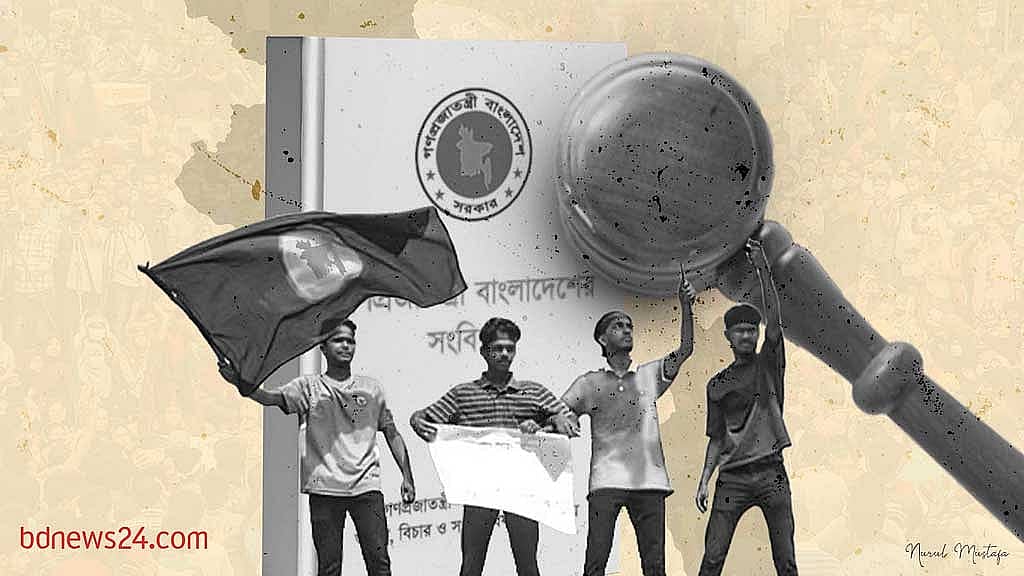
Fueling the reformist fire are the impassioned voices of the Anti-discrimination Student Movement and the National Citizens' Committee—vigorous advocates born from the ashes of revolution. The Movement, the vanguard that dismantled Hasina's longstanding rule, along with the Committee, a group formed by the movement and its supporters, wield significant influence. These groups are pushing not for a simple electoral battle but for a more radical approach: a "constituent assembly" election aimed at overhauling the constitution itself.
While political titans clash above, the common citizen wrestles with the more mundane monsters of daily survival—soaring prices and the spectre of unemployment haunt their waking hours.
In Old Dhaka’s labyrinthine Sutrapur area, Sobhani Mia, a cloth merchant of modest means, voices the weary sentiment of many. Speaking to bdnews24.com, he wondered: "How long until these reforms take root? Prices soar unchecked. There’s talk of no election—what’s going on?"
His frustration echoes through the market's din. "Just fix what's needed for a fair election. We can't let months and years slip by—it's not right."
The story of upheaval traces back to that fateful day, Jan 7, 2024, when the Awami League secured a victory in a questionable ballot shadowed by boycotts by the BNP, igniting flames of dissent that would eventually engulf its reign by July.
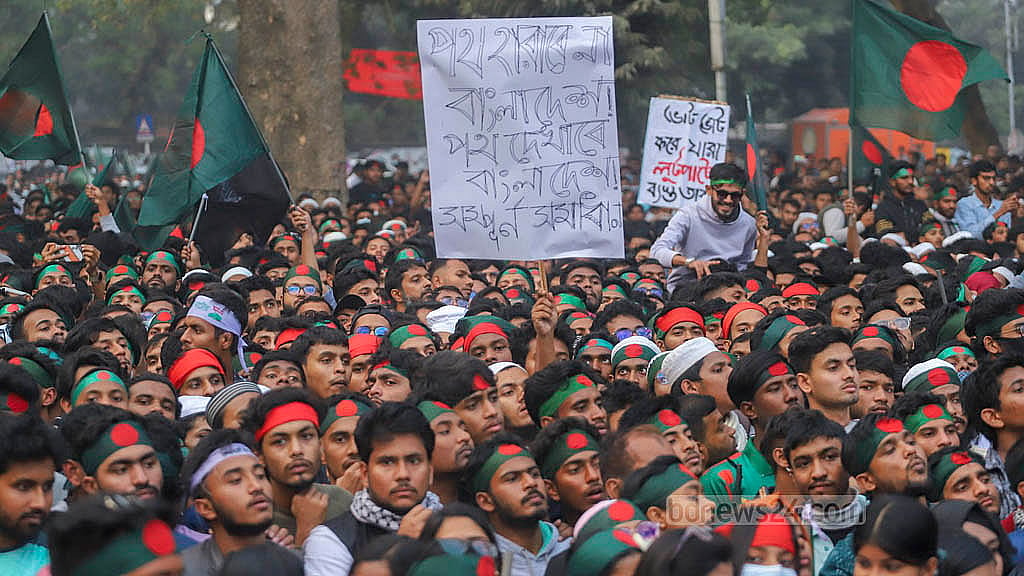
Ordinary people took to the streets in response to the violence during the student movement demanding reforms to the quota system for government jobs.
Eventually, the student-led movement evolved into an anti-government protest. The powerful impact of the protests led to the fall of the Hasina regime on Aug 5.
Hasina, Bangladesh’s longest-serving prime minister, once a towering figure in South Asia’s political landscape, fled to India seeking refuge.
In an unprecedented turn of events, the country remained without a government for three days until an interim administration, led by Nobel laureate Yunus, assumed power on Aug 8, following the dissolution of the parliament.
To prevent the rise of another “authoritarian” government like the Awami League regime, the interim government formed a total of 11 commissions last October and November to oversee reforms across different sectors of the state.
Despite these initiatives, political parties involved in the student-led protests have been calling for the general election or the 13th parliamentary election to be held soon.
Although the interim government aims to balance reforms with elections, parties are closely monitoring the situation to prevent any delays in the election process due to the ongoing reforms.
Chief Advisor Yunus has provided two possible timelines for the general election.
He also said there will be another round of dialogue with political parties after receiving the report from the reform commission.
If political parties do not demand substantial reforms, the government is expected to hold elections by the end of the year.
However, if the reform process continues, elections may be held in the first half of next year.
On Jan 8, amid discussions regarding the national election, the chief adviser spoke of preparations for local government elections.
The following day, Advisor Mahfuj Alam said the government would consult political parties to determine the path forward.
However, he did not specify whether local elections would be held before or after the parliamentary election.
The reports from the six initial reform commissions are expected this month.

By Jan 15, reports on electoral systems, police, the Anti-Corruption Commission, or ACC, public administration, and constitutional reforms will be submitted.
The Judiciary Reform Commission’s report is expected by Jan 31.
At an event in Munshiganj on Monday, Housing and Public Works Advisor Adilur Rahman Khan confirmed that the chief advisor had already set a timeline for the general elections.
He added that after receiving the reform commission's reports, the date for the elections would be determined after consulting all political parties.
To advance the reform process, alongside the formation of the National Consensus Commission, Yunus outlined a possible election timeline in his address to the nation on Dec 16, 2024.
He said, "The election could be scheduled between the end of 2025 and the first half of 2026."
On Jan 4, during a meeting with British MP Rupa Huq, the interim prime minister reiterated these two possible timelines for the elections.
Earlier, a search committee was formed under the law enacted during the Awami League government to reorganise the Election Commission.
WHAT BNP, JAMAAT ARE SAYING
From the outset, the BNP and the Jamaat-e-Islami have called for “reasonable” time for reforms.
However, recently, both parties have been pushing for elections to be held by the end of the year.
The BNP, which has been out of power since 2007, says it is not against reforms.
However, it sees a problem in holding elections only after all reforms are completed.
The party also has its own 31-point reform proposal.
The BNP says that crucial reforms must be completed before elections, and this should be done as quickly as possible.
The remaining reforms, they argue, should be implemented according to the decisions of a democratically elected parliament.
The BNP leaders have been consistently making statements on the election, while also holding meetings with allied parties to determine their next steps.
After the meetings, they plan to announce their decision.
A two-day national dialogue on elections and reforms, organised by the Forum for Bangladesh Studies, or FBS, took place in December 2024.
During the first day of the dialogue, BNP Secretary General Mirza Fakhrul Islam Alamgir said delays in reforms will only increase problems, highlighting the implementation challenge.
On Jan 9, speaking at an event, Fakhrul urged the interim government to create a framework where reforms can be implemented effectively.
He said, “Reforms are definitely needed. But the power behind those reforms must come from an elected parliament; an elected government.
“Without this, we can never legitimise reforms. Only fascists can do that.”
The BNP leader also warned against political division.
"Since Hasina fled, we’ve struggled to rebuild trust among ourselves, and we can't seem to unite.
“There's unhealthy competition to cling to power."
Earlier, on Dec 9, the BNP had opposed the plan to update voter lists by going door-to-door, and instead, they demanded that reforms be completed within three to four months, with elections held soon after.
Jamaat-e-Islami, which initially supported the idea of completing reforms before elections, has now become more vocal about holding elections.
On Jan 3, at a rally in Natore, the party chief Shafiqur Rahman urged the interim administration to wrap up "crucial" reforms swiftly and hand over power to an elected government.
"In this election, entrusting the nation's responsibility to those whom the people love and trust will ensure they respect the citizens of the country," he said.
After Local Government Reform Commission Chairman Tofail Ahmed remarked that "people want local government elections first," the interim government responded, sparking another debate.
BNP has made it clear they will not accept local elections before the general election, while Jamaat and the National Citizens' Committee have expressed differing views.
CPB, NDM, REVOLUTIONARY WORKERS PARTY VIEWS
The Nationalist Democratic Movement, or NDM, chief Bobby Hajjaj, told bdnews24.com: "We’ve always demanded elections at the earliest possible time.
“Whether it takes six months, nine months, or a year, it must be within this year."
He added, "Five months have already passed, and extending it for another year or more is illogical.”
The Communist Party of Bangladesh, or CPB, has called for announcing the election date by Jan 15.
At a rally in Dhaka on Jan 3, the party’s General Secretary Ruhin Hossain Prince said: "Don’t confine the idea of reforms to mere words.
“Engage in discussions with political parties and others to define clear objectives."
He added, "To prevent non-political forces from prolonging their authority, elections must be held promptly."
Saiful Haque, general secretary of the Revolutionary Workers’ Party and coordinator of the Ganatantra Mancha, believes the Election Commission can finalise preparations by May or June.
"They’ve already published a draft voter list and will verify it door-to-door from the 20th of January. The process can be wrapped up by April or May, enabling elections by October, November, or December," he said.
"By February-March, they can sit with political parties, finalise the reforms, and reach a consensus.”
Saiful said, "If all parties and the Election Commission are well-prepared, holding national elections this year is achievable.
“However, if the government unnecessarily delays, doubts and disputes will arise."
STUDENTS, CITIZENS’ COMMITTEE DEMAND CONSTITUENT ASSEMBLY
The Anti-discrimination Student Movement is working on forming a new political party, with the support of the National Citizens Committee, formed after their protests.
Leaders of both groups are holding meetings and rallies in different districts.
The Citizens’ Committee is calling for a "constituent assembly" election, while the student movement argues that reforms are needed to change the political structure before elections can take place.
Both groups stress the need to first finalise the electoral process before moving forward with the election.
The committee’s spokesperson Samantha Sharmin told bdews24.com, "Elections are crucial, but the ‘constituent assembly' election is what we need."
She believes reforms can create the right environment for elections.
Samantha said, "We've made our position clear regarding the elections. The National Citizens Committee believes that the current proposed elections will not fulfil the democratic aspirations that have emerged through this uprising."
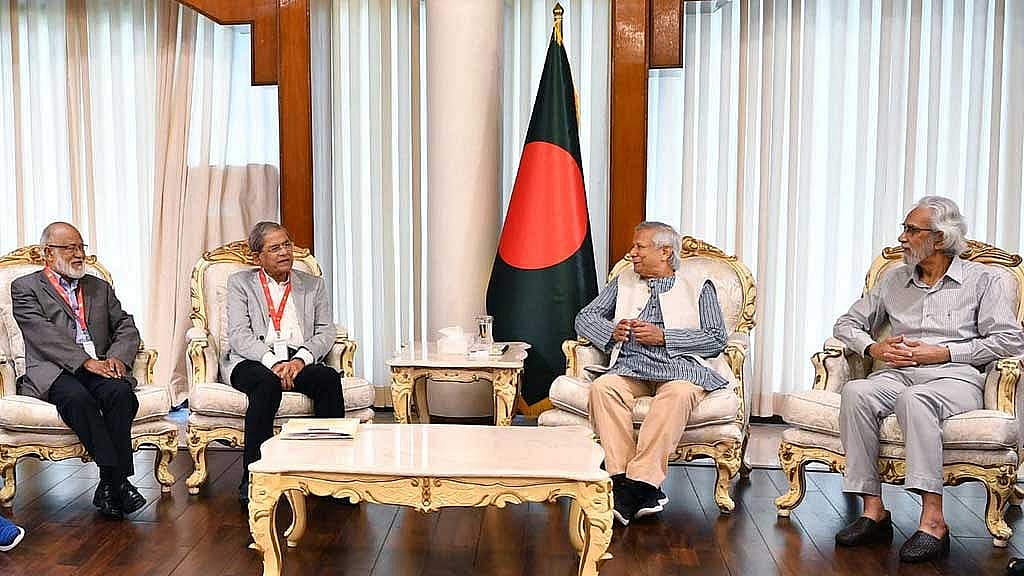
She added that the country’s constitutional institutions have been rendered ineffective, so reforms are essential to create an election-ready environment.
This involves bringing together all groups and factions for the restructuring process.
The spokesperson said the “constituent assembly” election is currently the most acceptable option.
“Since different institutions have failed, an uprising has occurred; however, it lacks formal recognition.
“Given the inclusion of that recognition and the constitutional crisis that has been pointed out to us, it is essential to move towards a constituent assembly election to amend the constitution."
She continued, “We view elections as important, a constituent assembly election is the only viable solution.
“Discussions can be held with different groups about the details – like how it will happen and whether it will follow a proportional or traditional format.
"But there will be no alternative to the constituent assembly election."
Samantha also explained why the constituent assembly election is necessary.
"The winning individuals' sole task will be to amend the constitution.
“Along with constitutional reforms, we propose that the constituent assembly could also function as a legislative body.
“This would allow for the reform process, the rewriting of the constitution, and the work of the legislature to be carried out together,” she concluded.
The Anti-discrimination Student Movement spokesperson Umama Fatema told bdnews24.com, “If the current system continues, holding elections won’t bring much benefit.
“It could easily lead to the establishment of a new fascist regime.
"We hope for a change in both the electoral and political systems in Bangladesh," she added.
ORDINANCE IF NECESSARY FOR EXCLUDED VOTERS
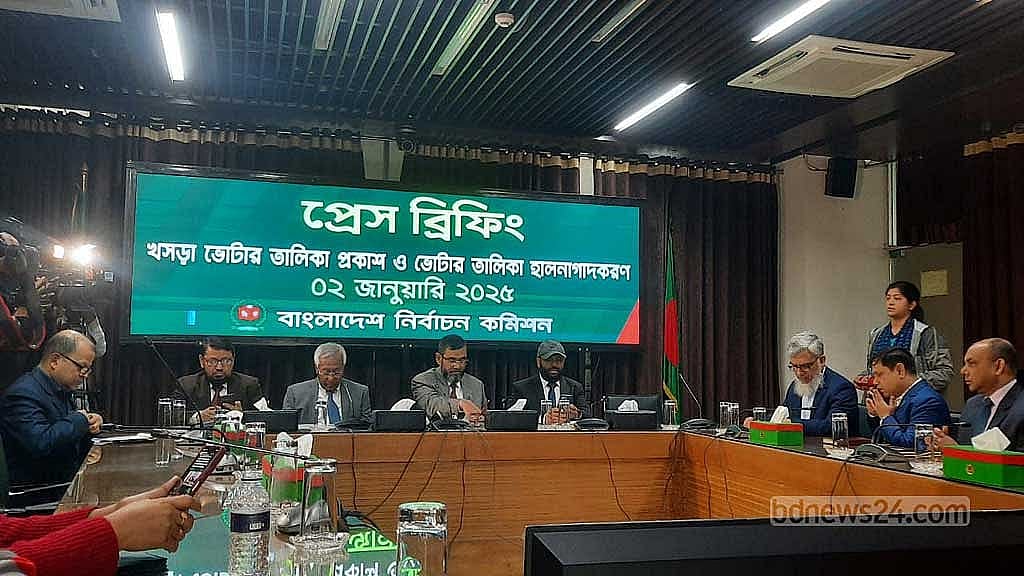
The Election Commission says it is ready to hold the polls as recomended by the chief advisor within one to one and a half years.
The election organising body said it would also sort out the work to update the voter list if the balloting comes forward.
A draft voter list has already been published. A total of 1,833,352 new voters were added to the draft list published on Jan 2.
Election Commissioner Abul Fazal Md Sanaullah said the final voter list would be published on Mar 2 after resolving any claims and objections after announcing the release of the draft voter list.
With the new ones, the total number of voters in Bangladesh now stands at 123.68 million.
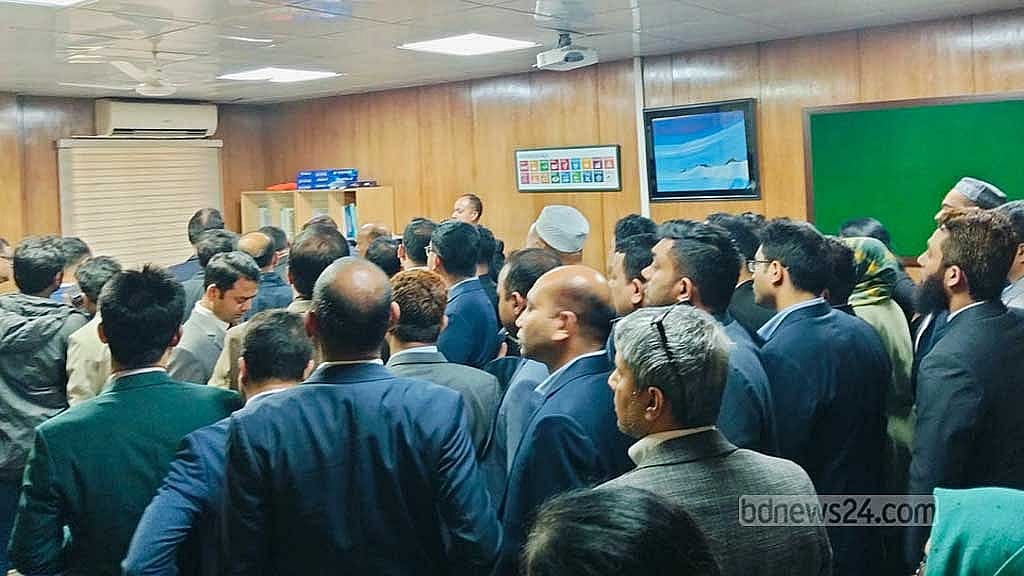
In addition, door-to-door data collection to register excluded voters and those who will become eligible to vote on Jan 1, 2026, will begin from Jan 20. The project is scheduled to be completed by June.
The commission has said it sees no legal complications in registering voters even if the polls are held before January next year.
Responding to a question on that day, Sanaullah said there are two things in the verification and the door-to-door update process. Enrollment of persons born on or before Jan 1, 2007, and who have become eligible to vote on Jan 1, 2025, but have not been enrolled yet.
He said, "There is no legal problem regarding this. We will register them before the election schedule is announced. The commission will decide about those who will become eligible to vote from Jan 2, 2025, to Jan 1, 2026."
The election commissioner said if it is found that significant voters have become eligible before the election, it will be checked whether they can be included in the voter list by issuing an ordinance if necessary. But no decision has been made about this so far, he added.
Attention was drawn to this the day after Yunus, in his Victory Day address to the nation, outlined the possible timeline for national elections.
On that day, the chief election commissioner said: "We have started working for the national election from the very first day. We have all the preparations required for the elections."
He said the commission is completely prepared to hold the parliamentary elections according to the time suggested by the chief advisor.
[Writing in English by Akramul Momen and Sheikh Fariha Bristy]