Published : 02 Jul 2025, 08:22 AM
Updated : 28 Aug 2026, 01:22 AM


When Nahid Islam pushed to dissolve the Anti-discrimination Student Movement, his former colleague Umama Fatema resisted, determined to keep the student platform alive.
A year later, Umama herself has walked away, accusing the once-independent group of being hijacked and transformed into a “partisan extension” of the newly formed National Citizen Party (NCP).
What began as a powerful youth-led Uprising to reform the civil service quota system on Jul 1, 2024, has since devolved into a deeply divided and scandal-hit organisation.
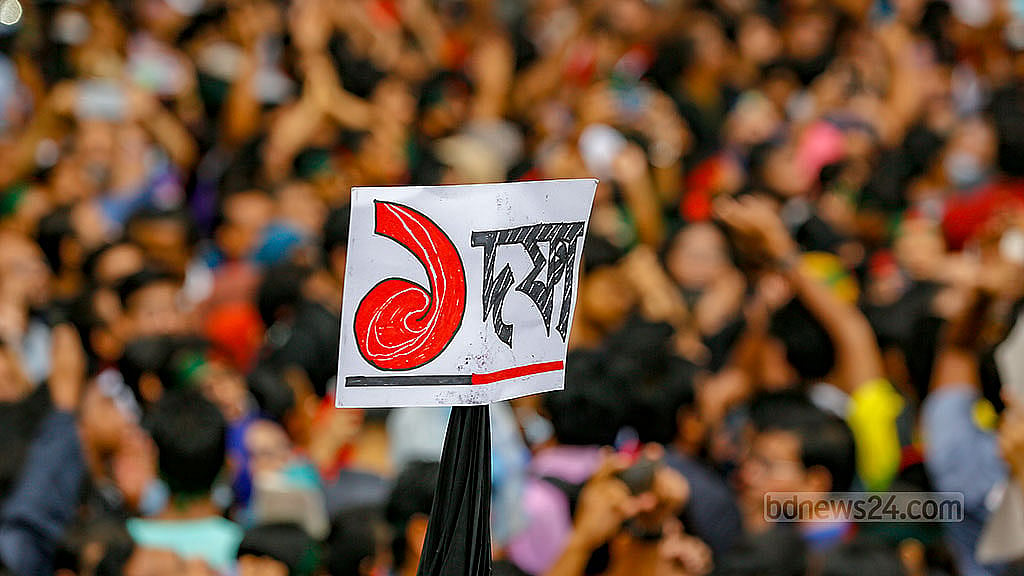
Just 36 days after its formation, the Anti-discrimination Student Movement led an unprecedented mass mobilisation that ousted the Sheikh Hasina-led Awami League government after almost 16 years in power -- a movement now remembered by its participants as the “July Uprising”, with Aug 5 rebranded as “July 36”.
The euphoria that followed the regime change has long faded. In its place: allegations of extortion, harassment, illegal occupation of public markets, and violent internal power struggles.
For many, the student platform that once symbolised unity and resistance is now little more than a satellite of the NCP.
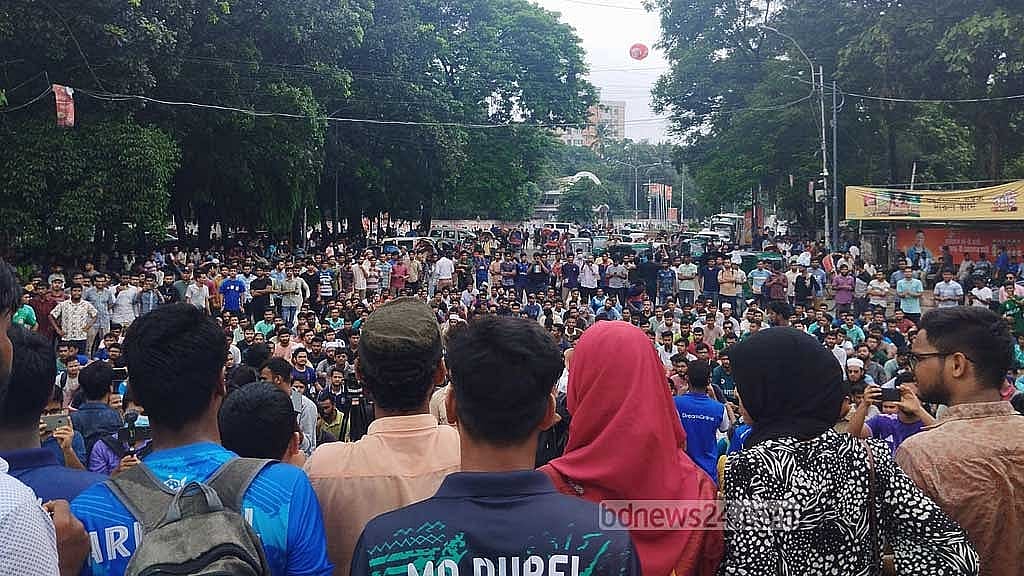
FROM MOVEMENT TO PARTY
At the heart of the Anti-discrimination Student Movement’s inception was a call for quota reform in government jobs. Students from across political lines joined under a neutral banner to push for change, led by coordinators such as Nahid.
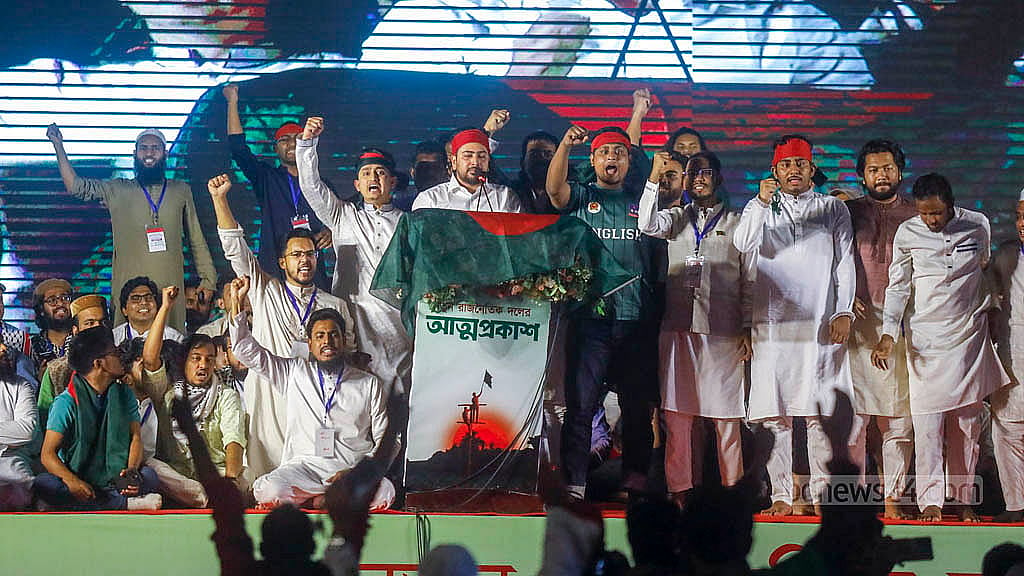
In the aftermath of the regime’s fall, Nahid was appointed an advisor in the interim government, later stepping down to lead the newly formed NCP as its convener.
The transformation of the movement into a political force began even before the party’s formal launch.
On Mar 7, 2025, Nahid declared at a press briefing: “The Anti-discrimination Student Movement is no longer where it was. A student organisation has emerged from it. A political party has emerged. The label ‘coordinator or anti-discrimination’ no longer applies.”
The same day, Anti-discrimination Student Movement spokesperson Umama Fatema issued a rebuttal on Facebook, writing, “No decision has been made to dissolve the Anti-discrimination Student Movement.
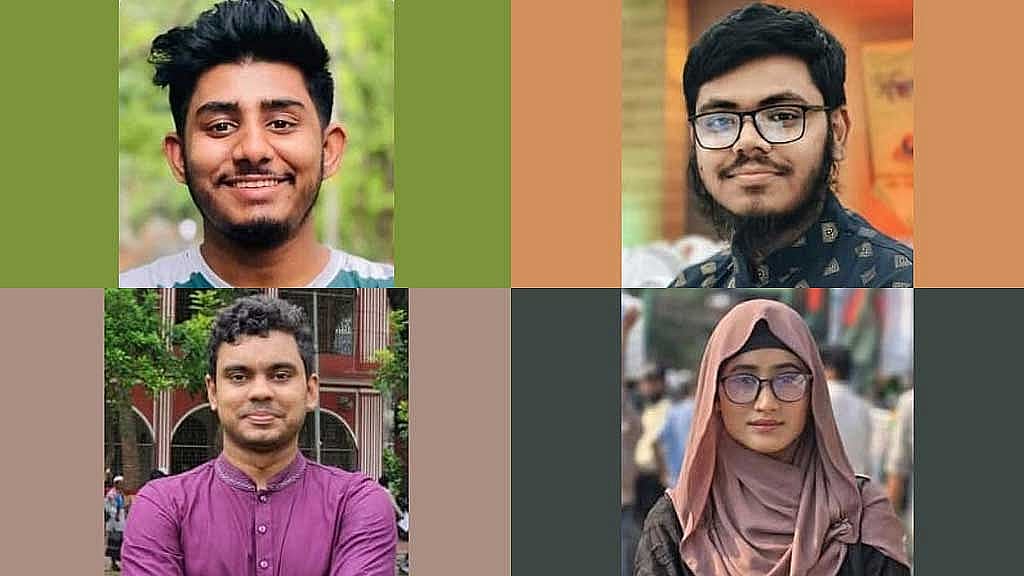
“Not all students involved in the platform have joined the new party or its student wing. The platform will not be dissolved without a collective discussion.”
By year’s end, the picture was clear: most of the original 21 central coordinators and the broader pool of 158 local and regional coordinators had either joined the NCP or its student wing, the Bangladesh Democratic Student Council (BDSC).
The Anti-discrimination Student Movement’s first council was held on Jun 25, electing Rashedul Islam (known as Rifat Rashid), a former central NCP leader, as president. Sheikh Inamul Hasan was elected general secretary.
Their rise solidified the perception that the Anti-discrimination Student Movement had become an auxiliary wing of the NCP.
RESIGNATION AND DISSENT
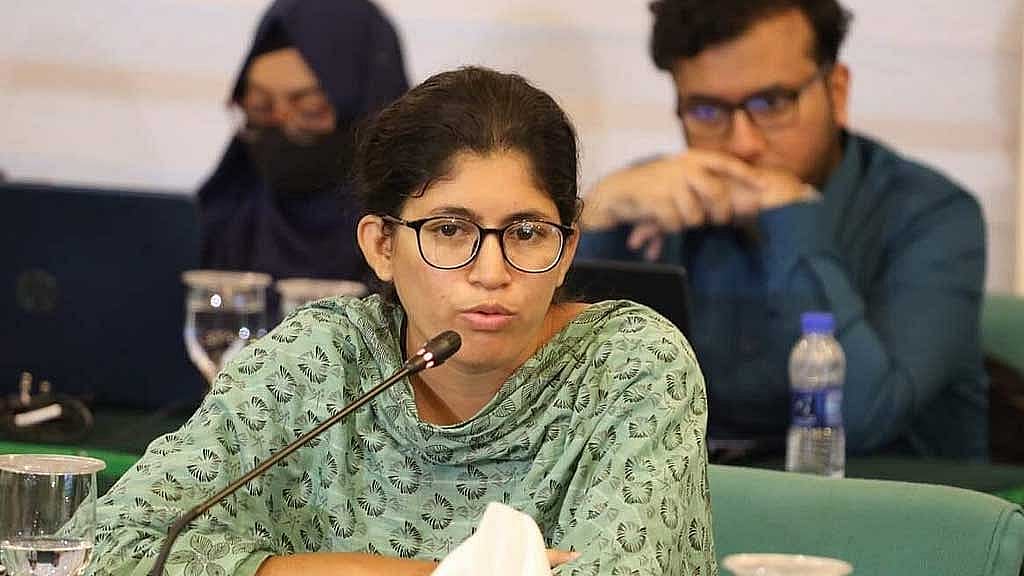
Umama, who had been the Anti-discrimination Student Movement’s face in the media for nearly a year, announced her resignation on social media.
In a sharply worded post, she said: “I am ashamed… the same authoritarianism, theatrics, and fraternity politics. I fear the platform has no future.”
Many others associated with the Anti-discrimination Student Movement echoed her concerns. Critics argue that although the movement succeeded in toppling the Awami League, it failed to uphold its promise of non-partisan, inclusive student mobilisation.
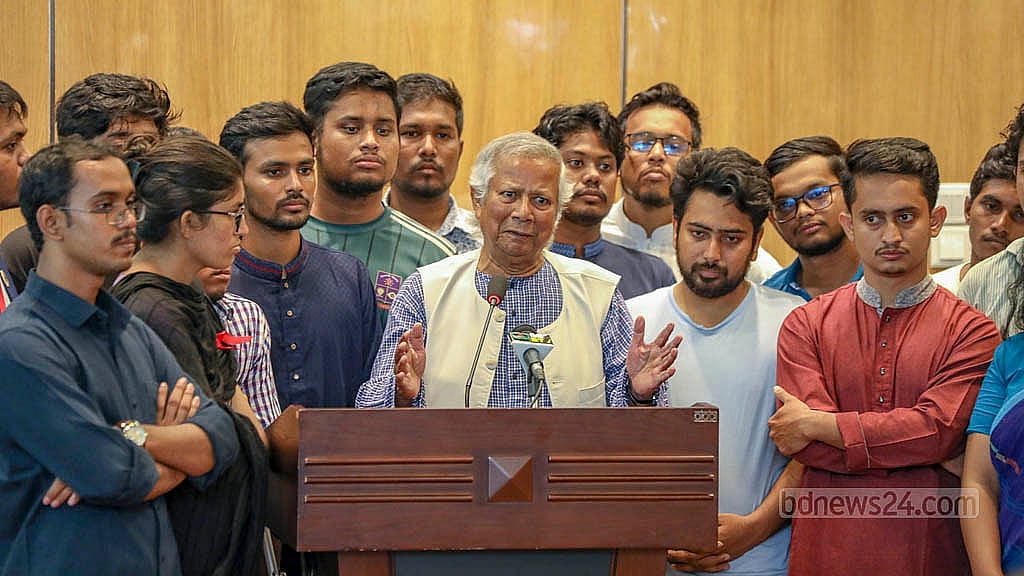
In response to allegations of party control, NCP convener Nahid told bdnews24.com: “I left the Anti-discrimination Student Movement long ago. I can’t comment on their current activities.
“No NCP member is part of the Anti-discrimination Student Movement anymore. Anyone who joined did so after resigning from the party. So the question of subservience does not arise.”
Following the uprising, the Anti-discrimination Student Movement set up regional committees to help maintain order and support victims. However, reports quickly emerged of individuals claiming coordination roles without formal authority, allegedly using the title for local influence.
Infighting soon followed, with multiple allegations of extortion, abuse of power, and interference in local administration surfacing from different regions.
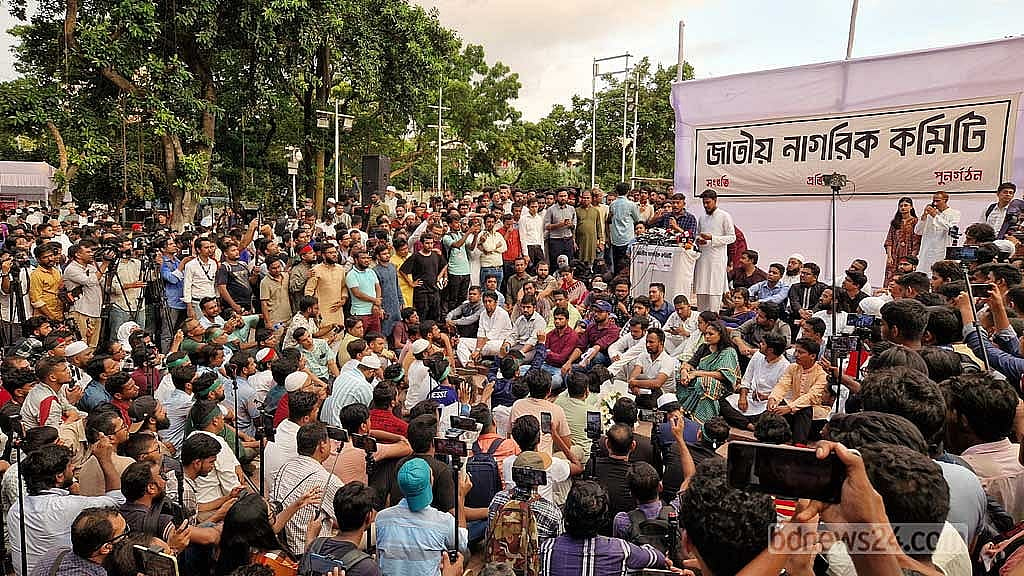
On Sept 8, a new body, the National Citizens’ Committee, was formed by youth leaders and professionals, many of whom were previously involved with the Anti-discrimination Student Movement.
A month later, the student platform was restructured, with Hasnat Abdullah as convener, Arif Sohel as member secretary, Abdul Hannan Masud as chief organiser, and Umama retained as spokesperson.
Now, all except Umama are part of the NCP’s central committee. Umama has since resigned from the Anti-discrimination Student Movement as well.
ALLEGATIONS STACK UP
A string of controversies has plagued the Anti-discrimination Student Movement since its peak:
In April, Prime Asia University student and Jatiyatabadi Chhatra Dal activist Zahidul Islam Parvez was killed in Banani. Most of the accused were affiliated with the anti-discrimination movement.
In March, two members, including the Narayanganj district coordinator, were arrested with yaba tablets from a hospital.
In June, several NCP leaders allegedly beat a student coordinator with a hammer in Madaripur.
On May 8, 56 members of the Kishoreganj Anti-discrimination Student Movement district unit resigned, accusing district committee Convenor Ikram Hossain and Member Secretary Faisal Prince of extortion, corruption, and illegal control of markets.
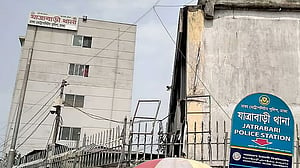
In June, in Dhaka’s Mirpur, two Dhaka leaders of the platform, Sadman Sanjid and Rifatul Haque Shawon, were accused of confining and torturing a businessman and forcing him to sign blank cheques.
That same month, a suspended Barishal unit member, Marjuk Abdullah and two others were accused in a robbery-preparation case.
On May 18, 16 leaders from Rangpur resigned, citing corruption, tender manipulation, and job-selling.
On May 21, Manikganj police detained two district leaders, Joint Member Secretaries Meherab Khan and Ashraful Islam Raju, for extortion and misbehaving with law enforcement.
On May 18, Chattogram’s city unit spokesperson Fatema Khanam Liza was expelled for alleged drug use and misconduct -- later reinstated after the charges weren’t proven.
On Apr 9, 48 members from Shyamnagar Upazila in Satkhira resigned, citing nepotism and undemocratic practices.
In Barishal, three leftist leaders returned to the Chhatra Federation, citing political subservience within the movement. They are Nahid Islam, joint member secretary of the student movement's metropolitan committee, Jannat Ara Ria, joint convener, and Ananya Islam Esha.
LOSING IDEALS
For some observers, the Anti-discrimination Student Movement’s fall from grace represents the death of the July Uprising’s original ideals.
Nasir Uddin Nasir, general secretary of the BNP-backed Jatiyatabadi Chhatra Dal, told bdnews24.com: “We united under the Anti-discrimination Student Movement banner to defeat authoritarianism. But over the past year, this banner has been misused for political gain.”
He alleged that after the reorganisation under Hasnat and Arif, the Anti-discrimination Student Movement continued to be used to serve narrow political interests.
“When our activist Parvez was murdered by those under the Anti-discrimination Student Movement umbrella, no one was expelled because there was no central leadership. That was tragic,” Nasir said.
He criticised the newly formed leadership as a continuation of that decline: “Umama Fatema’s resignation suggests more chaos to come. The Anti-discrimination Student Movement should have been shut down earlier, and everyone should have returned to their own political platforms.”
DESPAIR, INTROSPECTION
Akram Hossain Raj, an executive committee member of the Anti-discrimination Student Movement, said the situation after Aug 5 last year was “different”, with three days of uncertainty around government formation followed by floods.
“In many places, chaos began under the guise of ‘coordinator’ titles,” he said. The movement then started visiting every district to meet families of the deceased and injured.
“At that time, disorder began in many places under the guise of ‘coordinator’ roles.” he added. “We started travelling to every district to meet the families of the martyrs and the injured.”
“During those visits, we realised that after the 5th of August, some people began grabbing land using the identity of ‘coordinator’.
“The same person who was with Chhatra League in the morning had a flag tied around his head by the afternoon, posing as a coordinator.”
Akram said: “These impostors were at the heart of the disorder.Keeping that in mind, we tried to form committees led by real movement organisers.
“From October, we began forming committees across districts and Upazilas.”
According to him, the panels were meant to “bring structure to the movement and support the injured and bereaved families”.
“But unfortunately, very few committee members engaged in such work,” he said. “Most got involved in disputes and started behaving like conventional political actors.”
After the NCP was formed in February, Nahid questioned if the Anti‑discrimination Movement was still needed.
In March, he repeated the same doubts, prompting spokesperson Umama to disagree.
At the time, Nahid had also urged law-enforcercing agencies to take action against anyone committing “wrongdoing” under the group’s identity.
Asked about her current stance, Umama told bdnews24.com the movement had tried to push for reform in student politics.
“But unfortunately, no one really wanted to take those discussions forward. It wasn’t just apathy, there was disruption too,” she said.
"The opportunity to work on student union elections and greater participation of women in politics was there,” Umama added. “But that didn’t happen”.
“If we had raised topics like party finances, we would have been pushed into political dialogue.”
Umama said they had planned to work on documenting the July events. But when such discussions came up in meetings, some around them grew visibly “uneasy”.
“There was a fear among them that if these topics came up, the NCP could be targeted like the BNP. This duplicity really upset me,” she added.
COUNCIL, LEADERSHIP VOTE SPARK CONTROVERSY
At the council session of the Anti-discrimination Movement on Mar 15, Rifat Rashid was elected president and Hasan Inam general secretary through voting.
The electorate consisted of 21 members of the platform’s central committee, although district committee members were also allowed to contest under specific conditions.
Voting was held both offline and online, with ballots counted in the presence of polling agents. Rifat won the presidency with 16 out of 21 votes.
Hasan secured 10 out of 23 votes to become general secretary.
Moinul Islam was elected organisational secretary with 19 votes, and Cynthia Islam became spokesperson, also with 19 votes.
The leadership vote, however, drew criticism on social media -- even from members of the platform.
A leader from the NCP’s workers’ wing, requesting anonymity, told bdnews24.com that those from Chhatra Shakti held dominant control over the election process.
“Many are calling it a dummy election. Such actions are not appropriate after the mass uprising,” he said. “Since I want to remain in politics, I’m not speaking publicly.”
Nahid Chowdhury, commenting on the movement’s Facebook page, wrote: “You’re saying the Anti-discrimination Student Movement isn’t a political platform, but then demanding people leave their parties to join it. Fine.
“But then how did Hannan Masud and Samanta Sharmin vote in the council? They’re central leaders of a political party called the NCP.”
He argued that student groups like Chhatra Dal, Chhatra Shibir and Chhatra Adhikar, which had supported the movement, should also have had voting rights.
Otherwise, he said, the platform would seem like an NCP affiliate.
Lutfur Rahman, the NCP leader who oversaw the election, said the vote was held in line with decisions made by the executive committee.
He added that representatives from across the country were allowed to contest if they met eligibility criteria, and that the election was conducted according to “proper procedures”.
WHITE PAPER
Newly elected President of the Anti-discrimination Student Movement Rifat told bdnews24.com that the leadership resolution was passed before the formation of the NCP or anyone’s return to student organisations.
“This election was held in line with that resolution, and I have been elected. The election commission organised this as part of its responsibility to past commitments.”
Asked about controversies surrounding members of the platform, he said the absence of central leadership had allowed many to exploit the movement’s name for questionable activities.
“Some have tarnished the platform in several ways. It failed to uphold the responsibility of the July Uprising.”
Though the newly elected committee has not yet assumed formal charge, Rifat said it will form a financial transparency committee as soon as it does.
That body will investigate all local committees across the country within a set timeframe.
“Until the findings are published in a white paper, all organisational activities of those committees will remain suspended,” he added.
[Writing in English by Syed Mahmud Onindo and Sheikh Fariha Bristy]