Published : 02 Aug 2024, 09:48 AM
Updated : 28 Aug 2026, 01:11 AM


The government’s ban on Jamaat-e-Islami hot on the heels of a wave of violence and heavy casualties during the quota reform protests has yet to address all lingering issues related to the party’s role in the 1971 Liberation War.
The ban has sparked questions about whether the party's extensive network will engage in covert activities, form new political entities, or join major parties to increase their influence.
Jamaat was banned immediately after the 1971 Liberation War but was later permitted to re-enter politics under a presidential ordinance during Ziaur Rahman's military regime. Despite ongoing calls for the party's ban, it continued its activities.
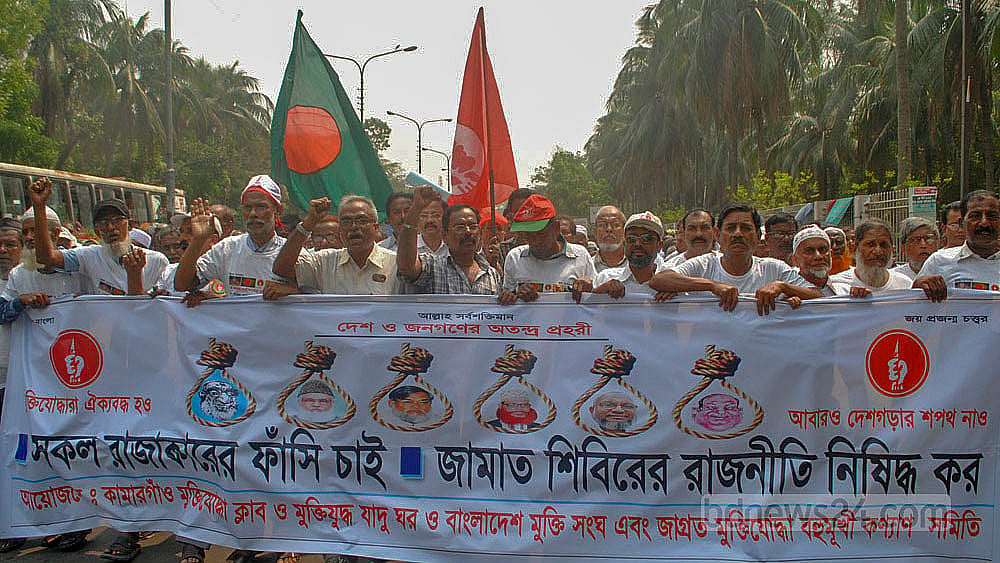
The International Crimes Tribunal, which tried members of the Rajakar and Al-Badr, wartime collaborators of the Pakistani forces, for their actions in 1971, declared Jamaat a ‘criminal organisation’.

Although there were calls for the party to be tried for its organisational role, required legal reforms to progress this trial did not materialise, despite government assurances.
The decision to ban Jamaat was taken after Prime Minister Sheikh Hasina attributed the violence and fatalities during the quota reform protests to the party.
This led to a unanimous decision by the 14-Party Alliance to implement the ban, which was then executed through an executive order.
Legal expert Tureen Afroz argues that an alternative approach might have been more effective than an executive order, as such orders can be overturned by future administrations.
The ruling party had long discussed outlawing Jamaat, but the issue gained urgency following the widespread violence during the recent quota reform protests.

It all began when the High Court declared a 2018 notification scrapping the quota system for government jobs invalid, leading students and job seekers to revive the quota reform movement with protests at the start of July. The scope and scale of the protests gradually increased.
During this period, state properties were damaged in various locations. The BTV building in Rampura, the Setu Bhaban in Banani, the Disaster Management Building, and the Directorate General of Health Services in Mohakhali were vandalised and set on fire. The expressway toll plaza in Mohakhali and two metro rail stations were also damaged and torched.
Amidst the conflict surrounding the protests, the government recorded 150 deaths within a week, although media reports suggested the toll exceeded 200.

Senior government officials claimed that Jamaat had exploited the student protests to incite violence, with support from their long-time ally, BNP.
Even after its ban post-1971, Jamaat’s activities persisted. The party's leaders engaged in mosque-based activities and have sometimes joined other political parties.
For example, after the war, former Jamaat MP Gazi Nazrul Islam from Satkhira-5 was involved with the Jatiya Samajtantrik Dal (JaSoD), according to records from the BNP-Jamaat coalition government era.
Tureen also warned that Jamaat members might join other parties or start new political ventures under different names.
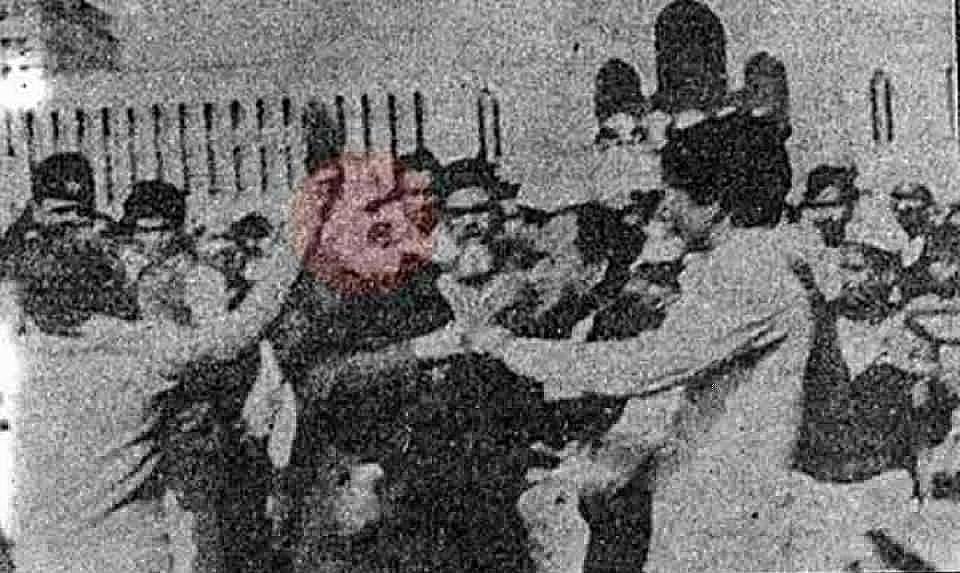
She advised adopting sequencing banning or incremental restrictions to address these possibilities effectively.
Historically, Jamaat’s electoral support has fluctuated between 5 to 8 percent since the 1970 elections, surpassing 10 percent only once in 1991.
A former Jamaat MP’s book reveals that an arrangement was made with the BNP that year.
While Jamaat’s vote share alone has not been sufficient to secure many seats, alliances or coalitions have proven advantageous.
In the 2001 elections, despite a tight contest between BNP and Awami League, BNP won 193 seats compared to Awami League’s 62, aided by Jamaat's support. Jamaat itself won 17 seats.
In contrast, in 1996, without any alliances, Jamaat secured only three seats.
After the 2001 election victory with Jamaat’s backing, BNP leader Khaleda Zia appointed two prominent Al-Badr leaders, Matiur Rahman Nizami and Ali Ahsan Mohammad Mujahid, as ministers.
SECOND TIME FACING BAN
After Bangladesh gained independence, Article 38 of the 1972 Constitution banned religion-based political parties.
As such, Jamaat was unable to carry out its political activities due to the ban.
During that time, almost all of the religion-based political groups which faced the ban aided the Pakistani Army during the liberation war.

According to the book Jibone Ja Dekhlam, written by Jamaat’s chief Ghulam Azam, Azam used to urge people not to vote for the Awami League during the 1970 elections. He used to tell people that Pakistan would not ‘survive’ if they voted for the Awami League.
He also welcomed the launch of Operation Searchlight, which was led by the Pakistani Army in 1971, while addressing the nation through the radio. He also called on the army to cooperate to help Pakistan sustain itself in the region.
Afterwards, Azam, along with the leaders of other Islamist parties, met with the Chief Martial Law Administrator General Tikka Khan to show support.
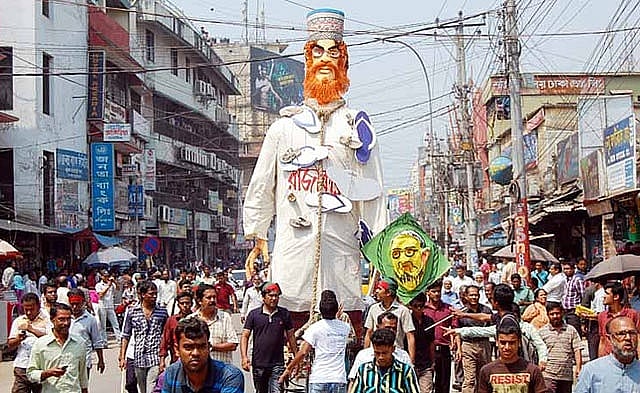
Jamaat played a leading role in forming the Razakars and Al Badr forces during the liberation war.
On Nov 22, Azam left Dhaka for Pakistan. Before leaving, he requested heavy weaponry for the Razakars.
After independence, Bangabandhu’s government cancelled Ghulam Azam’s citizenship.
However, things changed after Bangabandhu was murdered on Aug 15, 1975.
Following his death, Ziaur Rahman, the founder of BNP, became the chief martial law administrator, and President Abu Sadat Mohammad Sayem issued an order repealing Article 38 of Bangladesh’s Constitution. This lifted the ban on religion-based political parties.
This time, Jamaat faces a ban under the Anti-Terrorism Act. The government has banned the anti-independence party and its student wing, Islami Chhatra Shibir, following Article 18 of the Anti-Terrorism Act.
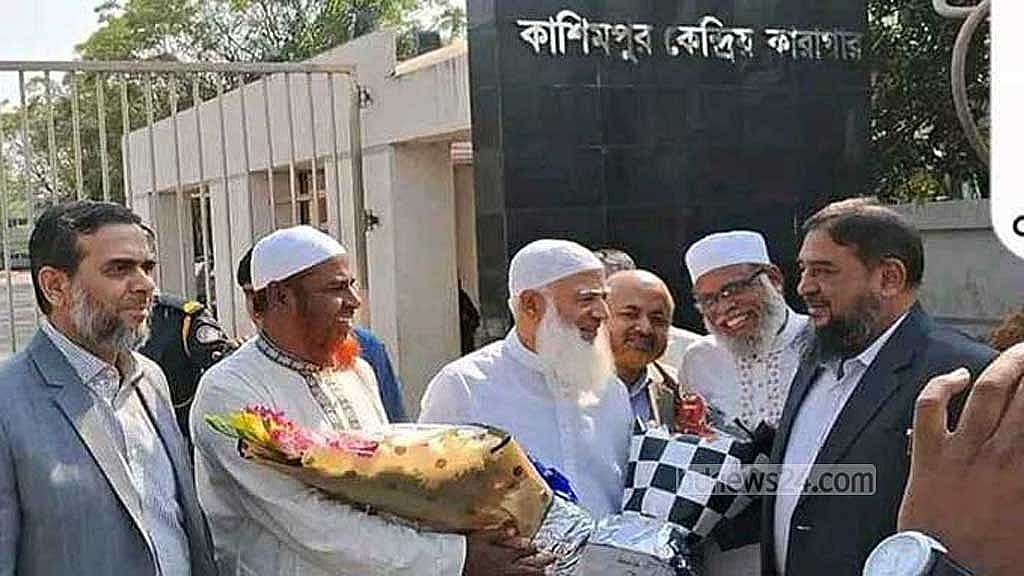
The Ministry of Home Affairs issued the notice on Thursday afternoon, dubbing Jamaat and its affiliates as ‘terrorist groups’ under the Anti-Terrorism Act 2009.
It is the second time the party has been banned.
JAMAAT'S BAN SPARKS REACTIONS AND CONCERNS
Following the government's announcement of Jamaat's ban, the party responded with an indignant statement.
Since the trials for crimes against humanity began in 2010, Jamaat's leaders and activists have been operating clandestinely.
In a statement, Jamaat chief Shafiqur Rahman said no political party or alliance has the authority to make decisions regarding another political party.
He said neither Bangladesh's laws nor its constitution grant such powers.

"If a practice of one party or alliance banning another party starts, it will lead to a situation where parties will keep banning each other, resulting in a collapse of state order," he added.
The statement also accused the government of diverting attention from the student-led anti-discrimination movement, alleging ‘indiscriminate mass killings’ to suppress the protests.
"In this chaotic scenario, the government's decision in the 14-Party Alliance meeting to ban the Jamaat is arbitrary, illogical, illegal, and unconstitutional."
From 1999 to December 2022, Jamaat's ally BNP frequently criticised the government.
BNP Secretary General Mirza Fakhrul Islam Alamgir held a press conference, saying: "The government creates an issue and then diverts attention... now they are using this. It’s their another project. We believe in multi-party democracy."
Mujahidul Islam Selim, former president of the Communist Party of Bangladesh or CPB, said: "If Jamaat is banned through administrative powers, a future government could reverse that decision by amending the regulations."
He criticised both the ruling Awami League and BNP for playing political games with Jamaat, saying: "Jamaat has tried to increase its strength by aligning with different parties at different times."
Selim said banning Jamaat is necessary but not sufficient, as the party continues to promote communal ideology.
He said: "Without stopping this ideology, the competition between the Awami League and BNP to appear more Islamic is leading the country down a dangerous path. The progressive forces must step forward."
Meanwhile, Home Minister Asaduzzaman Khan indicated that the government is cautious of potential reactions following the ban.
He blamed Jamaat and its student wing Shibir for the violence during the quota reform protests, saying: "Jamaat and Shibir has created this situation. They are significantly involved in this unrest."
He added: "The situation has deteriorated considerably. We are in the process of bringing those responsible to justice and informing the public about their actions."
LIMITATIONS OF THE EXECUTIVE BAN
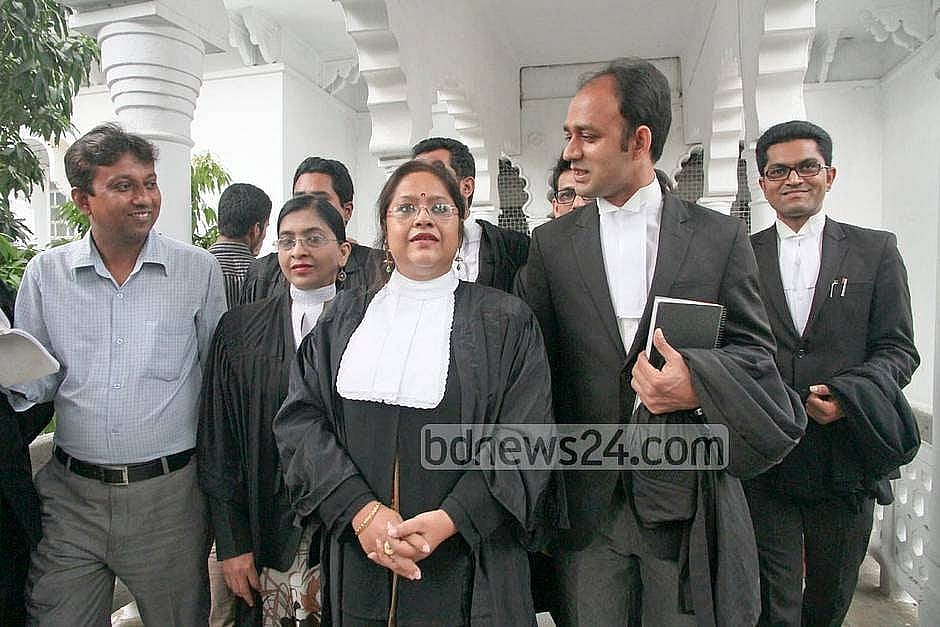
Tureen Afroz, a former prosecutor of the International Crimes Tribunal, told bdnews24.com: “Banning an organisation means that no activities can be carried out under the name of the organisation. However, if the activities continue, then the government can take action against it.”
While referring to the limitations of the executive order to ban Jamaat, she said: “It can be revoked at any time when another government comes into power. This has happened in the past. Jamaat students were banned earlier, but they made a comeback.”
“Executive orders do not have permanent seal stamps on them. There is always an opportunity to revoke it.”
When asked what could be done to resolve the issue, Tureen said: “You cannot stop them if these people (Jamaat, Shibir) decide to form a new organisation. The same people can form new organisations using new documents. If they drop Jamaat and adopt the name ‘Fantasy Bangladesh,’ then they will have to be proved as terrorists again to ban them.”
“If they sequentially ban them, then these people will not be able to form the same organisation under a new name,” she added.
According to Tureen, the leaders and activists of the banned organisation may dissolve and join existing organisations instead of forming a new one.
“If Jamaat merges with the BNP, then BNP will become stronger,” said the former prosecutor.
The Awami League should also initiate a process of self-purification, according to Tureen.
“We will not deny that Jamaat is in a state of chaos under the Awami League government. But those who are Jamaat supporters in the Awami League should also be purged.”
Tureen is also of the idea that besides banning Jamaat, an initiative should be taken to put an end to its propaganda.
“Everyone thought we had defeated Jamaat during the war. But today, after all these years, our children are saying, ‘Who are you? Who am I? Razakar! Razakar!’ This means we have not been able to ‘de-Jamaatise.”
The former prosecutor also opined that Jamaat may continue its activities in a covert manner.
ARE THERE ANY LEGAL LOOPHOLES?
According to Senior Supreme Court lawyer ZI Khan Panna, the 1972 constitution states that religion-based political parties cannot exist. So, there is no chance of finding loopholes within the law.
“We already asked for these parties to be banned previously. However, other Islamic groups like Hifazat-e Islam and Qawmi Madrasa are still operating. What is the use of banning Jamaat only?” he questioned.
While acknowledging a lot can happen if the government changes, Panna said: “Ghulam Azam’s citizenship was revoked during Bangabandhu’s rule. Later, when the BNP came to power, he (Ghulam Azam) was given back citizenship.”
When asked whether Jamaat can seek legal refuge in the future, Appellate Division lawyer Manoj Kumar Bhowmick told bdnews24.com: “Anyone can seek refuge in the court. However, it doesn’t seem like Jamaat will benefit from this. They are not even registered to take part in elections.
A JOB DONE RIGHT: PRO-AL TEACHER LEADER
Prof Mohammad Amjad Ali, the convener of Blue Panel, a pro-Awami Leage teachers’ organisation, expressed satisfaction with the government’s decision to ban Jamaat.
He told bdnews24.com: “Jamaat is still unable to accept our independence. They are still spreading anti-independence propaganda. They are trying to mislead the new generation.”
“If Jamaat does not exist as an organisation, then it will not get a political platform. I think this was a job done right. Initiatives should be taken so that they are not able to lead people against the liberation war in the future,” he concluded.
AWAITING JAMAAT’S RESPONSE: PRO-BNP TEACHER
Prof Mohammad Siddiqur Rahman, joint convener of Shada Dal, a pro-BNP teachers’ organisation, told bdnews24.com: “The decision to ban Jamaat has been pending for a long time.”
“The Awami League rather prolonged its existence by politicising it. Now, in the wake of an emergency in the country, the government is thinking that they will be safe after doing this,” said the professor.
The decision to ban Jamaat will not have much of an impact in the political arena of Bangladesh, he said. “People who are involved in Jamaat’s politics will still be in Bangladesh. We have to wait and see how they react.”
According to Prof Siddiqur, Jamaat will still try to be in politics even after getting banned.
However, Prof Sabbir Ahmed, a teacher of Dhaka University’s political science department, believes that banning Jamaat will have an impact on the politics of Bangladesh.

“But I don’t believe it will bring about any qualitative change to the overall political landscape.
There are other religious parties in politics besides Jamaat. They are not banning all the groups. Religion-based political parties will exist.”
“The state can ban Jamaat by an executive order. But another government can come to power and revoke the order.”
Prof Sabbir also believes that the ruling party will not be able to gain any ‘global recognition’ for banning Jamaat.
“Banning the anti-independence party will be well-received by all. However, the Awami League government is trying to take advantage of the timing of the ban. This ban could have been given earlier or later. But Awami League’s image will be destroyed internationally.”
When asked whether Jamaat will secretly carry out its political activities, the professor said: "I don’t think Jamaat will do this. Some people might do this. But others will do politics under a different name.”
JAMAAT’S VOTE COUNT
Election results during the 1970 election held during Pakistan’s rule and all the other elections held after Bangladesh’s independence show that Jamaat’s vote count was always between five to seven per cent.
The anti-independence party’s vote count was more concentrated in Chapainawabganj, Rajshahi, Bogra, Pabna, Dinajpur, Gaibandha, Satkhira, Jashore, Khulna, Jhenaidah, Lakshmipur, Chattogram and some areas of Cox’s Bazar.
In the 50 years of independence, Jamaat could only contest in one constituency of Sirajganj, one in Pirojpur, and one in Cumilla.
In the 1970 elections, Jamaat got a total of 6 percent votes in East Pakistan and a mere 4.6 percent in the 1986 national elections post-independence. The party got a total of 10 seats after contesting in the 1986 elections.
The impact of the BNP and Jamaat’s coalition on election politics was evident during the 1991 elections.
According to a book written by Amir Mujibur Rahman, the person in charge of Jamaat in 1991, the BNP unavowedly supported Jamaat in 35 seats during the fifth parliamentary elections. In addition, Jamaat voted for the BNP in hundreds of seats.
During that election, the BNP won 140 seats, Jamaat got 18, and the Awami League won 88 seats.
The voting results were close for the two major parties contesting in the fifth parliamentary elections.
The BNP received 30.8 percent of the total votes, while the Awami League got 30.10 percent of the votes.
Jamaat, on the other hand, received 12.10 percent of the total vote count. This shows that Jamaat reaped the benefits of its alliance with the BNP that year by getting double the number of votes in its entire political history.
Of the two elections held in 1996, Jamaat boycotted the Feb 15 elections, following the footsteps of the Awami League and the Jatiya Party. On Jun 12, 1996, when all the parties contested without forming any coalitions, Jamaat’s vote decreased to 8.61 percent. They won only three seats that year.
The Awami League got 37.40 percent of the total votes, and 146 seats during the 1996 elections. BNP got 33.60 percent of the votes, winning 116 seats.
If there was an agreement between the BNP and Jamaat that year, then the BNP would have gotten more votes and seats than the AL.
The BNP and Jamaat formed an alliance again during the eighth parliamentary elections in 2001.
The BNP got 193 seats alone that year, whereas Jamaat got 17 seats. Jatiya Party won four seats, and Islami Oikyo Jote got two seats.
The Awami League won 62 seats in the 2001 elections. The party lost four more votes in the by-elections later on.
The election results showed that the BNP got 41.40 percent of the votes, the Awami League got 40.02 percent, and Jamaat got 4.28 percent of the total vote count.
The 2008 parliamentary elections gave rise to an entirely new equation.
The Awami League won 230 seats by getting 48.04 percent of the votes during the ninth parliamentary elections. Alliance with the Jatiya Party and other parties also accounted for the total vote count for the Awami League that year.
The BNP won 30 seats with 32.50 percent of the votes, and Jamaat got a mere 4.70 percent. However, the anti-independence party were down by two less seats that year.
In 2013, Jamaat’s registration was cancelled. The party has not been able to contest in elections since.