Published : 26 Jun 2025, 11:59 PM
Updated : 21 Aug 2026, 01:27 PM


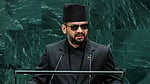
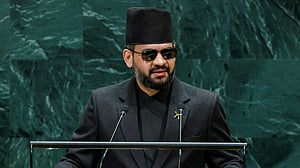
BNP Standing Committee member Salahuddin Ahmed has accused the National Consensus Commission of attempting to exert excessive control over the executive branch of government.
On Thursday, Salahuddin said the commission appears focused on weakening the executive, rather than addressing the root causes of authoritarianism.
“An autocrat ruled once. That doesn’t mean we dismantle the executive. Similarly, the fact that there was a dictator in a parliamentary system doesn’t mean we abolish or weaken the legislature,” he said.
Salahuddin stressed the need for a truly independent Election Commission, facilitated by a non-partisan caretaker government, to prevent the rise of autocracy.
“A strong democratic structure cannot be built by only weakening the executive branch,” he argued. “Each arm of the state -- executive, legislature, judiciary -- must function independently for a complete balance of power.”
He cited the “separation of powers” doctrine, saying, “...harmonious cooperation between all organs of the state must be established to prevent one from overstepping the jurisdiction of another.”
Addressing the pace of discussions within the Consensus Commission, Salahuddin noted that while there have been talks of reform, little disappointment has been expressed.
“Maybe more food and drink than actual discussion is taking place,” he said. “But I believe we’ll eventually reach a consensus.”
He pointed to specific reform proposals BNP has submitted, including changes to Article 70 of the Constitution and introducing a secret ballot for presidential elections involving MPs from both sides.
“We’ve also proposed a 10-year cap on premiership. Isn’t that a major achievement?”
He spoke at a Nagorik Oikya discussion at the National Press Club.
‘KEEP EYES AND EARS OPEN’
Nagorik Oikya President Mahmudur Rahman urged caution and vigilance during the efforts to establish consensus.
“Keep your ears as alert as a rabbit’s. Ask what’s really happening, not just what’s being said,” he said.
He anticipated that religion would be a contentious topic in future debates.
“Will it be written into the Constitution? Many believe in religion, yet for years it wasn’t written into our charter. Why?”
He added, “I am a Muslim and I believe in my religion. But in this country, there are Hindus, Buddhists, Christians too. They don’t necessarily agree with what I say.”