Published : 19 Aug 2024, 09:08 AM
Updated : 28 Aug 2026, 01:11 AM


The Awami League has faced a significant decline in influence since the government’s fall, with top leaders and grassroots members disappearing or going into hiding.
Central and local leaders are reportedly prioritising personal safety over political activities.
Speaking from hiding, a leader of the editorial board told bdnews24.com: "Survival first, politics later."
The situation represents a dramatic fall from political dominance to near invisibility.
Just two months ago, the party was a dominant force in politics.
Now, despite the absence of police on the streets, no one could visit Dhanmondi 32 to pay respects to Bangabandhu Sheikh Mujibur Rahman on Aug 15 due to barriers set up by a group of teenagers and young adults.
Following the loss of power and a series of violent protests, the AL is now dealing with multiple murder cases and investigations into crimes against humanity involving its leader, Sheikh Hasina.
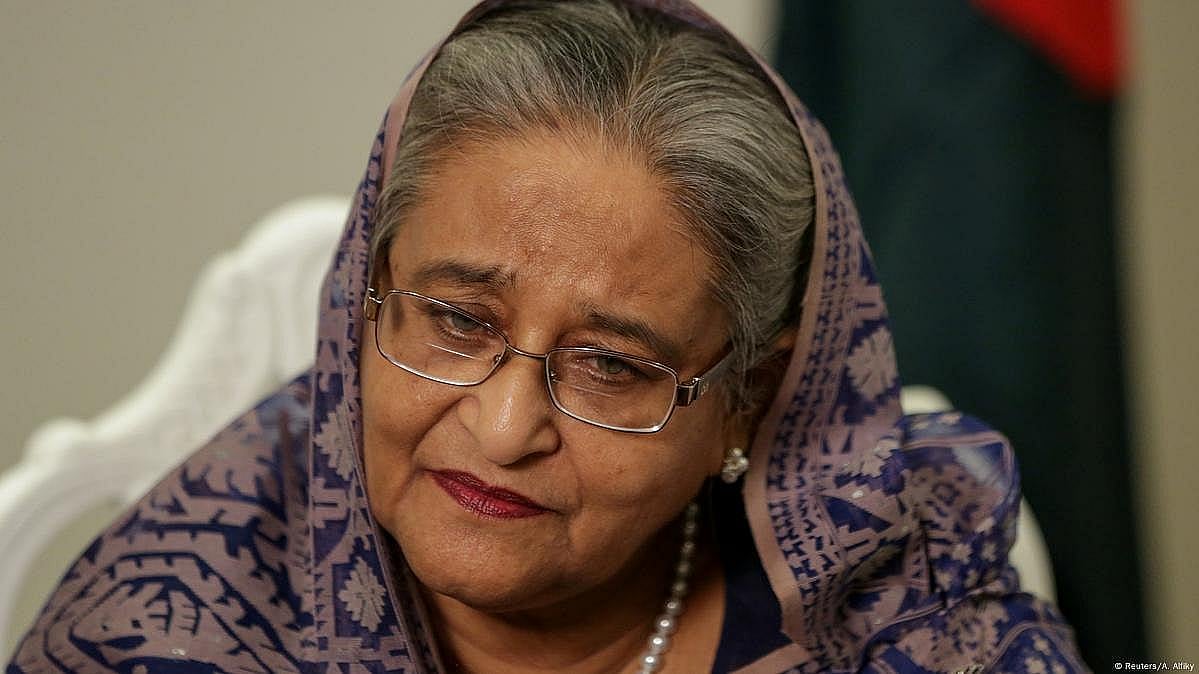
Former ministers and MPs, recently ousted from power, have been taken into remand and are even struggling to hire lawyers in court.
These events have left Bangladesh’s longest-serving ruling party in turmoil following a 36-day protest against job quotas.
The party, which had never before faced such a crisis, has failed to address the unrest effectively.
Leaders in hiding have not provided any guidance to grassroots activists for two weeks.
In the face of relentless attacks, the Awami League’s organisational structure has crumbled.
Party leaders and activists are in hiding, and the offices, nearly all of which have been burned down, are no longer available for meetings.
Grassroots activists are also scattered and unable to mobilise due to the breakdown of police measures, except in Gopalganj.

Despite the challenges, the party's activities in the past were more resilient even in hostile environments, such as after the assassination of Bangabandhu in 1975.
An organisational secretary of the party told bdnews24.com, "After the assassination of Bangabandhu in 1975, it was almost taboo to speak of the Awami League or Bangabandhu. Many, including the national four leaders, were killed, and many endured long imprisonments.”
“But the party recovered then, and it will rise again now."
The leader requested anonymity for safety reasons.
SERIES OF LEGAL CASES
On Aug 14, Law Advisor Asif Nazrul suggested that July’s deaths be tried at the International Crimes Tribunal.
On that day, a petition was submitted to investigate Hasina and the AL, which was accepted by the prosecution.
In 2009, Hasina, upon returning to power, initiated trials for crimes against humanity committed during the liberation war, leading to the establishment of the tribunal.
This included the execution of leaders from Al-Badr and Jamaat-e-Islami, such as Matiur Rahman Nizami and Abdul Quader Molla.

Although there was an attempt to prosecute Jamaat-e-Islami as a party, legal constraints prevented progress, and the government’s promise to amend the law remained unfulfilled.
The interim government now seeks to label the recent deaths during the quota movement as ‘genocide’.
The day before the tribunal complaint was filed, a murder case was registered against Hasina for the first time.
This case pertains to the death of a shop owner in Mohammadpur, Dhaka, who was killed by police gunfire during the quota movement, and an investigation order has been issued.
Subsequent cases have emerged in various districts, including Dhaka, Narayanganj, Bogura, Rangpur, Natore, and Joypurhat.
There is also an abduction case in Dhaka.
The AL has not responded to these cases.
Although Hasina made a statement through Sajeeb Wazed Joy on Aug 14, there has been no reaction regarding the cases.
However, the organizational secretary of the ousted party is not paying attention to these cases.

He said, "The leader was imprisoned during Ershad's regime and again during 1/11. Lawsuits and attacks will not subdue the Awami League. The leader has prosecuted Jamaat; now, attempts are being made to take revenge.”
“However, in due time, the party members will bounce back and thwart all conspiracies."
When asked about the current lack of activity, Kamrul Islam, a member of the presidium who is currently in hiding, told bdnews24.com: "The leader has not provided any guidance or outlined what needs to be done."
On the matter of who will take on the party's responsibilities, he said: "There are no instructions."
FRAGMENTED PARTY
Hasina resigned and left the country on Aug 5, on the second day of the anti-government movement, which stemmed from the anti-quota protests.
According to various media reports, she was given 45 minutes to relinquish her position and leave the country.
She had intended to record a speech for the nation but was unable to do so.
The night before, the Anti-discrimination Student Movement, which led the quota protest, called for a March for Dhaka to demand the government’s fall. A curfew was imposed that night.
On that day, the Anti-discrimination Student Movement leading the quota reform protests called for a "March to Dhaka" demanding the fall of the government.
A curfew was imposed the night before.

The next morning, police prevented gatherings at the Central Shaheed Minar and barred entry from Jatrabari.
However, crowds assembled in Uttara.
Amid these events, an announcement from General Waker-Uz-Zaman, the chief of army staff, that he would address the nation hinted at the government's collapse.
At 3:45pm, he confirmed that Hasina had resigned, and an interim government would be formed.
In the midst of this upheaval, homes of AL ministers, MPs, and supporters were vandalised, looted, and set on fire.
Reports emerged of casualties: 24 people died in a hotel fire, 7 in one home, 6 in another, and 3 or 4 in various other locations.
AL leaders and activists believe that Hasina's departure from the country in the face of the mass movement has set the party back by "many years”.
Gopalganj remains the only area actively protesting the forced resignation of the party president, drawing large crowds, while a few other AL strongholds have reported smaller marches.
After Hasina's departure, her son Joy made several statements over a few days, which only increased confusion.
Initially, he told the BBC that his mother would not return to politics.
Joy said, “Our family has faced three coups, lost everything, and lived abroad. Apart from our mother, the rest of us have been living abroad for a long time and have settled here. We are accustomed to our life here with no problems.”

This statement only added to the despair of party members who were already fleeing across the country.
Later, Joy said he is ready to enter politics and lead the party, and Hasina would return once elections were held.
He claimed she had not resigned before leaving for India, among other remarks.
A central leader of the AL said, “The party has been pushed to face political death for at least the next 10 years.”
WHERE IS OBAIDUL QUADER
While Hasina's whereabouts are known, the location of party General Secretary Obaidul Quader remains undisclosed.
His village home in Noakhali has been set on fire.
A person who resided at Quader's home in Dhaka said he was scheduled to hold a press conference at the party office in Dhanmondi on Aug 4.
However, Quader suddenly said, “I am going outside.”
That evening, a meeting was held at the residence of Sheikh Fazle Shams Parash, chairman of the Jubo League, with notable figures such as Mayor Sheikh Fazle Noor Taposh and Mujibur Rahman Chowdhury Nixon.
A central Jubo League leader said, “They left the country on Sunday night.”
Following Hasina's departure, several ministers and MPs also left the country.
Some, however, failed in their attempts to travel abroad.

Immigration officials at Shahjalal International Airport detained outgoing foreign minister Hasan Mahmud, former state minister for ICT Zunaid Ahmed Palak, Dhaka University Chhatra League General Secretary Tanvir Hasan Saikat, and Dhaka Metropolitan North Chhatra League President Riaz Mahmud.
Rumours surfaced on social media on Tuesday night about Quader being detained in Jashore, but law enforcers could not confirm this.
On the same day, former Anisul Huq, former law minister and Salman F Rahman, former private investment and industry advisor to the deposed prime minister, were arrested and remanded for 10 days.
They were not given the opportunity to hire lawyers.
Later, former deputy speaker Shamsul Haque Tuku and Palak were also arrested.
CONCERNS OVER SURVIVAL
One member of the Al presidium, requesting anonymity, told bdnews24.com: “The leader [Hasina] built this country, and before leaving, she would have certainly addressed the nation and the party’s leaders at all levels, though she might not have had the chance.”
Regarding the party’s future, another central leader said: “There is no guarantee of survival. You are concerned about the party. Look, wherever the Awami League is found, there are killings. Pray that we survive; if we do, we can achieve a lot.”
“Awami League leaders are currently focused on survival rather than party matters.”
Another leader added, “Awami League members across the country are suffering; no one is spared. They are being beaten, hacked, or shot dead. The question now is whether we will survive to continue in politics."
RAMPANT ATTACKS AND LOOTING
On the afternoon of Aug 5, an attack occurred at the home of Kutub Jahangir, president of the Charfession Upazila Sramik League in Bhola.
He was dragged out and hacked to death in the street.
Jahangir’s neighbour, Fakhrul Islam said: "Several hundred people suddenly dragged him out of the house. They ensured his death by hacking him, then set fire to the duplex house."
On Aug 5, around 3:30pm, Shariful Islam Sharif, president of the Kamrangirchar Thana Chhatra League, attempted to flee across a river but was captured.
He was beaten, bound with a rope, and drowned. His family eventually found his body floating far from where he was last seen.
Similar attacks occurred across districts, Upazilas, and Unions, affecting elected AL representatives.
On Aug 5, a procession set fire to the home of Lalmonirhat District AL Joint Secretary Sakawat Hossain Suman Khan, where six bodies were later recovered.
Four bodies were recovered from Jannati Palace, the residence of former Natore-2 MP Shafiqul Islam Shimul, after the house was set on fire.
In Sylhet, government buildings and the homes and businesses of AL leaders and activists have been set on fire, vandalised, and looted.
Following the government's collapse, violence in Dhaka’s Savar and Ashulia led to the deaths of 33 people.
Protesters carried out attacks on Savar, Ashulia, and Dharmrai police stations, leading to vandalism, looting, and arson.
They attacked and looted government buildings and AL offices, setting fires and causing widespread destruction.
In the arson attack on The Zabeer Jashore, an international hotel, owned by Shahin Chakladar, general secretary of district AL, 24 bodies, including that of a foreigner, have been recovered.
In Satkhira, attacks in Pratapnagar Union and Baikari village in Sadar Upazilla led to the deaths of 14 people.
In Narayanganj, the factory and warehouse of the Gazi Group, owned by former minister Golam Dostagir Gazi, were looted.
According to a company official, the damage from this looting amounts to at least Tk 10 billion.
PROTESTS IN GOPALGANJ
After Hasina's resignation, only the AL leaders and activists in Gopalganj have been able to stage protests.
They have also vowed to bring the party leader back to Bangladesh.
They took this vow on the third day of the government's fall, after paying respects at the mausoleum of the Father of the Nation, Bangabandhu Sheikh Mujibur Rahman, in Tungipara at 12pm on Wednesday.
In unison, they said: “we pledge that until we bring back the daughter of Bangabandhu, Leader Sheikh Hasina, to the soil of Bangladesh, we will not return home.
“We also pledge to avenge all the injustices done to her. From today, our movement is to bring Sheikh Hasina back to the country.”
From that day until Aug 15, protests continued unabated in Gopalganj.
While there were protests in other districts such as Madaripur, Mymensingh, Barishal, Brahmanbaria, and Noakhali, they were not as intense as those in Gopalganj