Published : 09 Jun 2025, 07:00 AM
Updated : 21 Aug 2026, 01:23 PM


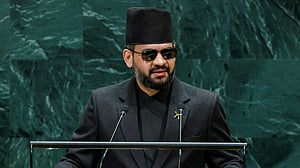
Tofail Ahmed, head of the Local Government Reform Commission, has described the long-standing trend of grooming national leaders from student politics as a “misguided notion”.
National leadership should emerge from local governance system, according to him, as those with experience working directly with the public are more attuned to real-life challenges and better positioned to offer effective solutions.
Tofail also believes that cultivating national leadership through local government would lead to a qualitative shift in the political landscape. For this to happen, however, he argues that the local government’s structure and electoral system must undergo fundamental reform.
In an interview with bdnews24.com's talk show Inside Out, Tofail addressed the shortcomings of the current local government system and proposed changes to its framework and voting method, while exploring alternative paths for fostering women’s leadership.
The episode aired Sunday on bdnews24.com’s Facebook page and YouTube channel.
A leading expert on local governance and elections, Tofail previously served on the Local Government Commission formed by the 2006-07 military-backed caretaker government.
On Nov 18 last year, Tofail, a former chairman of the Public Administration Department at Chittagong University, was appointed as the chairman of the new Local Government Reform Commission under the Muhammad Yunus-led interim government. The seven-strong panel was tasked with drafting reform proposals to make local governance more effective and accountable.
On Apr 20, the commission submitted its final report in two volumes to Chief Advisor Yunus.
It recommended restructuring local government bodies in line with a parliamentary model. The report also called for merging the Union Parishads (councils), Upazila Parishads, District Parishads, municipalities, and city corporations under a single legal framework, and holding all local elections under a unified schedule.
More than a month after submitting the report, Tofail expressed frustration at the lack of progress on implementation.
“We submitted the report on the 20th of April. There hasn’t been any discussion on it. And there’s no indication that anything will happen,” he said.
“At most, it seems the report will serve as an archival document. That’s all I can hope for now.”
He holds politicians and local government leadership partly responsible for this inertia.
“There is no reform-mindedness among our politicians or among local leaders like councillors and union members because we’ve already dismantled much of what once existed,” he said.
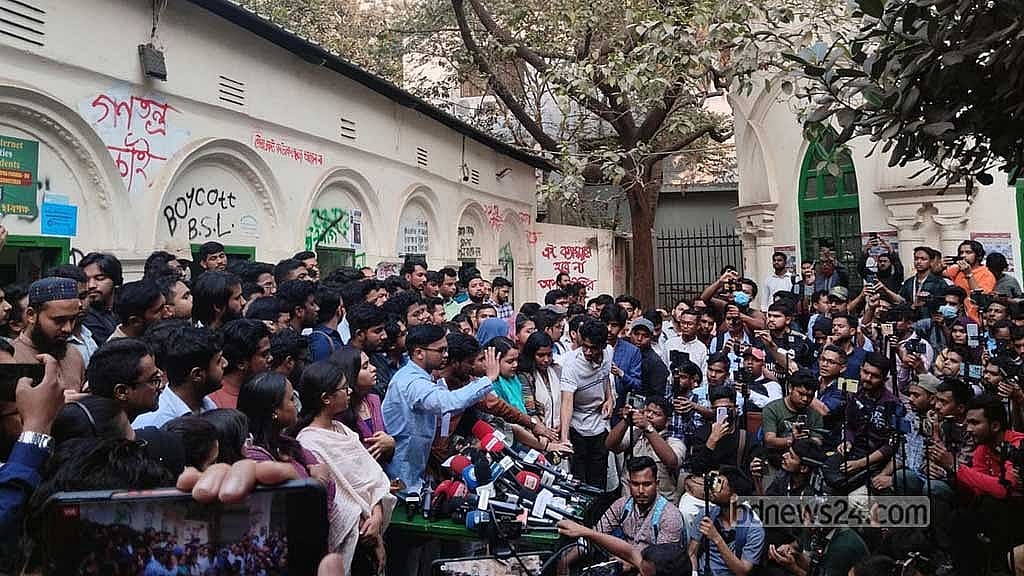
SHOULD STUDENT POLITICS BE THE BREEDING GROUND FOR NATIONAL LEADERS?
Following the events of Aug 5, 2024, the flight of Awami League-backed elected representatives of the city corporations, district councils, Upazila councils, and municipalities has disrupted essential civic services. In response, the government amended the law and appointed administrators to replace these officials.
When asked about the matter, Tofail said: “A vacuum was created, and it happened through a process. One reason for the vacuum is that some representatives fled, went into hiding, or failed to turn up. Another is that those who remained were removed, creating a new void.”
Currently, civil servants are providing services in place of local bodies. However, Tofail believes elected representatives played a more significant role in maintaining social stability.
He labelled the neglect of local government in leadership development a “misconception”.
“We have not seriously considered the local government system as a platform for leadership development. There's this belief that all leaders should emerge from student politics. But that’s a wrong concept. It doesn’t happen like that in any other country in the world,” he said.
Highlighting the limitations of leaders who rise solely through campus politics, he continued: “I don’t work for the public. I study at university. I take part in processions on campus. I become a campus leader and then a national leader, but I don’t understand the country’s problems. In fact, I am not even trying to understand them.”
“This is a kind of romanticism. Campus politics operating in its own bubble. But we’ve turned campus politics into national politics. We've allowed it to dictate the direction of national leadership. In doing so, the kind of qualitative political transformation we need has been sidestepped. Our leadership development process has taken an entirely different path.”
Emphasising the importance of experience in local government, Tofail said: “If someone worked in local government, they would interact with people, understand their problems through direct engagement, and gain practical experience in solving issues one-on-one.
"They would also learn how to handle finances, mediate disputes, and navigate social and administrative matters. This kind of experience prepares people for higher leadership roles.”
He continued, “This is how leadership should grow. We’ve seen some ministers who were once local government leaders -- chairmen of union councils, or mayors of municipalities.”
“One of the most important roles of local government is to nurture future national leaders -- to educate and prepare them as local parliamentarians before they step into national parliament. Unfortunately, this effort hasn’t taken root in our country. But it could have.”
LOCAL GOVERNMENT BODIES SHOULD FUNCTION AS 'LOCAL PARLIAMENTS'
Tofail described the five tiers of local government in Bangladesh as “local parliaments”.
“We only think in terms of the national parliament, the Jatiya Sangsad. But local government institutions are essentially parliaments too. If the national parliament is meant for formulating central policies, then we also have five local parliaments -- union councils, municipalities, districts, Upazilas, and city corporations.”
Tofail added that the Local Government Reform Commission had recommended reorganising these institutions under a parliamentary structure.
“We’ve proposed restructuring them to function like real parliaments at their respective levels. They will exercise limited legislative powers, and for that reason, we’ve proposed separating the executive and legislative functions.”
Expanding on the recommendation, he said: “The chairman or mayor will serve as the executive. That position will function like the head of the executive branch.”
“There will be someone akin to a speaker, a presiding officer, elected by the council members.”
To make the proposed system democratic, transparent, and accountable, Tofail stressed that all members of the council must be elected, including mayors and chairpersons.
“We’ve said that under this system, everyone must be elected, all members must be councillors. The councillors will elect the mayor. If a vote of no-confidence is passed, the mayor will revert to being a councillor instead of being removed entirely. Some people have misunderstood this as a return to Ayub Khan’s system.”
In the 1960s, Pakistan’s military ruler Ayub Khan introduced a local government model called “Basic Democracy”, which was abolished after his fall during the 1969 Mass Uprising.
Explaining the difference, Tofail said: “Why was Basic Democracy flawed? Because under that system, the basic democrats voted on behalf of the people. That version of basic democracy in East and West Pakistan was problematic.”
“This isn’t Basic Democracy. This is parliamentary democracy. Just as we don’t directly elect the prime minister -- MPs do -- the same principle applies here.”
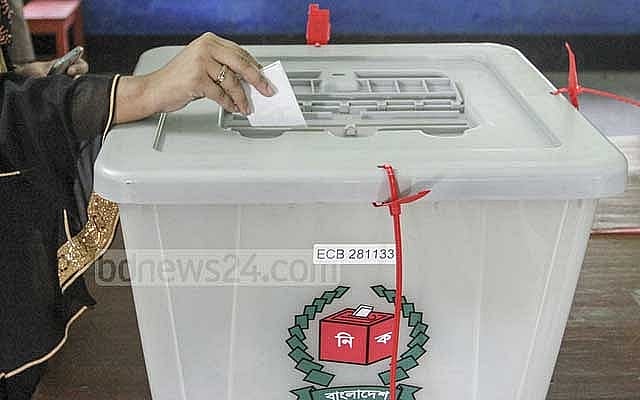
THREE BALLOTS FOR LOCAL GOVERNMENT POLLS
Tofail also elaborated on the proposed idea of holding elections for all five tiers of local government simultaneously.
“Currently, five separate elections are held for local government. Among them, union council, Upazila council, and municipality polls are conducted much like national elections. City corporation and district council elections are comparatively less intense and more localised.”
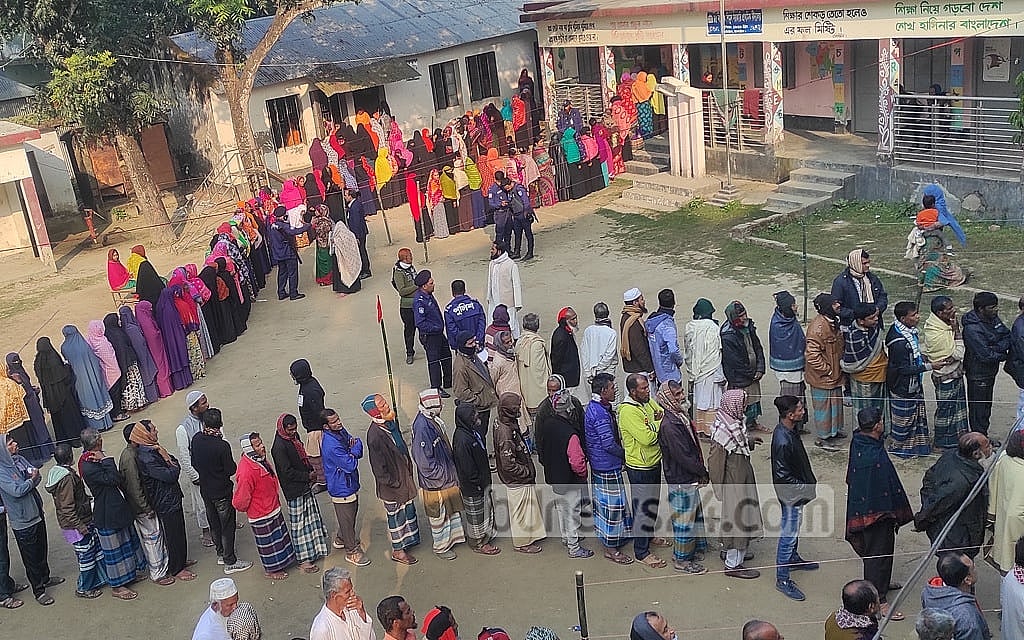
Describing the proposed unified election system as “the simplest”, he said: “In this system, the elections for five institutions will happen together. But each voter will cast votes for three positions. For example, a union-level voter will receive three separate ballots.”
Enlarging further into the process, he said: “Once inside the polling booth, a voter will be handed three ballot papers -- one for their union council ward member, one for their Upazila council ward, and one for the district council ward they fall under. They vote for all three and leave -- no hassle.
“Municipal voters will also cast three votes -- one for their municipal ward, one for the Upazila council, and another for the district council.”
However, residents of city corporations will vote for only two positions, he said.
“Since city dwellers don’t fall under an Upazila council, they will only vote for their city corporation councillor and their district council councillor. That’s it. Easier voting.”
In the proposed system, the elected members or councillors will then elect the chairman or mayor.
“We want this system to be democratic, transparent, and accountable,” Tofail said.
“Everyone would first have to be elected as a member or councillor. Then the councillors will elect the mayor. If a vote of no-confidence is passed, the mayor returns to being a councillor rather than being completely removed.”
Tofail argued that once the system is tested in a full election cycle, its benefits would become evident.
He also noted that the proposed model would significantly reduce government expenditure on local elections.
“In the 2021-2024 local elections, the Election Commission spent around Tk 23 billion. Under the new system, it would cost only around Tk 6 billion.”
To minimise complications, he suggested the possibility of conducting elections in phases, either district-wise or division-wise, under a single election schedule.
'ROTATIONAL SYSTEM' FOR WOMEN'S REPRESENTATION
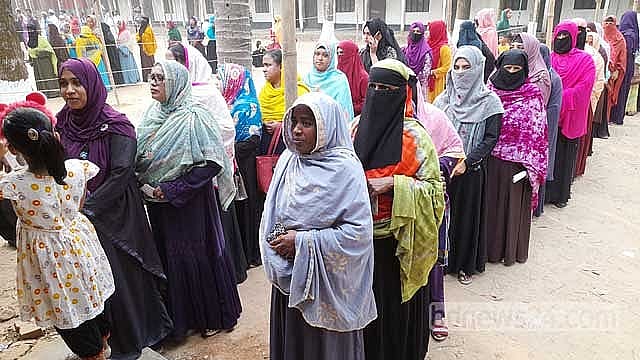
To ensure better representation of women, the reform commission recommended introducing a rotational system in local government elections.
Pointing out that such a system already exists in India, Tofail explained: “Currently, one-third of local government seats are reserved for women. But there are no fixed constituencies. These are supernumerary seats where one person is imposed on three members.
“As a result, in union councils, the female representative doesn’t really have a defined constituency to work with. In Upazila councils, there are two vice-chairpersons, one of whom must be a woman, but her responsibilities are often unclear. That’s why we’ve recommended a rotational system.”
Explaining how it would work, he said: “For example, if a union has nine wards, three of them will be designated as reserved for women in a given election.
“Only women will contest those three seats. In the next election, those three wards become general seats again, and a different set of three wards will be reserved for women. This way, the reserved seats rotate.”
Tofail noted that any registered voter, regardless of gender, would be eligible to contest from any seat, and this rotational method has been proposed to avoid confusion or complexity.
The commission has also recommended that, based on population and area, the number of wards in a union council should be a minimum of nine and a maximum of 39.

'NON-PARTISAN LOCAL GOVERNMENT POLLS'
Tofail criticised the provision allowing political parties to use their electoral symbols in local government elections, a system introduced under the Awami League government.
“They [the Awami League government] introduced party symbols, but did so with a twist. Mayors are elected with party symbols, while councillors and members run as independents. What kind of half-baked system is this?
“There has long been strong public sentiment that non-partisan, socially engaged individuals not affiliated with political parties should contest local elections. That has been the traditional approach, and we’re simply recommending continuing that legacy.”
He continued, “That doesn’t mean everyone running will be apolitical. But this system would allow people to choose real local leaders. We’re not saying the elections must be entirely non-partisan but we also don’t support reverting to fully-fledged party-based elections either.”
Although there were demands to set a minimum education requirement for candidates in local elections, the reform commission did not recommend this, according to Tofail.
“There was a strong public push for it,” he said. “But after careful analysis, we found it’s not feasible. The Constitution wouldn’t allow it, and such a requirement would likely be overturned in court.”
'BLIND MEN AND THE ELEPHANT'
Tofail likened the state of local government in Bangladesh to the parable of the blind men and the elephant, saying a coherent system has yet to take shape.
“We don’t have a proper local government system in this country. Everyone interprets it differently, like the blind men trying to describe an elephant,” he said. “Over time, we’ve developed a few scattered institutions, each emerging in different periods and contexts, with no consistency or integration.”
He pointed out that political and administrative interference affects union and Upazila councils, while the public has no direct electoral participation in district councils.
“In reality, the council system isn’t functioning properly at any level of local government,” said Tofail.
“Things are mostly run according to the will of the mayors and chairpersons.”
To address this, the reform commission has recommended establishing a unified structure.
“We tried to propose a uniform framework, keeping all aspects in mind. There has been longstanding discussion across different platforms about having a homogeneous structure for all tiers.”
“We've attempted to bring all institutions, including city corporations and municipalities, under the same type of framework.”
'NATIONAL VOTE SHOULD BE HELD SEPARATELY'
Tofail expressed his firm support for separating local government elections from parliamentary polls.
“We are not suggesting that national and local elections be held on the same day. The national parliament should remain distinct. There's no benefit in combining it with local government elections. The issues at stake are different, the level of intensity is different.”
“Mixing the two would only lead to confusion,” he added.
To hold all local elections simultaneously, the local government election law must first be updated, according to Tofail.
“That’s why we haven’t prescribed whether elections should be held earlier or later. But during surveys, the public expressed their opinion. For example, 65 percent of people want local elections to be held before the national ones.
“And in the hill districts, 86 percent of respondents said the district council elections should be held immediately,” he said.
DOUBTS OVER IMPLEMENTATION OF REFORM PROPOSALS
More than a month has passed since the full report of the Local Government Reform Commission was submitted, but no steps have been taken toward its implementation, much to Tofail's disappointment.
He is not holding out hope that the recommendations will be implemented anytime soon either.
"Yes, at best, this report will have archival value. That’s all I can see at this point," he said.
In a rueful tone, he added: “I wouldn’t call it shelved, but it’ll have archival value, meaning, it’ll be printed, and one day people will read it. It will be said that there once was a commission that submitted this report, and these were its observations.
“There will be criticisms of it, there will be positive aspects. But in the end, its value will lie in the archives of history.”
Tofail believes that political will is essential to implement reforms.
“They won't be able to implement this. The interim government started off well by forming a solid commission and collecting the report. But when it comes to implementation, the political environment needed to support reform simply hasn’t materialised.”
Citing India as an example, he said: “In places where reform proposals came from the political leadership, they saw success." But that has not been the case here, according to Tofail.
ISHRAQUE'S CASE NOW A 'POLITICAL PROBLEM'
The deadlock surrounding BNP leader Ishraque Hossain’s swearing-in as mayor of Dhaka South City Corporation is no longer just a legal matter -- it has turned political, according to Tofail.
“This delay has shifted the entire dimension of the issue. Now, there's barely any time left in the city corporation's tenure. You've ended up in a major trap,” he said.
“So this is no longer a legal issue. It's become a political problem now -- a matter of political complication.”
Tofail criticised the situation, saying: “Why are such issues being created in the first place? These stem from political motivations of those currently in charge. Also, there’s a kind of bureaucratic inertia at play. Neither is acceptable.”
After a prolonged legal battle, Ishraque finally got the green light to assume office following a court verdict two months ago. Though the Election Commission declared him mayor afterwards, the Local Government Division has yet to arrange his oath-taking, citing legal complications.
Tofail believes such problems cannot be solved by taking to the streets.
“Ishraque also must understand that there is a court ruling, and if it’s not being implemented, he must return to the court. Sitting on the streets won’t solve anything.
“Blocking streets, halting services -- that’s not a solution. The court has already ruled. If the verdict is being ignored, the only path is to go back to court for enforcement. I don’t believe sitting on the streets is a way to resolve this.”
[Writing in English by Turaj Ahmad]