Published : 16 Dec 2022, 02:55 AM
Updated : 16 Dec 2022, 08:52 AM


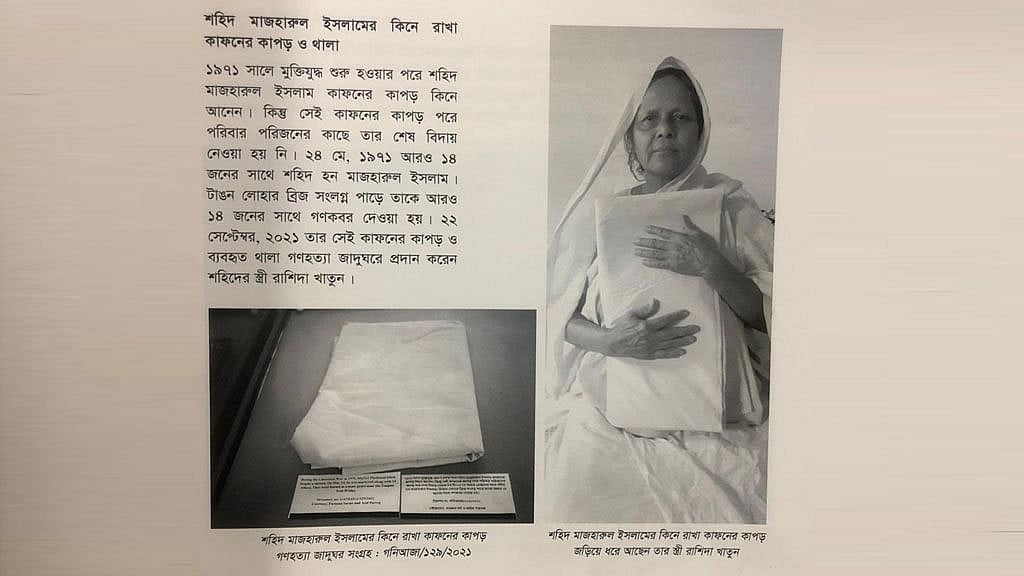
Mazharul Islam, a grocery store owner in Thakurgaon, bought a white shroud with war supplies in 1971 as he thought he would need it for himself amid killings of Bangladeshis by the Pakistan Army.
The family could not use the piece of cloth as the martyr was denied a proper burial.
They came to know about his death months after his body was dumped with others in a mass grave during the Liberation War.
In April, the Pakistani forces sent a letter through the Razakars or their wartime collaborators to Mazharul and some others, telling them to visit the army camp.
The Pakistani Army warned them against helping freedom fighters and ordered them to turn over the members of the Mukti Bahini.
After a week, they called Mazharul again. He never returned home.
From the witness account, the family learnt that Mazharul was among some 15 people killed by the Pakistani army in May. The bodies were dumped near the old iron bridge on the River Tangon in Thakurgaon town.
"We couldn’t even see the body, let alone wrap it with the shroud. We received the news of the killing much later,” said his wife Rashida Khatun.
For 50 years, she kept that piece of cloth. Last year, the family donated the shroud to 1971: Genocide-Torture Archive and Museum in Khulna for preservation.
In her 70s now, Rashida said the Pakistani forces had asked Mazharul to turn over the freedom fighters because he was held in high regard by locals. Mazharul was also a supporter of the Awami League.
Ali Ahmed was only one and a half years old when he lost his father Mazharul. Rashida raised him and his sister, who was 5 during the war, all by herself.
Now a businessman like his father, Ali said: "My father had to die only because the Razakars and some other locals didn’t like him.”
“Like many others, I’ve lost my father. Sometimes people inquire about us. But have we been able to show proper respect to the martyrs who shed their blood for us?”
The Genocide-Torture Museum, founded in May 2014, is piecing together a wide range of information about the identification of the mass killing grounds and genocide, in addition to collecting souvenirs, photographs, books, publications, and documents of the martyrs.
Chowdhury Shahid Kader, trustee secretary of the museum, said: “We’re scouring throughout the country to gather information on genocide and mass killing sites. One of our researchers, while working at the field level, found Mazharul Islam's shroud.”
“We’re collecting such memorabilia. We’re also gathering the mortal remains of the martyrs from the mass killing sites.”
Around 3 million Bengalis were killed during the war. Like Mazharul, many of them were victims of genocide and were denied a proper burial. Mass graves with bones of the martyrs were found in many places up and down the country.
Bangladesh is now working to get international recognition of the genocide committed by the Pakistani army and its local collaborators.
The country observes Mar 25 as National Genocide Day to remember and mourn the victims of the mass killings that began on that night in 1971.