


Published : 20 Jun 2020, 10:59 AM
Updated : 03 Aug 2022, 02:40 PM


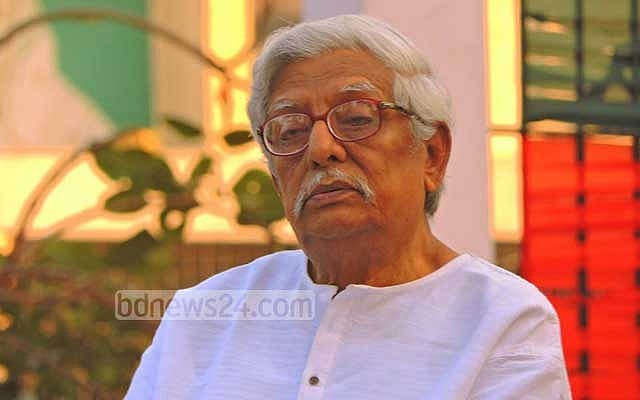
Kamal passed away during treatment at Dhaka's Sheikh Russel Gastro Liver Institute & Hospital on Saturday, his son Sagar Lohani confirmed.
Doctors at the hospital took him off life support and pronounced him dead at around 10:15 am Saturday, said Sagar.
The former director-general of Shilpakala Academy was admitted to the intensive care unit of Panthapath's Health and Hope Hospital for a combination of lung and kidney ailments.
He was later tested for the coronavirus infection and the results came back positive on Friday. He was subsequently transferred to Sheikh Russel Gastro Liver Hospital where he lost the battle for his life.
He leaves behind two daughters and a son.
President Abdul Hamid and Prime Minister Sheikh Hasina have expressed deep sorrow over his death.
In a condolence message, President Hamid said, “Aside from journalism, Kamal Lohani has made a huge contribution to our Language Movement, the struggle for independence and the Liberation War. He was a pioneering figure in the promulgation of the Bengali culture and the spirit of the Liberation War.”
"The country has lost a distinguished journalist and cultural figure. His death is an irreparable loss to the cultural sphere.”
Hasina said, "As an idealistic and virtuous man, he was a leading figure in establishing the spirit of the Liberation War and secular values as well the movement to proliferate our culture."
Kamal's remains will be taken to the offices of Bangladesh Udichi Shilpigoshthi in the afternoon where its staffers will pay their respects in line with social distancing norms, his son Sagar said.
He will be laid to rest in Sunotola village in Sirajganj's Ullapara Upazila with state honours later on Saturday.
Born in Sirajganj's Ullapara in 1934, Kamal completed his secondary education at Pabna District School in 1952. He later went to Pabna Edward College where his formal education would end upon graduation.
During his final year at Pabna District School, Kamal took part in the Language Movement of 1952 which marked the beginning of his involvement in politics.
In 1953, he was sent to jail for his part in the attempts to block the arrival of Muslim League leaders, including Nurul Amin, in Pabna. Shortly after his release, Kamal was arrested again in 1954 and it was at that time that he was drawn to the ideology of communism.
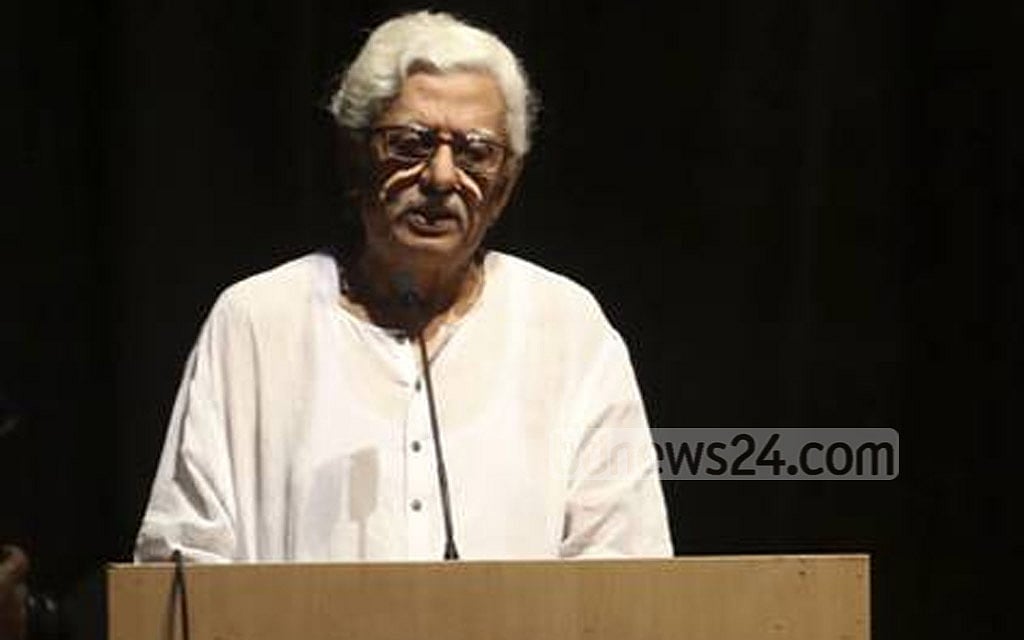
In 1962, Kamal became the general secretary of cultural organisation Chhayanaut. Later in 1967, he formed Kranti, a cultural organisation reflecting his political ideology, which gave a platform to numerous famous artists, including Altaf Mahmood, Sheikh Lutfar Rahman, Sukhendu Das and Abdul Latif.
In 1971, Kamal joined Bangladesh's struggle for independence in multiple capacities, as an artist, a journalist and a political activist. Kamal served as the head of news of Swadhin Bangla Betar Kendra during the Liberation War.
It was in Kamal Lohani's voice that Bengalis heard the news of victory that they had been longing for on Dec 16, 1971.
"We have won. The Pakistan army has been forced to surrender to our allied forces."
Once the bulletin was broadcast, Kamal and all the staff of Swadhin Bangla Betar burst with joy, chanting ‘Joy Bangla’.
After the assassination of Bangabandhu on Aug 15, 1975, Kamal became immersed in a socio-cultural movement.
In 1981, he resigned as the editor of the Daily Barta and started organising cultural movements with renewed vigour. Later, he also played an integral role in the formation of a joint cultural alliance.
Kamal began his career in journalism with the Daily Millat. Since then, he worked in important positions in Azad, Sangbad, Purbodesh and Dainik Barta. He has also served as the president of Dhaka Union of Journalists.
Kamal, who was awarded Ekushey Padak, the second-highest civilian award in Bangladesh, in 2015, served as the director-general of Bangladesh Shilpakala Academy from 2009 to 2011.













