Published : 09 Aug 2023, 04:29 AM
Updated : 09 Aug 2023, 04:28 AM


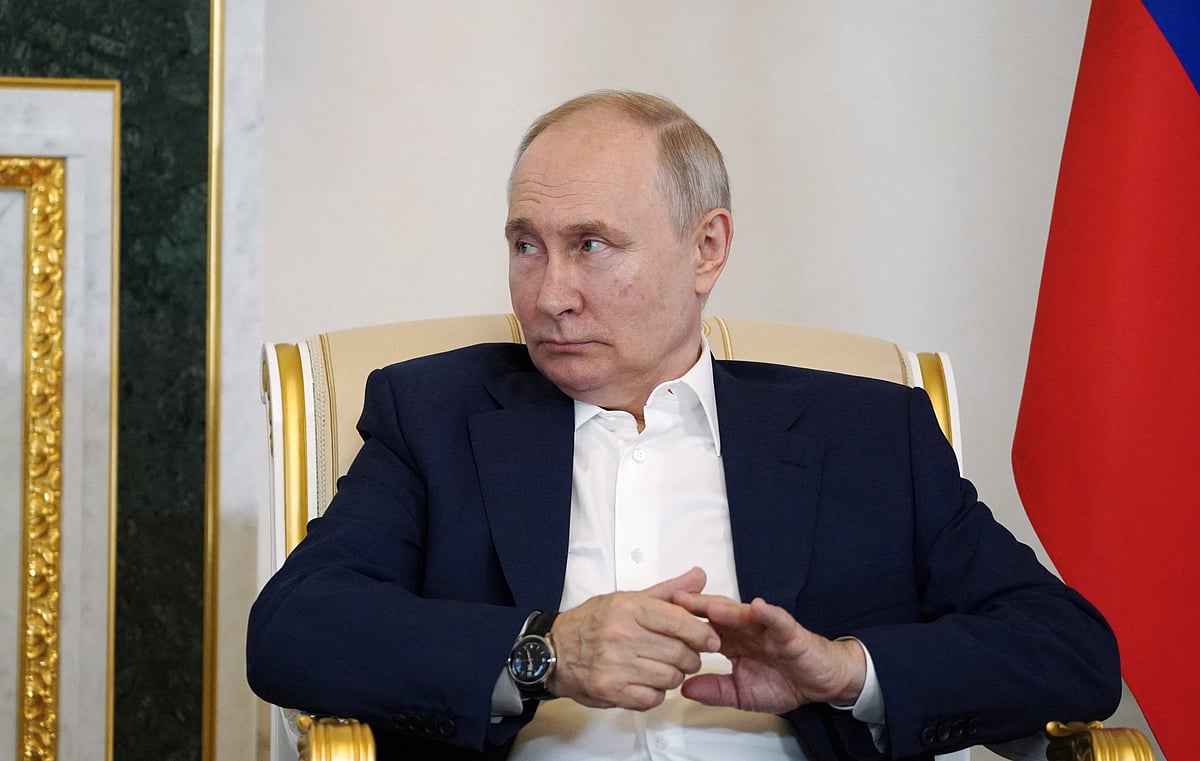
As reported by Business Insider, in a meeting in the Kremlin last July, Vladimir Putin said that Russia reached its limit of revolutions in the last century. As a KGB operative, Putin witnessed the failed coup of August 1991. He resigned from the KGB on Aug 20, near the end of the aborted putsch. Since 1994, the popular uprising--the near-revolution against the failed coup--has been celebrated on Aug 22 as National Flag Day of the Russian Federation. Putin never attended any ceremonies commemorating this auspicious day, according to the essay ‘The Failed Coup that Failed Russia’ by Nina Khrushcheva, great-granddaughter of Nikita Khrushchev, which was published by Project Syndicate on Aug 21, 2021.
On Aug 2, 2023, David Remnick, Editor of The New Yorker magazine, wrote, “In August, 1991, the leaders of the K.G.B., the military, and the Communist Party plotted to lock Gorbachev and his family up in his summer dacha on the Black Sea; then they sent tanks into the capital. The coup started out as an ominous conspiracy, complete with resistance in the streets and a stolen nuclear 'football.' But it all ended in just three days, a Marx Brothers farce.” Putin appears to be upset that this farce failed; as a result, it could not maintain the status quo, and it led to the official dissolution of the Union of the Soviet Socialist Republic four months later, in December 1991, after a series of revolutions giving birth to fourteen new countries.
Regardless of whether you call it a “Marx Brothers farce,” putsch, or revolution, Putin appears to be scared of any change or destabilisation inside Russia during his autocratic rule. On Jun 24, he was shocked to witness the blitzkrieg of five thousand mercenaries led by Prigozhin - who was convicted as a thief, robber, and fraud - against a colossal and clueless Russian army. Putin was so horrified that he saw the ghost of the 1917 Bolshevik revolution and the subsequent half-decade of devastating civil war lurking again in Russia.
Let us dive a little deeper into what happened on Jun 24, compare it to the mutiny of 1917, and try to make sense of why Putin is seeing the ghost of a revolution, repeatedly.
After the fall of Rostov-on-Don to Wagner mercenaries without firing a shot on June 24, the Blitzkrieg of Wagnerites over more than five hundred miles brought them within 124 miles of Moscow in less than a day. The Russian armed forces have four military districts, and Rostov-on-Don is the headquarters of one of them. Both the fall of Rostov-on-Don and the presence of heavily-armed mutineers near Moscow are shocking. During the mad dash, the Wagnerites also shot down Russian military aircraft and came close to the Russian army base Voronezh that holds nuclear weapons.
Yevgeny Prigozhin, the warlord of the mercenaries, dubbed his mutiny as the “March for Justice” against Russian military commanders. Putin and his cronies, including multiple Generals, reportedly flew out of Moscow in panic. Putin made a pre-recorded televised address accusing Prigozhin of treason and promising to crush the mutiny. The Russian army installed defensive positions on the southwest border of Moscow. The World witnessed the chaos and inaction of the Russian military in defending its homeland. This mutiny exposed the weakness of the Russian army.
While Putin came out as the winner over Prigozhin at the conclusion of the Jun 24 mutiny, he came out appearing terribly weak. How many Frankensteins, like Prigozhin, are out there hiding in the shadows of the Kremlin?
The Wagner mutiny could be a false flag operation, a coup, or an angry overreaction of a convicted felon. No one knows for sure. But the question lingers. Is it a preamble to a revolution?
Is there any similarity between the Wagner mutiny and the mutiny of General Kornilov in 1917? In 1917, General Kornilov, the army chief, rushed to Saint Petersburg for a coup d’état but was halted by workers and former army personnel belonging to the Petrograd Soviet. The desertion of fighters from the battlefield appears to be a common denominator predating both events. However, in 1917 it happened on a larger scale. Recently, it was reported that Russian armed forces had been sent to the frontline without proper supplies and ammunition. That was also prevalent in Russian war efforts during the First World War. The Russian economy was in bad shape in 1917 and, lately, it has been shrinking steadily.
The main difference is that in 1917 there were very powerful revolutionary political organisations like the Bolsheviks, the Socialist Revolutionaries, and the Mensheviks, with strong support from army, workers, and civilians. Today, Putin’s political opposition appears to be meek. Also, neither the city government in Saint Petersburg nor Moscow is of the same stature as the Petrograd Soviet, which was controlling the power centre at that time. During 1917, the Petrograd Soviet had been continuously gravitating towards the Bolsheviks, which was the nemesis of the Kerensky Government. Currently, the city governments in Saint Petersburg and Moscow reportedly are not completely subservient to Putin’s regime, but there is a significant presence of his cronies in the power structures of both cities.
At first glance, it appears that a revolution, if it happens, would be mutilated and finished by Putin easily. But why is he so nervous? Many of his powerful allies and oligarchs have been dying mysteriously. By whose hand, if anyone's? How does one explain the firing, vanishing, or arresting of more than a dozen Generals after the June 24 mutiny, many of whom were highly-decorated, battle-hardened heroes of the Russian armed forces? What happened to General Sergei 'Armageddon' Surovikin, Major-General Alexander Kornev, Colonel-General Mikhail Teplinskiy, Major-General Ramil Ibatullin, Major-General Vladimir Seliverstov, Major-General Ivan Popov, Major-General Nikolay Gostev, Lieutenant-General Oleg Tsokov, Colonel-General Andrey Yudin, Lieutenant-General Vladimir Alexseev, Colonel-General Mikhail Mizintsev, aka the Butcher of Mariupol, Lieutenant-General Andrey Gurulev, and deputy defence minister - Colonel-General Yunus-bek Yevkurov?
The Wagner mutiny could be the iceberg that sank the Titanic. One-ninth of that colossal iceberg was seen. The remaining eight-ninths were not visible. Perhaps the ex-K.G.B. operator Putin has x-ray eyes. He may see the ghostly monster of the Bolshevik revolution lurking behind the Russian Federation. One hundred years have passed. The ghost may have mutated. No one knows the details of this mysterious being. Only time will tell.
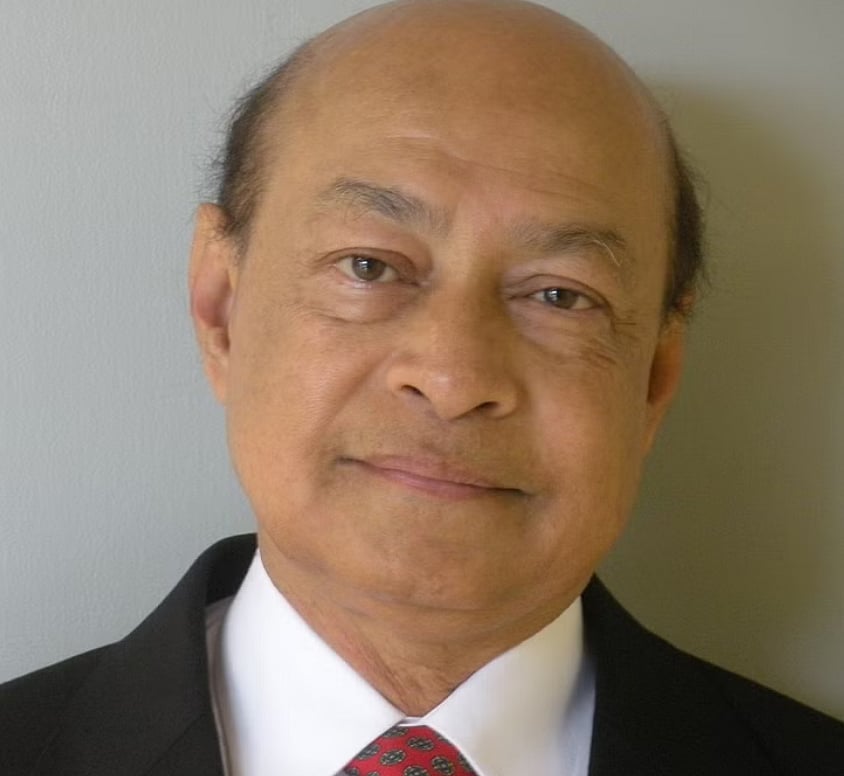
[Dr Mostofa Sarwar, professor emeritus and former Associate Provost at the University of New Orleans, is former dean and ex-vice-chancellor of Delgado Community College and former commissioner of the governing board of Regional Transit Authority of New Orleans.]