


Published : 29 Nov 2018, 11:16 AM
Updated : 19 Oct 2022, 02:24 PM


The 4.6 sq km island, part of the Sundarbans delta on the Bay of Bengal, has nearly halved in size over the past two decades, according to village elders.
The tiny island is home to 4,800 people, down from 7,000 a decade ago.
"If a tsunami or a big cyclone hits this island we will be finished," said Sanjib Sagar, village leader on the island 150 km south of the Indian city of Kolkata.
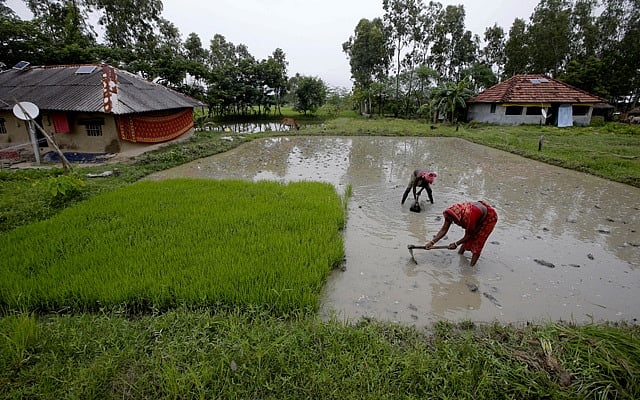
Villagers work in a paddy field on Ghoramara Island, India, Aug 19, 2018. Ghoramara Island, part of the Sundarbans delta on the Bay of Bengal, has nearly halved in size over the past two decades, according to village elders. REUTERS
Ghoramara is among many islands in the delta affected by rising sea levels and soil erosion experts say is caused by climate change.
Residents say the flood waters are getting worse, threatening their homes and livelihoods.
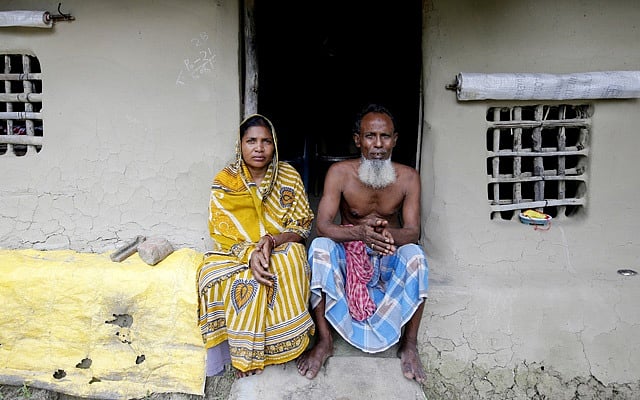
"If government gives rehabilitation I will leave," said Sheikh Aftab Uddin, sitting outside his new mud house with his wife, after his previous home was destroyed by flood waters.
Half of the villagers are ready to move if the government provided free land in a safer area, Sagar said, but there has been no response to their request for compensation or to move people off the island.
Two people in the office of Javed Ahmed Khan, the minister in charge of disaster management in the state government of West Bengal, declined to comment on whether it had any plans to relocate inhabitants.
Sheikh Aftab Uddin, 66, and his wife Mamta Bibi, 50, pose for a picture outside their new mud house after their previous house was washed away due to high tides on Ghoramara Island, India, Aug 19, 2018. REUTERS
As well as damaging homes, floods destroy valuable betel leaf crops that many islanders have depended on for a living.
"Every year, high-tide salt water enters my farm and destroys my cultivation, so I have to face a big loss," said Mihir Kumar Mondal, a betel leaf farmer.
Climate change experts say the entire island population will have to be relocated one day.
"There has to be some planning for those people, in terms of relocating them to other areas. Frankly speaking, this has to be in the plan of the government," said Suruchi Bhadwal, a researcher on climate change at the New Delhi-based Energy and Resources Institute.













