


Published : 31 Jul 2018, 03:11 PM
Updated : 08 Apr 2022, 03:14 PM


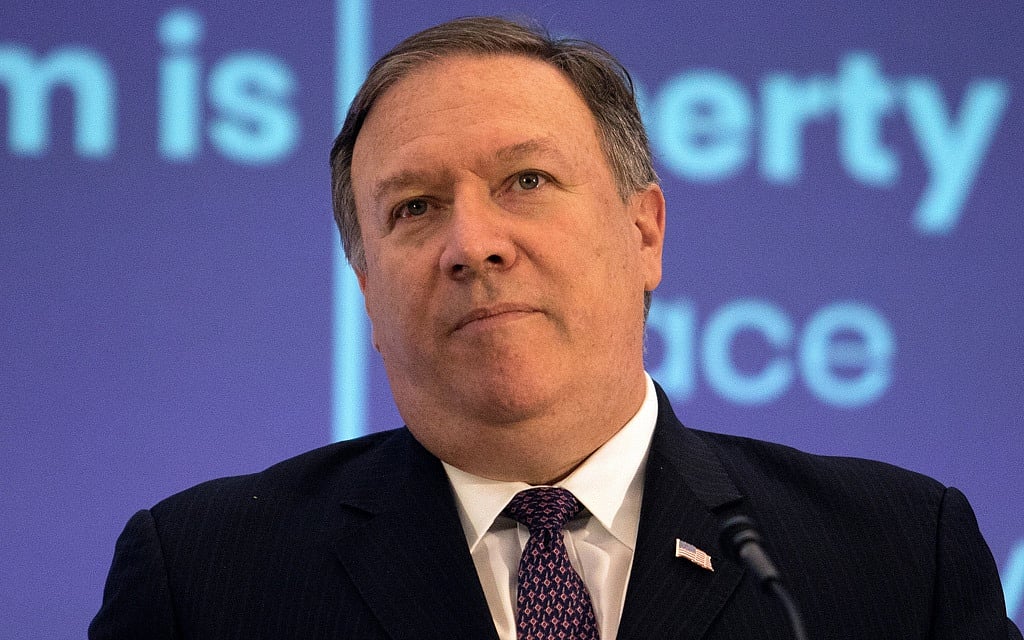
Secretary of State Michael Pompeo announced the new funds for building “foundational areas” of the future of the region as the US did in the past for “enabling the growth, development, and wealth” across the Indo-Pacific.
“It’s clear a big part of America’s international economic future is in this region,” Pompeo said in Washington on Monday while detailing the Trump administration’s vision for the region.
Pompeo talked about the Trump administration’s strategy for advancing a free and open Indo-Pacific, and why US business engagement is at the centre of it—it’s a staple of Washington’s mission to promote peace, stability, and prosperity.
The Indo-Pacific region stretches from the US’s west coast to the west coast of India. More than one-third of the global population is there.
Four of the world’s six largest economies are there as well: China, Japan, India and the US.
The ten countries of the ASEAN community are the fastest-growing economic zone in the world and are major buyers of US products.
Pompeo said President Donald Trump will “strike while the iron is hot, because there are clear economic benefits at hand for the American people.”
“Our Indo-Pacific vision excludes no nation,” he said.
“We seek to work with anyone to promote a free and open Indo-Pacific, so long as that cooperation adheres to the highest standards that our citizens demand.
“The United States is committed to growing our presence in the region because we want Americans and all people of the Indo-Pacific to share in the economic growth of 2020, 2030, 2040, and beyond.”
Pompeo mentioned Bangladesh’s first-ever satellite launching with the SpaceX and said US companies literally help Indo-Pacific partner nations reach for the stars.
“It is an American vision that is deeply engaged in the region’s economic, political, cultural, and security affairs.”
“We stand ready to enhance the security of our partners and to assist them in developing their economies and societies in ways that ensure human dignity. We will help them. We will help them keep their people free from coercion or great power domination.”
“A free and open Indo-Pacific is America’s chosen course – and we hope that it will be yours too,” he said.
Pompeo said the US remains committed “to economic engagement in the Indo-Pacific because of the national security benefits for the American people and our partners.”
He explained that the first initiative is the Digital Connectivity and Cybersecurity Partnership.
This will start with a $25 million initial investment to improve partner countries’ digital connectivity and expand opportunities for US technology exports.
The US will support communications infrastructure development through technical assistance and public-private partnerships; promote market-driven digital regulatory policies; and build partners’ cybersecurity capacity to address common threats.
The second initiative is called Asia EDGE. It stands for Enhancing Development and Growth through Energy.
“Through Asia EDGE, we will invest nearly $50 million this year alone to help Indo-Pacific partners import, produce, move, store, and deploy their energy resources,” Pompeo said.
Third is infrastructure. The US is committed to connectivity that advances national sovereignty, regional integration, and trust. This occurs when infrastructure is physically secure, financially viable, and socially responsible.
He said the US also launched an Infrastructure Transaction and Assistance Network to boost the development of infrastructure done right.
“In each of these areas – digital economy, energy, and infrastructure – we look forward to working with allies and partners,” Pompeo said, adding that private sector would be the key for funding the needs of addressing Indo-Pacific’s needs.
“And only if countries make themselves welcoming to private investment will those trillions of dollars get off the sidelines, into their economies, and into productive enterprises that bring jobs and prosperity to their peoples,” he said.
“For that to happen, Indo-Pacific leaders must prioritize transparency, anti-corruption, and responsible financing.”
“The US government’s Indo-Pacific initiatives will be shaped by these values and buttressed by partnerships with American companies.
“This will reflect American values in the high standards, transparency, and adherence to the rule of law.”
Pompeo also announced strengthened support for regional institutions in the Indo-Pacific, including the ASEAN and US-ASEAN Connect, APEC, and the Lower Mekong Initiative, along with a first-ever contribution to the Indian Ocean Rim Association.












