


Published : 19 Dec 2021, 11:31 PM
Updated : 08 Apr 2022, 01:25 PM


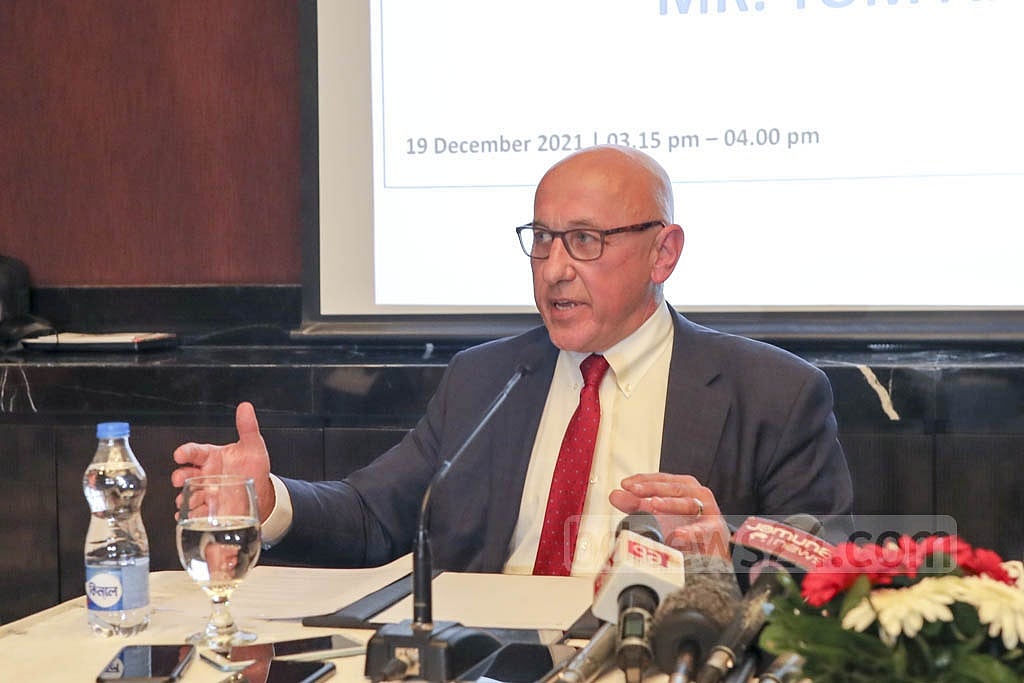
“I think that the international community can do a much better job of identifying sources of revenue that are flowing into the coffers of this military junta and perpetuating these atrocities, and cut them off in a coordinated way,” Andrews said at a news conference in Dhaka on Sunday.
“Now, I know probably the next question is going to be -- that would require action by the UN Security Council and no-one is holding their breath that that's going to happen anytime soon. Fair enough.”
“The UN General Assembly told the nations of the world to keep working to stop arms flowing into Myanmar. Well, let's do it.”
The UN rights envoy said if it cannot be done through the Security Council, “then let’s do it in a coordinated way among those countries who are willing to do it”.
“That is the kind of pressure that needs to be brought to bear and I'm using every ounce of my energy to not only try to build support for those who are here in Bangladesh for no fault of their own and support efforts like those here in Bangladesh to support them, but also to build pressure on the Myanmar military because this issue is not a Bangladesh issue. It is a Myanmar issue,” he said about the Rohingya refugees who fled atrocities in Myanmar and took shelter in Bangladesh.
Myanmar has been in turmoil since the military ousted a civilian government led by Nobel laureate Aung San Suu Kyi on Feb 1, triggering protests and sporadic clashes in the countryside between anti-junta militia and the army.
Fresh fighting broke out last week between the Karen National Union (KNU), Myanmar's oldest rebel force, and the military, forcing thousands from Myanmar's Karen state to flee.
Some crossed the narrow river between Myanmar and Thailand in boats while others waded through chest-high waters while holding children.
Most of the nearly 1 million Rohingya refugees in Bangladesh fled Myanmar during a 2017 military operation, which UN investigators said was conducted with “genocidal intent”.
Some of the refugees have been relocated to a remote island, Bhasan Char, as the situation in the sprawling camps in Cox’s Bazar has continued to worsen.
The recent killing of a civil society leader, Mohib Ullah, by suspected Rohingya militants exposed the dangers lurking in the densely populated camps.
"His murder was believed to be at the hands of the Arakan Rohingya Salvation Army or ARSA. I have received credible reports that members of ARSA have killed, tortured, abducted, and threatened Rohingya refugees," said Andrews.
“There's awareness that there are various forms of activity … nefarious activity that needs to be addressed.”













