


Published : 11 May 2018, 08:21 PM
Updated : 19 Oct 2022, 02:12 PM


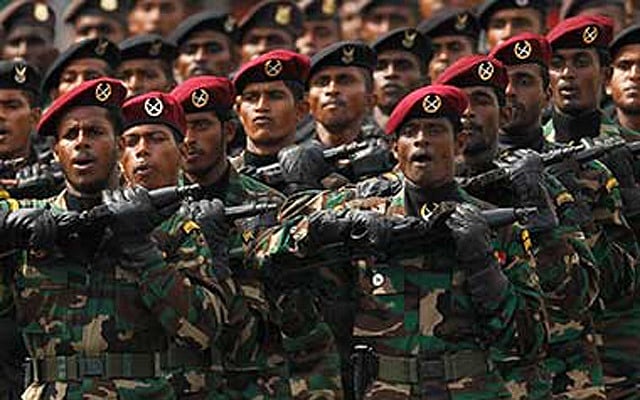
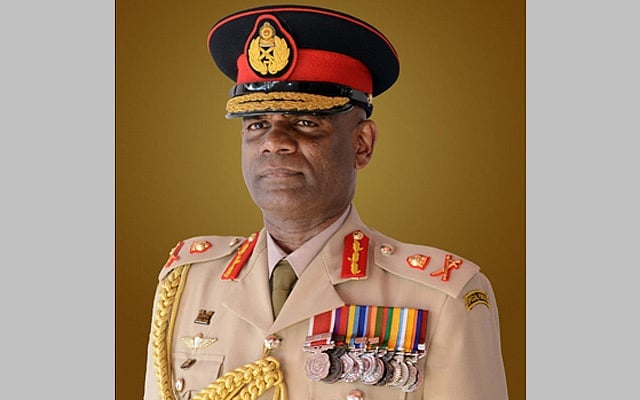
This was stated by the Army Commander Lt Gen Mahesh Senanayake at a meeting with the Foreign Correspondents’ Association of Sri Lanka in Colombo on Thursday.
The UN Human Rights Council (UNHRC) had passed several resolutions accusing the Lankan army of breaching International Humanitarian Law which could be deemed “war crimes.”
The UNHRC and the West-based human rights lobby have called for an international judicial mechanism to investigate and bring the guilty to book. The former UN High Commissioner of Human Rights Prince Zeid Ra'ad al-Hussein had even suggested the extension of Universal Jurisdiction to Sri Lanka.
Gen Senanayake said in the absence of adequate support from those outside the army, the army considers it necessary to have an organisation or a think tank of its own, to defend the institution in the context of the grave charges. And the defence has to be carried out with facts and figures.
The general said the Directorate of Overseas Operations was set up in April and is already engaged in the collection of the relevant materials.
The other important task that has been given to it is the whetting of army personnel wanting to serve in UN peacekeeping missions overseas.
War crimes charges
The general said he is not against any inquiry about alleged war crimes and that he and the army are keen to clear the institution’s name.
He felt that there is no need to fear an inquiry if the army had not committed any violations wantonly as alleged by people overseas.
He believes that there was no wanton violation of the laws of war on a significant scale.
“A few personnel may have committed crimes, but the whole army cannot be blamed for that. At any rate, 14 personnel who had committed objectionable act had been punished,” he said, mentioning those who are now serving sentences.
“The army has not told its side of the story, which is what the new think tank will do,” Gen Senanayake said.
There is still no clarity about many war-time issues, including casualty figures. Some say 100,000 civilians were killed with 40, 000 dying in the last phase of the war. The government puts the figure at 7,000 to 8,000, the army commander pointed out.
The army, too, had lost men. The 30-year war had claimed 20,000 soldiers’ lives; 37, 000 were wounded and 3,488 were missing in action and are yet to be traced.
Transformation into peacetime army
Since the end of the war on May 19, 2009, the Sri Lankan Army has transformed itself into a peacetime army, contributing to national development and reconciliation.
“The Army is the only institution which has the capacity to help the civilian administration in the former war zone in the North and East of the island. It is involved in rehabilitation and re-settlement. Seventy-seven percent of the lands held by the army during the war in the North and East has been returned. The majority of these were private lands,” Gen Senanayake said.
On April 13 this year, 315 of the 640 families living in refugee camps in Jaffna were given back their lands.
“Only those lands which are necessary for security would be kept, such as the lands around the airbase in Palaly in Jaffna. This is because national security cannot be compromised,” he added.
In Trincomalee district, the army has rehabilitated 570 tanks or reservoirs. In Polonaruwa district, 214 tanks were rehabilitated. It provides workers and expertise for house-building in the war zone. By year end, 300 houses would have been built in the North.
On the complaint that the army is building recreation facilities for its staff in the North, Gen Senanayake said the Rest and Recreational (R and R) facilities are needed for any army.













