


Published : 02 Nov 2017, 10:47 AM
Updated : 19 Oct 2022, 03:50 PM


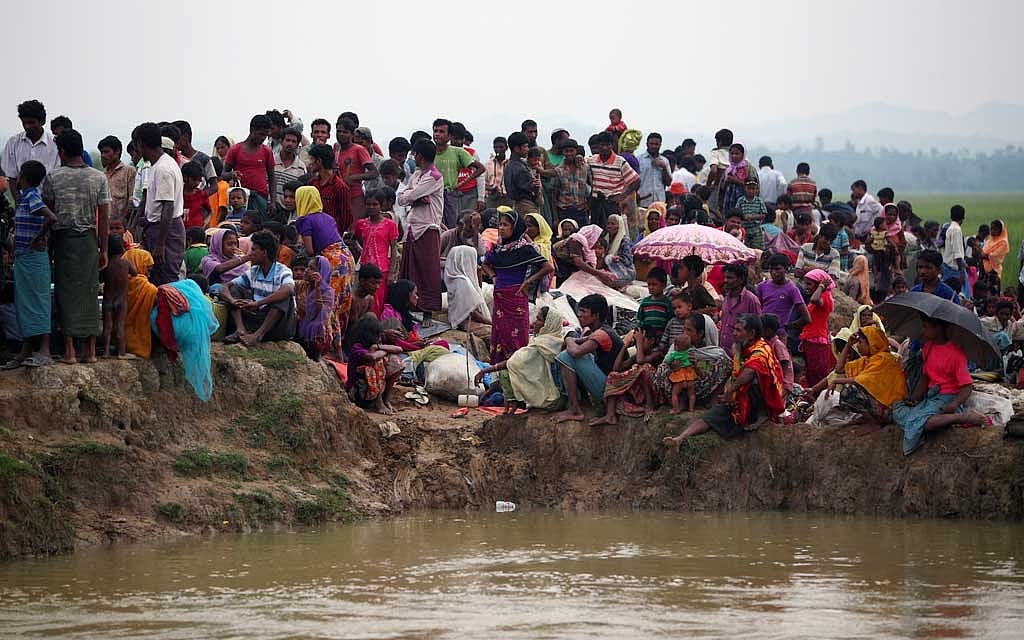
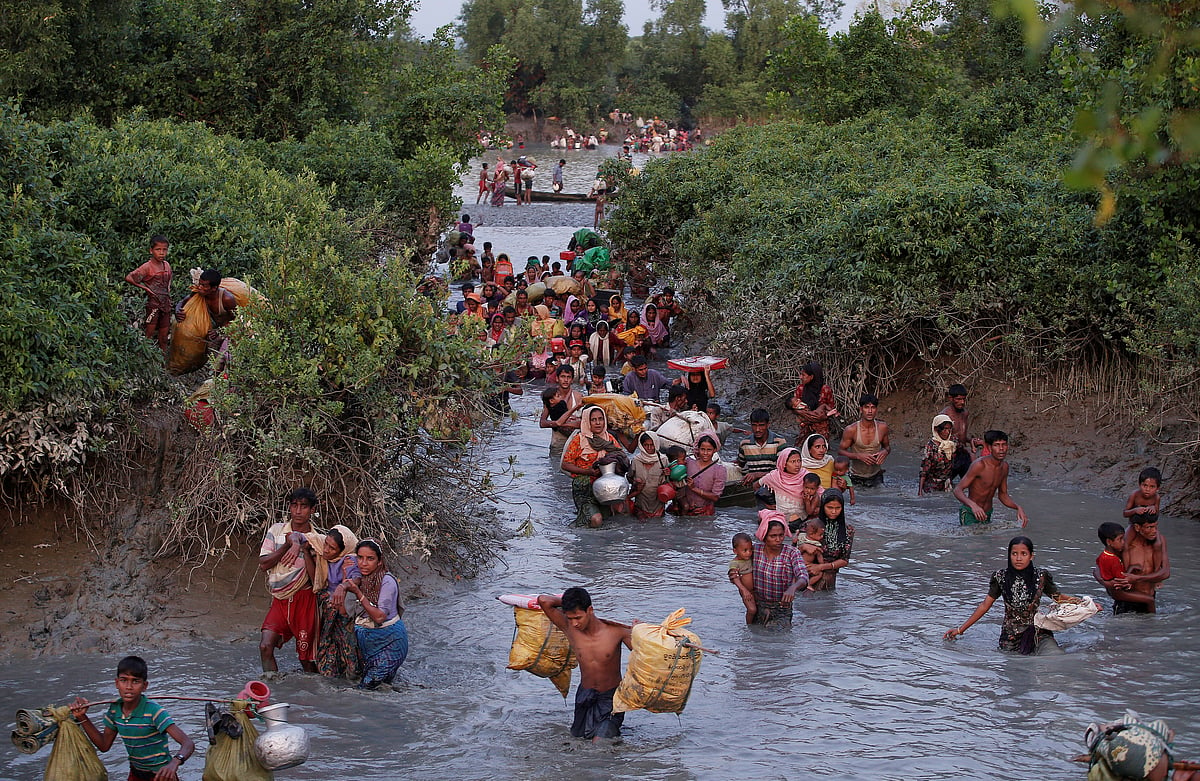
Reuters photographers saw thousands of desperate Rohingyas wade through shallows and narrow creeks between islands of the Naf River to reach neighbouring Bangladesh the previous evening.
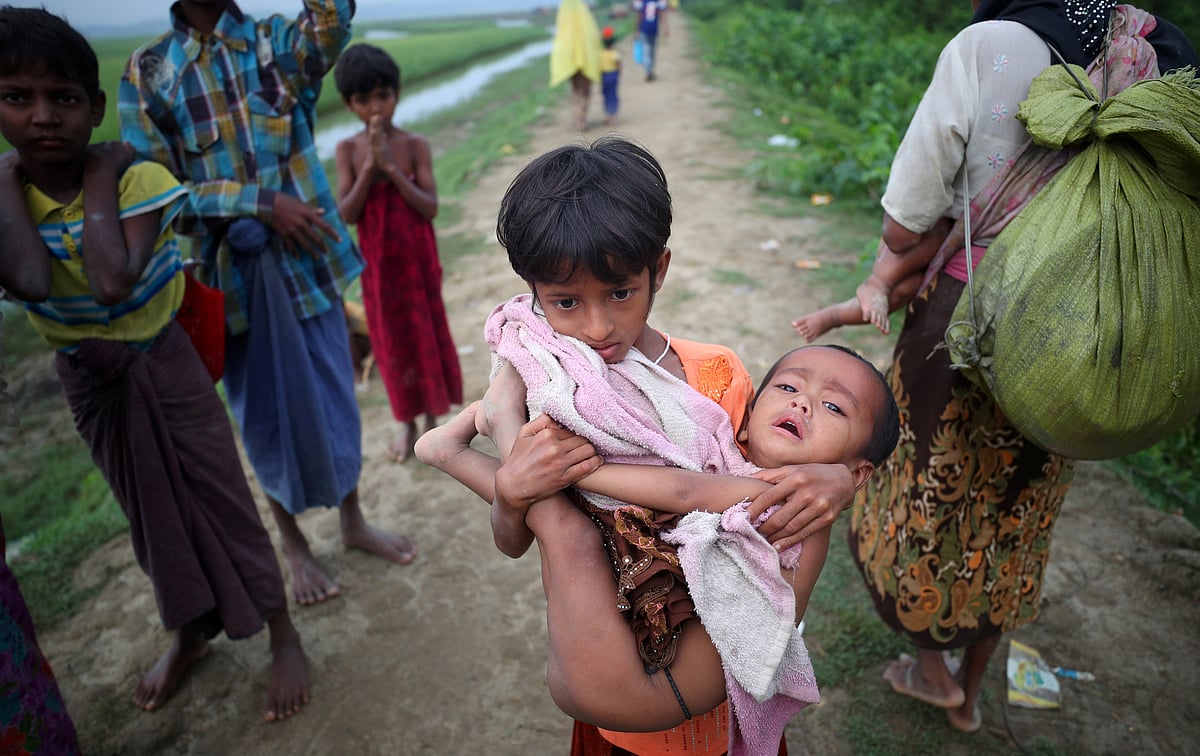
Some had small boats or pulled makeshift rafts to get to Bangladesh on the river's western bank, but most walked, children cradled in their arms and the elderly carried on their backs, with sacks of belongings tied to staves on their shoulders.
Reaching the far side, some women and older people had to be pulled through the mud to reach dry land atop steep banks.
Rohingya refugees cross the Naf River at the Bangladesh-Myanmar border in Palong Khali, near Cox’s Bazar, Bangladesh November 1, 2017. Reuters
Over 600,000 Rohingyas have fled predominantly Buddhist Myanmar to neighbouring Bangladesh since late August to escape violence in the wake of a military counter-insurgency operation launched after Rohingya militants attacked security posts in Rakhine State.
Suu Kyi, a Nobel Peace Prize winner, has faced heavy international criticism for not taking a higher profile in responding to what UN officials have called "ethnic cleansing" by the army.
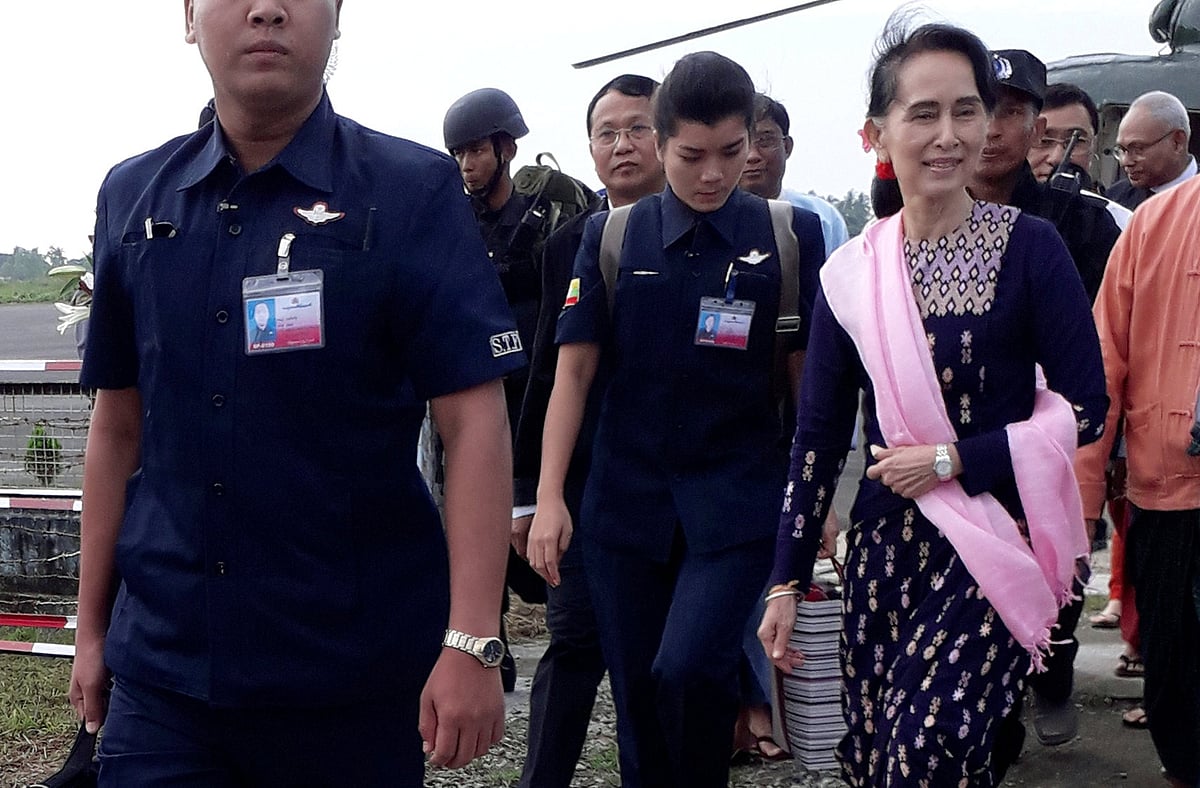
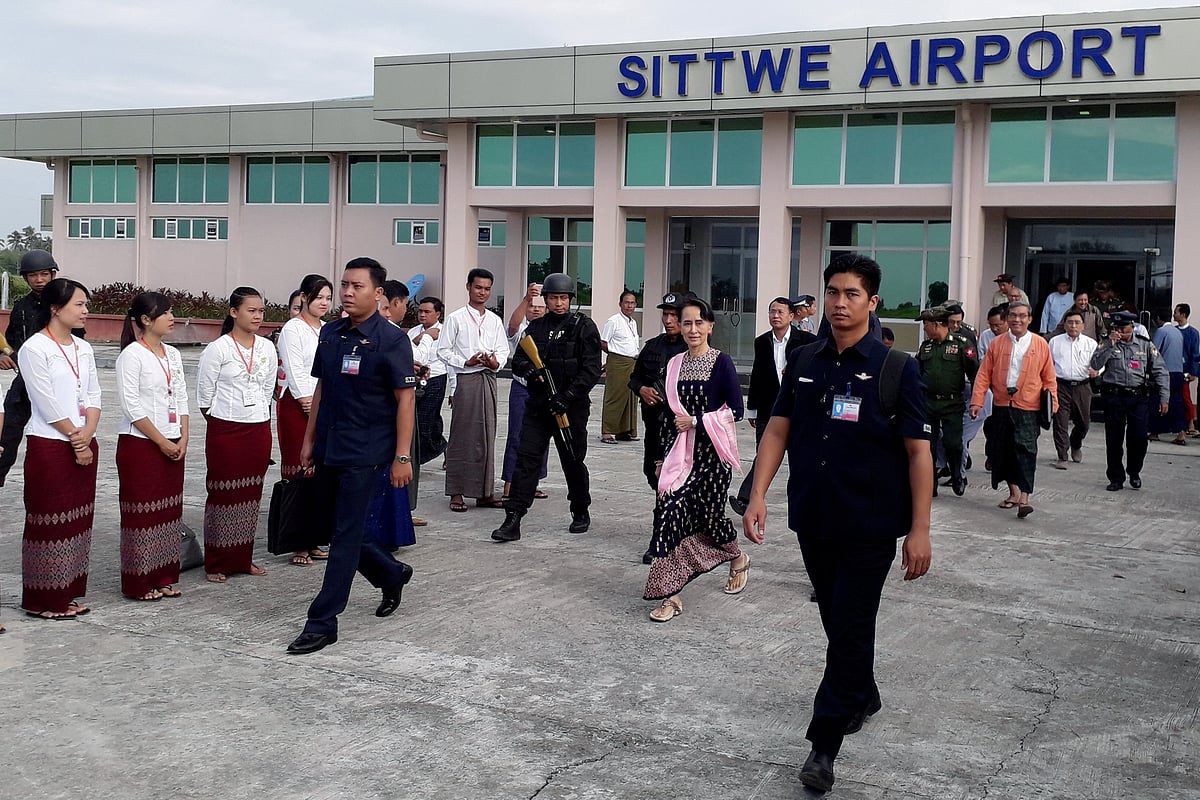
Amid heightened security, she boarded a military helicopter at Sittwe, the Rakhine state capital, to be taken to a village in Maungdaw, the district that has seen the greatest exodus.
"On the road where some people gathered, she stopped the car and talked to everyone," said Chris Lewa, from the Arakan Project monitoring group, citing a Rohingya religious leader who was present.
"She only said three things to the people - they should live peacefully, the government is there to help them, and they should not quarrel among each other."
Myanmar's de facto leader Aung San Suu Kyi arrives at Sittwe airport in the state of Rakhine November 2, 2017. Reuters
Talks on repatriation
Suu Kyi had not previously visited Rakhine since assuming power last year following a landslide 2015 election victory. The majority of residents in the northern part of the state, which includes Maungdaw, were Muslims until the recent crisis.
Also read
Bangladesh delaying Rohingya repatriation: Myanmar
Dhaka’s intention to fix Rohingya crisis clear: UN
Myanmar has rejected the accusations of ethnic cleansing, saying its security forces launched a counter-insurgency operation after Rohingya militants attacked 30 security posts in northern Rakhine on Aug 25.
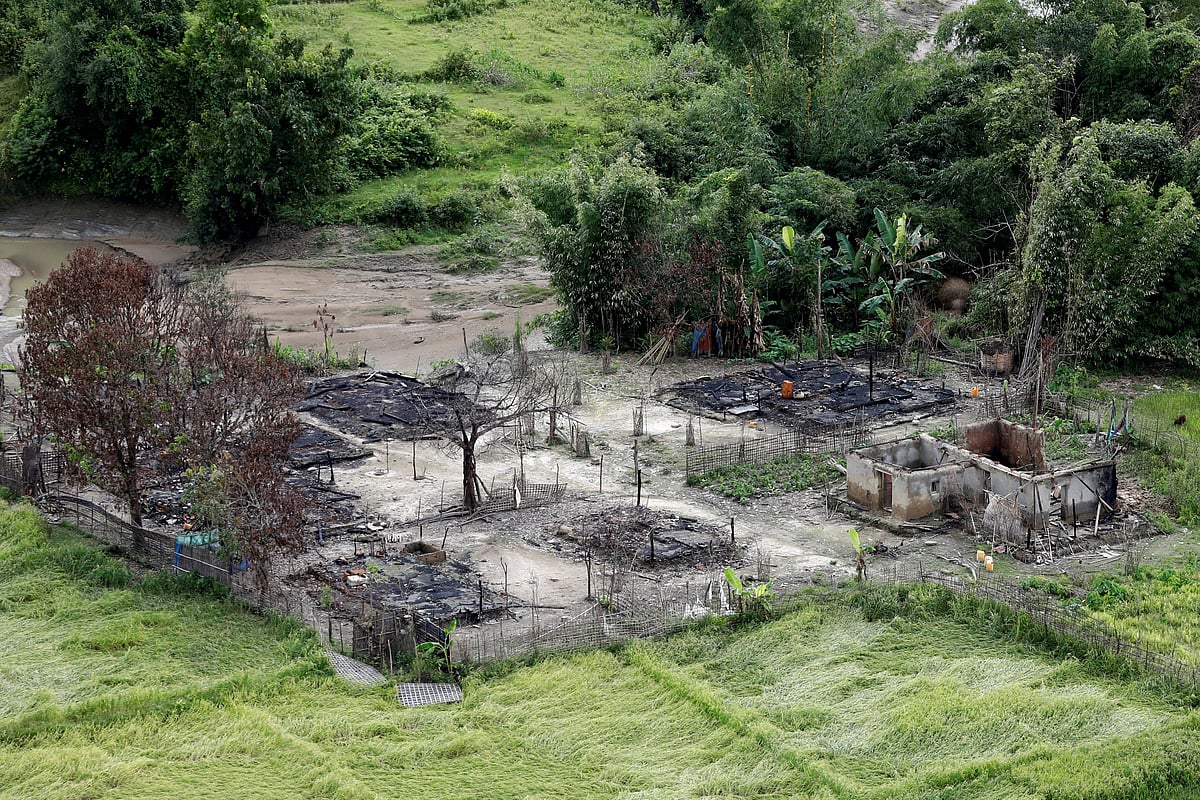
Refugees in the Bangladesh camps say the Myanmar army torched their villages, but Myanmar blames Rohingya militants.
Aerial view of a burned Rohingya village near Maungdaw, north of Rakhine state, Myanmar Sept 27, 2017. Reuters
Businessman Zaw Zaw, formerly sanctioned by the US Treasury for his ties to Myanmar's junta, was also with the Nobel laureate.
Suu Kyi launched a project last month to help rehabilitation and resettlement in Rakhine and has urged tycoons to contribute.
She has pledged to allow the return of refugees who can prove they were residents of Myanmar, but thousands of people have continued to flee to Bangladesh.
Rohingya refugees continue their way after crossing from Myanmar into Palong Khali, near Cox's Bazar, Bangladesh, Nov 2, 2017. Reuters
Suu Kyi's spokesman voiced fears on Tuesday that Bangladesh could be stalling on the accord to first get millions of dollars of international aid money, an accusation a senior Bangladesh home ministry official described as outrageous.
But the scene on Wednesday at the Naf River showed Rohingyas were still ready to risk being destitute in Bangladesh, rather than stay in Myanmar in fear for their lives.













