


Published : 26 Feb 2016, 12:36 PM
Updated : 19 Oct 2022, 05:08 PM


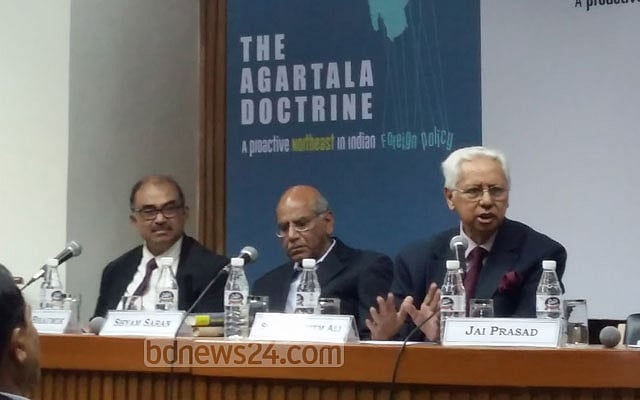
Bangladesh is contemplating air connectivity with India’s northeastern states. But this is only one of many ambitious plans to connect the two regions.
“We want to make a drastic change in terms of connectivity. Air connectivity between Guwahati to Dhaka and Shillong to Agartala via Dhaka could be explored. But we need to chalk out the commercial viability,” said Bangladesh High Commissioner to India Syed Muazzem Ali in New Delhi on Thursday.
Pointing out that the northeast is the gateway to connectivity with India, the high commissioner said that both Bangladesh and India have been talking about launching bus services on a daily basis or at least twice a week.
“Earlier, connectivity was considered a threat to the country’s security (due to insurgencies), but now the scenario has changed. Both countries are now in a win-win situation,” said the high commissioner.
He has also emphasised on the railway connectivity between both the countries.
“Our prime minister is committed to the railway connectivity with India. In fact, we will first restore the 1965 railway line which was disrupted during the Indo-Pak war,” the high commissioner said.
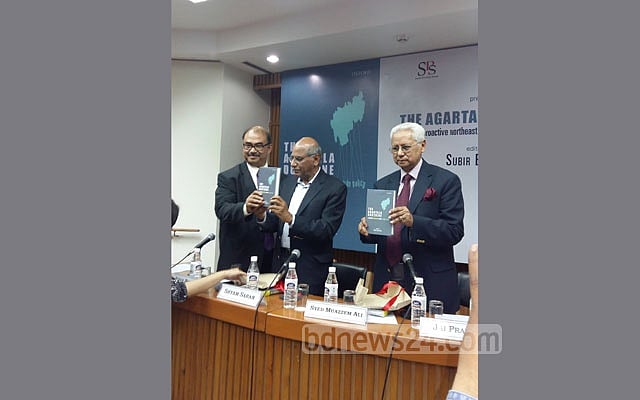
Referring to Bhaumik’s book, the high commissioner said that it will definitely prove to be a success.
The book is based on how leaders of Tripura, from its first chief minister Sachindralal Singha to current chief minister Manik Sarkar , have pursued a proactive policy of engagement in the neighborhood.
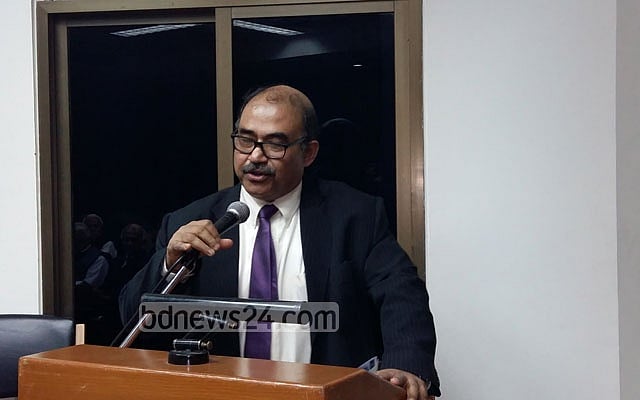
“This is a national doctrine for neighbourhood management,” said Bhaumik, who is also the India Editor of bdnews24.com.
"Tripura chief minister Manik Sarkar's recent praise for former Home Minister L K Advani indicates he had his approval for covert operations inside Bangladesh, though Vajpayee and his National Security Advisor Brajesh Brajesh Mishra were clearly opposed to it,” said Bhaumik in his book.
The book refers to 21 such strikes on rebel bases and hideouts between 2001-2004 using surrendered militant and Bangladesh mafia that, Bhaumik says, broke the back of separatist insurgency in Tripura.
"The country went ga-ga over one such strike in Myanmar last year, but Sarkar prefers total secrecy and no chest-thumping, he is interested in results," Bhaumik said.
After Kolkata and Agartala, Delhi was the third city in India where Agartala Doctrine was launched. It will be launched in four more cities and in Dhaka.
It has been published by Oxford University Press.
“My doctrine of 'appropriate response' (strictly based on reciprocity) is modelled on Tripura's relatively unknown but very sustained proactive role in dealing with East Pakistan and later Bangladesh. While the state's leaders never played cheap localism like Mamata or Jayalalitha and worked their policy with parameters of larger national interest, they played a much more proactive role than any Indian state,” Bhaumik said.
The book contains several other articles written by writers like Samir K Purkayastha, Farooq Sobhan, Biswajit Mohapatra, Sashi Tharoor and others.













