Home
+
Published : 06 Sep 2020, 10:36 AM
Rodari, a beloved children’s author in Italy who died in 1980, took state violence seriously. When he was a reporter for the communist newspaper L’Unità, in 1950, he covered the police shooting of six unarmed men protesting for workers’ rights, and one of his early poems was about a child whose father was killed by police.
But by the time he published his masterpiece, “Telephone Tales,” Rodari had developed a subtler approach. “He put politics in his tales in a way that you couldn’t say, ‘Well, this is socialist ideology,’ but made you question what’s happening in the world and how nonsensical people are sometimes,” said Jack Zipes, a professor emeritus of comparative literature at the University of Minnesota who has studied and translated Rodari.
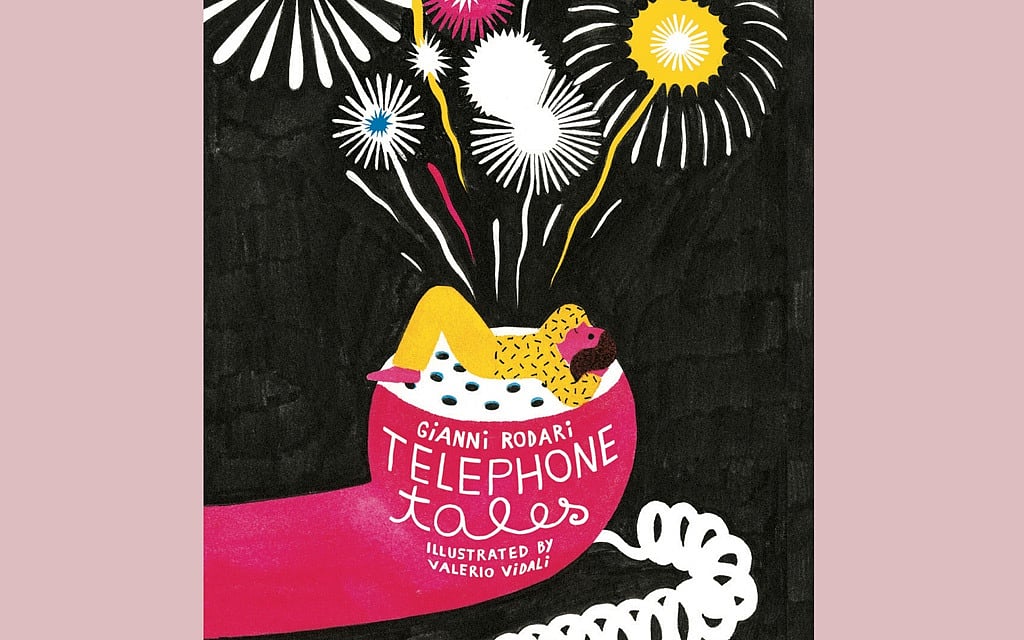
First published in Italy in 1962, “Telephone Tales” is a collection of children’s stories intended to be short enough that one could be read during a 20th-century pay phone call, as the Italian title, “Favole al telefono,” suggests more explicitly. It is also unapologetically political, using unlikely situations and imaginary worlds to prompt readers to question the status quo.
It has never before been published in the United States, but Enchanted Lion is releasing it Tuesday, with translation by Antony Shugaar and illustrations by Valerio Vidali (a partial English translation came out in the U.K. in the 1960s). The publisher also plans to release Rodari’s essay on education and storytelling, “The Grammar of Fantasy,” translated by Zipes, next year.
Other children’s books, including “The Story of Ferdinand,” have become classics over the years despite debate over their political interpretations, but it remains to be seen how “Telephone Tales” will be received in America. “Every single tale is a small revolutionary act,” said Giulia Massini, an Italian book critic.
Claudia Bedrick, the publisher and editor at Enchanted Lion, said she and Shugaar have been working on the book for five years and that its release isn’t a political statement or a response to one. But she added that “Rodari’s political message is profoundly important, and you don’t publish Rodari without caring about it, because it lives and breathes in all he says.”
During his lifetime, Rodari was popular at home and abroad, especially in Russia and Eastern Europe, and was the only Italian writer awarded the prestigious Hans Christian Andersen Award for children’s literature. He never caught on with English-speaking readers, in part because of his ties to the Communist Party.
In Italy, nevertheless, Rodari is seen as a mainstream author. His books are read in schools, most Italians know at least one of his nursery rhymes by heart, and some of his lines (“nails have heads but they don’t think / the same could be said of some people”) are part of Italy’s shared heritage as much as Pinocchio.
His books are constantly reprinted, and he has been the subject of several books in Italy, most recently a biography by historian Vanessa Roghi. “He’s a timely author,” she said.
Born in a working-class family, Rodari briefly taught in a primary school. During World War II, he joined the Resistance and Italy’s Communist Party, and in 1947 he began working for L’Unità, the party’s newspaper, as a political reporter. There editors asked him to write the children’s section, because he was the only staff member who had ever worked with children.
His breakthrough came in 1960, with a collection of nursery rhymes that reached far beyond his typical politicised, leftist readership. “Telephone Tales,” published two years later, was an instant success. In 1971, publisher Einaudi released a new edition of the “Telephone Tales” in its most prestigious book series, the Struzzi, dedicated to classics, placing Rodari side by side with F Scott Fitzgerald and Italo Calvino.
Rodari worked at a pivotal moment for Italy’s education system and took a serious interest in pedagogy. In the 1960s, Italy’s schools were reformed to be more inclusive of poor and working-class children, but the changes sparked a conservative backlash. Rodari’s books, with their accessible style and jokes built around grammatical mistakes, were intended to empower disadvantaged children who weren’t exposed to books and formal speech at home.
“He wanted kids not to feel intimidated, to see mistakes as a tool to grow and as a creative moment,” said Roghi, his biographer. She added that Rodari also contributed to the development of the Reggio approach, the educational philosophy born in Reggio Emilia after World War II, that saw the classroom as a self-educating community.
To Rodari, imagination was always revolutionary, because he thought that, when readers picture different worlds, they stop taking existing conditions for granted and learn to think about alternatives. His world bears similarities to Dr Seuss as much as it does Marxist philosopher Antonio Gramsci, bringing utopia and nonsense together.
In one of the stories in “Telephone Tales,” two children make up numbers and measurements on a whim. “How much does a teardrop weigh?” one asks. The other answers: “Depends. A willful child’s teardrop weighs less than the wind, but that of a starving child weighs more than the world.”
c.2020 The New York Times Company