


Published : 28 Dec 2015, 09:04 PM
Updated : 19 Oct 2022, 07:06 PM


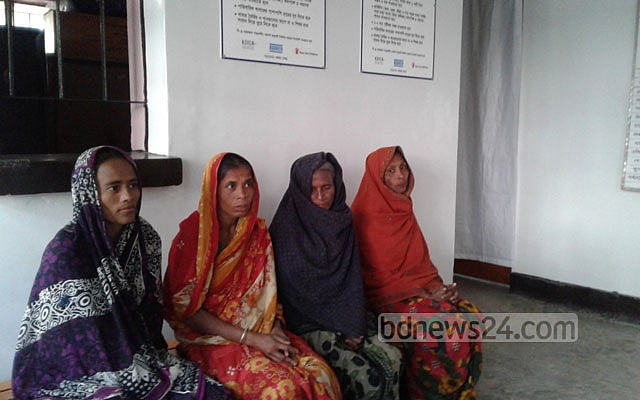
Female members of her family including her mother-in-law, grandmother, sister and cousin have come to see her on Sunday afternoon.
“For the first time, someone in our family is about to deliver in a hospital,” her elder sister Hosna Begum, who is also a mother of four children, told bdnews24.com. All of her children were born at home.
Home delivery is common in Bangladesh. But it raises the risk of a women’s death from birth complications, as most attendants helping in the delivery are unskilled.
Skilled attendants account for only about 30 percent of the deliveries annually in Bangladesh.
Julfa Begum’s family members wait at the UH & FWC
“Families, religious leaders all raise questions if a would-be-mother goes to doctor,” Mostake Ahmed Sayem, an NGO worker of the upazilla, told bdnews24.com.
He said cow dung was smeared over one of their billboards flashing info on maternal and family planning related services.
The conservative stance of her mother-in-law forced even a family planning worker to deliver at home.
“But things are changing,” Sayem said.
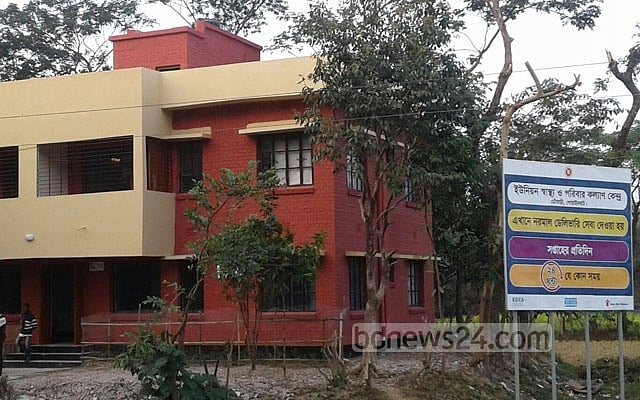
The Union Health and Family Welfare Centre (UH&FWC), where Begum was lying, is the only government facility for delivery-related services of Doubari union.
But even a month ago it was like a haunted place. The dilapidated building, with most of the medical staff posts vacant, failed to attract service seekers.
A Family Welfare Visitor (FWV), frontline worker of the family planning directorate, was the only service provider.
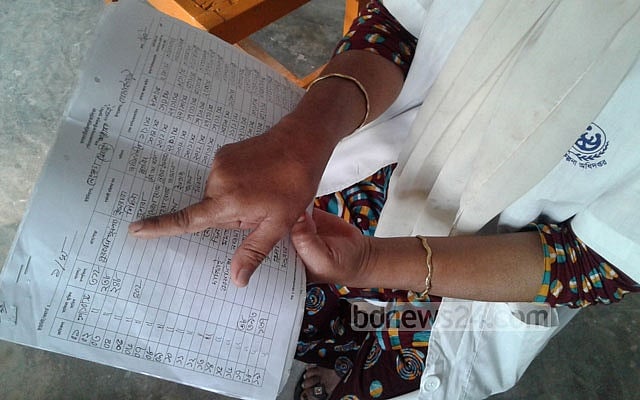
FWV Jahanara Akhter shows the register book
They renovated the building and added staff to the government’s existing manpower, Jamil Akhtar, project director of NGO Mamata, a KOICA supported project, said.
The idea was to ensure maternal, newborn and family planning related services by deploying both health service promoters and providers.
“Three births have already taken place since the opening of the centre on December 7,” FWV Jahanara Akhter of the Centre said. She herself moved the top floor of the two-storied renovated facility to live with her family.
The project put two more trained staff with her.
“The whole input is to keep it open all the time,” the project director said, adding that their volunteers work door to door to convince families to come to the facility for services.
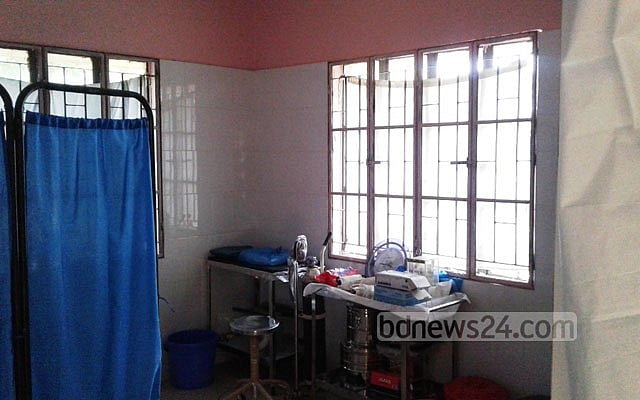
The delivery room at the UH & FWC
The project revealed that the union’s health and family planning centres can afford to remain open 24/7.
The government took it up and the Directorate General of Family Planning (DGFP) incorporated the approach in its programme.
The DGFP also signed an MoU with MaMoni in 2014 to get technical support for its about 4,000 such family welfare centres across Bangladesh.
“Our objective is to support the government to scale up its plan,” Project Director Akhtar said. “This is to show that minimum input can maximise the service delivery system”.













