


Published : 25 Sep 2019, 05:40 PM
Updated : 08 Apr 2022, 02:24 PM


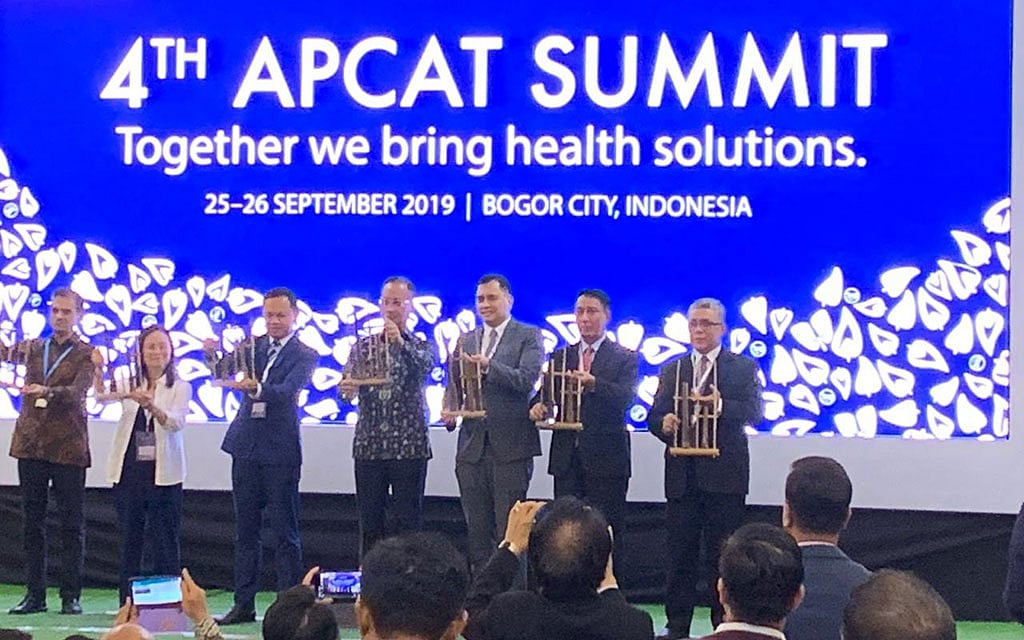
“When we, APCAT, said we want to create smoke-free cities – that we will ban tobacco promotion, that we will safeguard people’s health from the tobacco industry, that we will reduce NCD-related deaths and diseases,” Bogor Mayor Bima Arya Sugianto, also a co-chair of the APCAT, said at the opening on Wednesday.
“We said we will build tobacco-free generation in our cities. No excuses! That was and continue to be our ambition to achieve. And we gathered here, sharing, networking, ensuring that we could achieve that ambition,” he said.
The APCAT, established in November 2016, is a network of mayors and subnational leaders united by their shared vision to create tobacco-free environments.
It meets on a regular basis to learn and share experiences about comprehensive tobacco control policies and strategies and create solutions to prevent non-communicable diseases (NDC) such as heart attack, stroke, cancers, and chronic lung diseases.
This year’s two-day regional meet is jointly organised by APCAT, Ministry of Health Indonesia, Bogor City, The Union (International Union Against Tuberculosis and Lung Disease) and the Partnership for Healthy Cities with the presence of over 100 local leaders from 40 cities of 12 countries.
Dr Paula Fujiwara, Scientific Director of The Union, linked it with the word leaders’ new political declaration on the establishment of ‘universal health coverage’ two days ago at the UN General Assembly.
“It does include several commitments relating to NCDs, including a commitment to address the leading risk factors associated with NCDs,” she said, adding that tobacco use is “one of the lead risk factors” for NCDs.
“We have to keep working together to beat the influence of the tobacco industry and to see that the WHO Framework Convention on Tobacco Control is implemented as a part of countries’ efforts to achieve universal health coverage.”
She said stronger political leadership and the alliance of mayors and subnational leaders like APCAT plays a “crucial role” in creating healthy cities and environments in the region.
Bogor is an example. It was the first city in Indonesia to implement a smoking ban in public places and a tobacco display ban in retail outlets.
It has also adopted a ‘comprehensive ban on tobacco advertising, promotions and sponsorships’ and opened a hotline people can use to report violations of the smoke-free laws.
But challenges remain, the city mayor said when asked.
“There is ongoing pressure from tobacco industries I have to admit. There are many ways for them to penetrate to our city,” he said.
“I said to tobacco industries don’t dare to come to Bogor because we have a very strong commitment to deal with tobacco control,” he said, adding that he has two strong tools to deal tobacco industries.
One is a strong legal framework and the other is a strong support from local communities and stakeholders, he said.
Bogor is also continuing to build facilities and infrastructure to promote a healthy lifestyle for its citizens.
“Our aim is to become an open and enthusiastic city in connecting, networking, and problem-solving and making people prefer running to smoking,” he said, adding that Bogor has three identities as a city in Indonesia – green city, heritage city and smart city.
But, he said, solving the problem of smoking tobacco is not easy. “We need to do this together. We must connect with each other, support each other, and inspire each other. Together we bring health solutions – this is APCAT.”













