Published :
12 Jul 2013, 04:30 PM
Updated :
09 Aug 2022, 10:54 AM
Blood cancer patients in Bangladesh will soon have bone marrow transplant facilities in the country and need not travel abroad for treatment.
Dhaka Medical College and Hospital will offer this therapy ‘within the next two months’.
Health Minister AFM Ruhal Haque had earlier set the deadline for June but said on Friday more time was needed to set up this ‘very sophisticated and technology-dependent’ unit at the country’s biggest public hospital.
“I hope the Prime Minister will be able to open it within the next two months,” he said at a seminar where experts from the Massachusetts General Hospital (MGH) spoke of their role in creating the unit together with the government.
Training of nurses and ‘comprehensive’ women’s cervical cancer care were also part of the collaborative effort, they said.
The Ministry of Health and Family Welfare had tied up with the MGH, the primary teaching hospital of the Harvard Medical School, and a biomedical research centre in Boston a year ago to make treatment affordable to thousands of cancer patients unable to bear the hefty costs incurred abroad.
Transplantation replaces damaged or destroyed bone marrow – the soft and spongy tissue inside bones – with healthy bone marrow stem cells.

This is needed to treat different types of blood cancer, leukaemia and certain genetic blood and immune disorders like thalassemia, cancer of the lymphatic system, and severe aplastic anaemia.
There are no official data about people needing bone marrow transplantation in Bangladesh but doctors say many go abroad for treatment.
BRAC founder Sir Fazle Hasan Abed, present at the seminar, welcomed the initiative, saying it would benefit the poor. BRAC is Bangladesh’s biggest NGO.
USAID’s mission director Richard Greene said the transplant unit would play a critical role, as the number of cancer patients was rising in the country alongside economic growth.
Dr Bimalangshu Dey, a Bangladesh-born American at the MGH who is also the US coordinator, said he was initially ‘surprised’ when the minister broached the idea.
“But now it is going to happen,” he said, adding that 20 nurses for the transplant unit had already been given training in Boston.
Doctors too were undergoing training, he said.
The floor of the DMCH extension on which the unit is housed has been remodelled to suit its special needs.
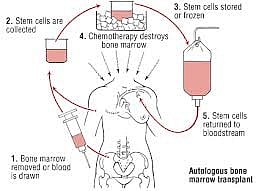
Prof MA Khan, in-charge of the unit, told bdnews24.com they would start with autologous bone marrow transplant in which one’s own bone marrow is used.
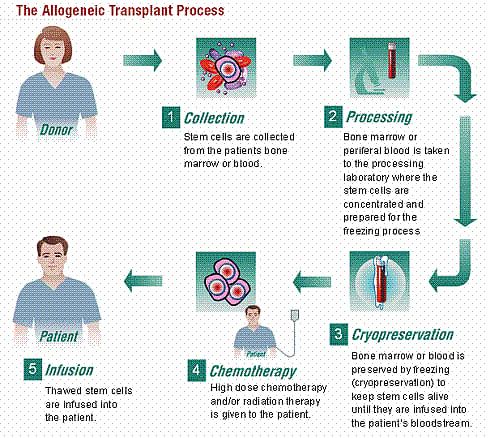
“We will gradually introduce allogeneic bone marrow transplant in which we can use the marrow of siblings or donors after proper matching.
“Allogenic procedure needs greater expertise and every new centre starts with the autologous system,” he said.
He said five patients could be treated at a time in the unit’s five isolated cabins, where patients would have to spend at least three weeks after transplantation.
“When India started it in 1984, they were doing one or two cases a year for the first four or five years. But if you see their 2010 statistics, it was 588,” he said, the procedure needed “high skills that takes time to grow”.
“For autologous procedure we may charge Tk 0.5 million while for the allogeneic it may be Tk 1 million,” he said “which is three times lower than even India”.