Published :
26 May 2013, 04:23 PM
Updated :
09 Aug 2022, 10:42 AM
As the campaign for higher taxes on tobacco products grows louder, a section of researchers and parliamentarians become active on every budget eve to prevent any hike in bidi taxes.
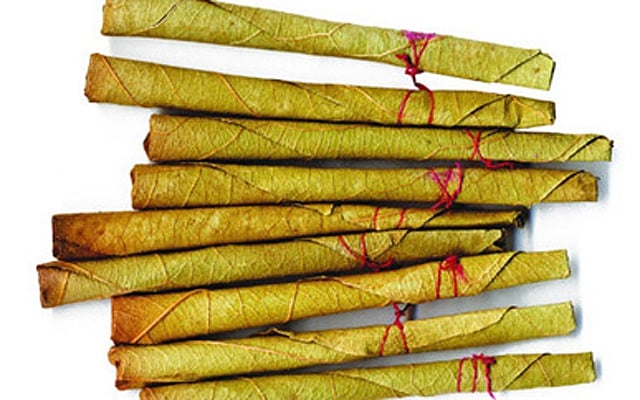
Their collective pressure, according to the National Board of Revenue (NBR), stands in the way of increasing taxes on bidis, a sort of hand-rolled cigarette low-income Bangladeshis smoke.
NBR officials say, like before, they have received more than 50 letters from MPs, urging the finance minister not to raise taxes on bidis.
They argue that a tax hike would affect the livelihood of ‘millions of workers’ in bidi factories.
Research and Development Collectives, a research group, organised a roundtable and a television talk-show demanding tax exemption for bidis in workers’ interest.
Economists and anti-tobacco campaigners are frustrated over the country's tobacco taxation policy, saying that ‘faulty’ taxation has 'steadily' pushed down tobacco prices since 2001, encouraging new users.
But they are particularly concerned about taxes on bidis, available at dirt-cheap prices in the absence tax hikes in the past three years.
The bidi lobby says more than 2.4 million workers are employed in bidi factories, but independent investigations repudiate the claim.
A survey by journalists last year found that only about 65,000 workers work in 117-bidi factories across Bangladesh, a figure far below the industry’s claim.
Professor Mesbah Kamal, Chairperson of the Research and Development Collectives and professor of history at Dhaka university, in a talk-show on a private TV recently said cigarette companies employed only about 10,000 people against more than 2.4 million people - 1.8 million of them women - employed by bidi manufacturers.
“I am also an anti-tobacco activist. People die consuming tobacco. But increasing taxation on bidis would ruin their livelihoods,” he said.
He, however, revised the data to 0.35 million to 0.4 million direct employment in bidi factories when pressed for the source of his information.
Kamal also organised a roundtable at CIRDAP to counter the bidi taxation campaign.
When asked about the event's sponsors, he said, “We work for the workers, not for company owners," Kamal told bdnews24.com.
But the anti-bidi-tax lobby rarely talks of pay hike for workers or improving working conditions as bdnews24.com found out.
According to the Bangladesh Bureau of Statistics, the daily average wage rate of the bidi workers is Tk 90 for men and Tk 64 for women, arguably among the cheapest in the world and falls way below the national average – Tk 133 for male and Tk 96 for female.
Moreover, study has shown that bidi factories routinely hire child workers, who are made to slog in filthy working conditions, at much lower wages.
Kamal argues that the government policies favoured multi-national cigarette companies. “The BNP-led government had created a lowest price slab for cigarettes that made cigarettes cheaper than bidis,” he said.
Anti-tobacco campaigners slammed his argument.
“We will appreciate if they demand the lifting of price slabs of cigarettes. But they must not demand tax exemption for bidis,” said US-based Campaign for Tobacco Free Kids’ Bangladesh coordinator Taifur Rahman.
He demanded a 70 percent tax on all tobacco products to discourage smokers.
He said those arguing in favour of bidi factories “never talk about low wages, working conditions and child labour.”
An anti-tobacco group, Progga Knowledge for Progress, also alleged that bidi companies use lobbyists to pursue their demands before budget sessions.
Its spokesperson told bdnews24.com that bidi companies organise television talk-shows, roundtables, and collect letters from some MPs to bolster their position.
And this happens despite World Health Organisation's appeal to countries to raise tobacco product taxes to deterring levels.
It said countries like Bangladesh had to spend double the amount for treating tobacco related diseases than it earned from tobacco revenues.
Bangladesh, having ratified the Framework Convention for Tobacco Control (FCTC) in 2005, is under an obligation to abide by its recommendations.
Last year former NBR chairman Nasiruddin Ahmed said in an international conference that several MPs were involved in the tobacco business. "Before the last (2011-2012) budget, more than 120 MPs had written to the NBR seeking a freeze on bidi taxes,” Ahmed said.
He says the industry should be “phased out as it is not important for the economy and is detrimental to health”.
According to the Global Adult Tobacco Survey, 43.3 percent Bangladeshi adults either smoke tobacco or consume it in some other form.