


Published : 20 Jul 2022, 03:05 AM
Updated : 25 Oct 2022, 10:00 AM


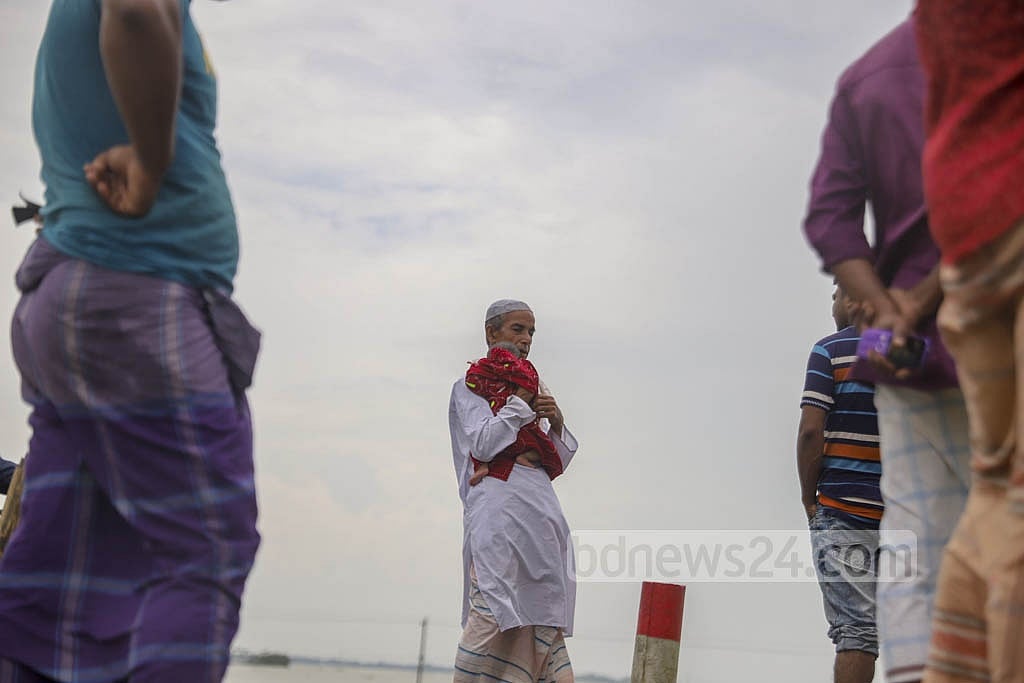
A paediatrician at the hospital gave him some ointment and oral medicines, advising Asia against giving him a bath in dirty water, which caused the problem.
Sufian’s father Sayek Mia abandoned him and his mother Aleya Begum after his birth. Aleya works as a daily wager for a living, while Sufian’s grandmother Asiya takes care of him during the day.
Asiya said they have no alternative to bathing the child with floodwater available outside the house.
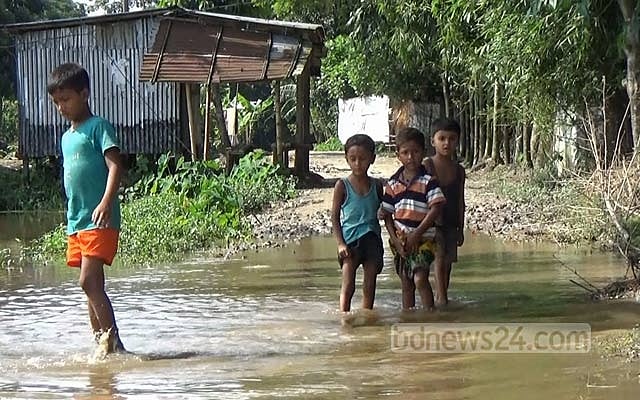
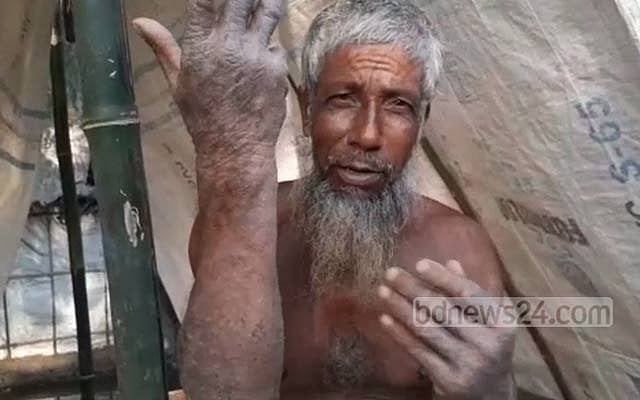
Although the floodwaters have receded in the northeastern Sylhet region, many people like Sufian are suffering from waterborne diseases.
Medical experts and health service providers, however, say the outbreak has not reached the alarming level just yet.
According to the Directorate General of Health Services, as many as 20,705 people contracted waterborne diseases or were injured in accidents in 45 flood-affected areas in 28 districts from May 17 to Jul 18. At least 123 people died.
Hospitals reported 12,230 people in the flood-hit areas across the country were afflicted by diarrhoea while one of the patients died.
As many as 383 people developed skin diseases and 1,000 suffered from respiratory distress. Also, 25 people were bitten by snakes and two of them died.
On Monday, 483 people in Sylhet Division were found receiving treatments at hospitals for diseases caused by the flooding. At least 213 suffered from diarrhoea, 36 from respiratory diseases, 89 from skin diseases, 8 from eye infections and 117 suffered from other diseases.
The number of patients suffering from waterborne diseases may rise after the floodwaters recede further, said Professor Robed Amin, chief of non-communicable disease control at the DGHS.
“The floods are ending and therefore, diarrhoea and other waterborne diseases may spread further. As people came into contact with the dirty floodwaters, cases of skin diseases have surged too.”
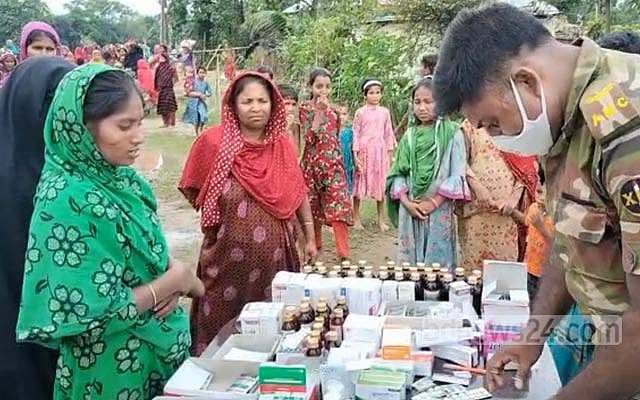
The diseases are non-communicable and can be treated at the local health complexes, he said. “The government has supplied emergency medicines to the hospitals. This year, the flood victims did not face any severe health hazards and medical treatment at the local level is enough for them,” he said.
The health inspectors are working to ensure the supply of emergency medicines to the remote areas with the worst road connectivity, he added.
Toddler Noha Akter was brought to Sunamganj Sadar Hospital on Monday as she suffered from a stomach problem. According to her father Chan Mia, she was suffering from chronic stomach disease after the flood hit their area and was not recovering. Chan Mia’s wife was suffering from the same illness, he said.
Shundor Ali, 50, from Sujatpur village in Jamalganj Upazila came to the medicine dispensing room in Sunamganj Sadar Hospital.
Besides itchy skin rashes, Shundor was suffering from stomach problems and cold and cough once the floodwater receded in his neighbourhood, he said.
On average, more than a hundred diarrhoea patients per day were admitted to the hospitals last week, said Sunamganj Deputy Civil Surgeon Dr Alberuni Khan.
“The number slid down below a hundred this week. We’re alarmed by the severity of the floods thinking the diarrhoea that usually spreads after flooding will be severe too. Thankfully, the diarrhoea has not turned into an epidemic this time.”
Many patients suffering from skin and stomach diseases are receiving treatment at the outpatient department of Sunamganj Sadar Hospital, said its Director Dr Anisur Rahman. The number of patients is slightly bigger than usual but not alarming, he said.
On average 7 to 8 patients get admitted to the hospitals each day in Kalmakanda Upazila, a figure that dropped from 14 to 15 at the beginning of the flood situation.
The prevalence of diseases following the flood has not been alarming but floods damaged the infrastructure including road connections, preventing regular patients from moving to different places for medical treatment, many health service providers said.
“Some patients need immediate medical treatment. But we’re struggling to do that as the roads are damaged,” said Dr Mizanur Rahman, medical officer in Ma O Shishu Hospital in Dharmapasha Upazila in Sunamganj.
He added that they were running a medical camp to provide the flood victims in Dharmapasha with health services.
[Additional reporting by Lavlu Pal Chowdhury in Netrakona; writing in Bangla by Masum Billah; writing in English by Sabrina Karim Murshed; editing by Osham-ul-Sufian Talukder]













