Published :
13 Jan 2013, 06:09 PM
Updated :
09 Aug 2022, 10:05 AM

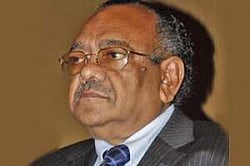
“We need to utilise them, honour them. It’s time to recognise them,” AFM Ruhal Haque said after he opened the first-ever national public health conference in Dhaka that brought together public health managers, academics, researchers, scientists and development partners in a three-day meet.
The minister stressed the need for prioritising public health at medical college level so that fresh doctors can ‘really contribute’ to their workplace.
“They (medical students) learn how to assist a gallbladder surgery or even in complicated cases during their study. But when they are being posted in a remote place they feel they have nothing to do there.”
“But if we could teach them public health issues properly, they could utilise that in rural places,” he said.
Haque made the comment as government doctors who have post-graduate degrees in public health-related subjects have little to do in Bangladesh since there are limited posts for them except teaching jobs at medical colleges.
He extolled the initiative to organise the public health conference where four themes -- institutionalising public health programmes, policy and planning, multi-sectoral coordination and evidence-based best practices in public health education and service delivery, and demographics and disease pattern – would be discussed.
According to the Institute of Epidemiology Disease Control and Research, organiser of the event, the main objective of the conference is to promote coordinated multi-sectoral approach to sustain positive health outcomes while find out ways of tackling emerging challenges.
Presenting the keynote paper, ICDDR,B Interim Executive Director Dr Abbas Bhuiyan said Bangladesh has so far made ‘impressive’ progress in public health, but has to prepare to face new challenges like transition of disease burden from contagious to lifestyle ones.
“A child born in Bangladesh in 2010 can expect to live 70 years on an average, which is almost double what a child could expect if born 50 to 60 years ago,” he said focusing on progresses in the health sector.
Bhuiyan said Bangladesh has succeeded to cut maternal as well as child deaths ‘significantly’ while total fertility rate has been declined, but improvement of nutritional status remains as a challenge.
He said though progresses have been made in controlling tuberculosis by increasing the identification rate, multi-drug resistant tuberculosis appeared as ‘a major challenge’.
Bhuiyan said shortage of trained human resources in the heath sector, inadequate healthcare financing and socioeconomic inequity in health and limitation in quality healthcare access are some major issues that Bangladesh is facing.
He said still nearly 65 percent people have to spend out-of-pocket to meet their healthcare need.
Earlier IEDCR director Prof Mahmudur Rahman told bdnews24.com that the conference would provide ‘the opportunity’ to discuss major issues of public health in Bangladesh and examine the entire gamut of options available to improve the public health infrastructure.
He said though Bangladesh has made ‘notable’ progress in different health indicators, it still faces the “dual burden of communicable and rapidly increasing non-communicable diseases (NCD).”